
Origin
Highland and pastoral flocks across Fars, Khorasan, Kurdistan and Azerbaijan.
Properties
- Elastic and resilient
- High dye affinity
- Naturally soil-resistant
- Variable staple length by region
Preparation
Shorn, sorted by staple, washed, carded, then hand- or wheel-spun; often plied before dyeing.
Care & preservation
Keep dry and ventilated, avoid prolonged direct light, and inspect regularly for insect activity.
General guidance only. For valuable or fragile pieces, consult a qualified conservator before cleaning or treatment.
Fleece, yarn and the finished textile
Wool is a protein fibre with surface scales and natural crimp. Fleece varies by animal, husbandry and sorting; “highland wool” is not one uniform grade. Washing removes dirt and much of the grease before spinning. The resilience of a carpet depends on yarn twist, pile construction, foundation and wear as well as the fleece. Neither softness nor visible yarn irregularity establishes an Iranian origin.
Pile, flatweave and felt are different structures
Knotted pile secures cut yarns around warp threads. A kilim makes its surface through interlaced warp and weft; felt consolidates loose fibres without a loom. A photograph of a pile rug is therefore not a photograph of feltmaking. Record which parts are wool: a “wool carpet” can still have cotton foundations or silk details. Compare the face, reverse and exposed edges without pulling out fibres.
Dyes, repairs and condition
Natural-source and synthetic dyes both occur on wool. Abrash, a muted palette and uneven yarn cannot determine the dye chemistry or age. Look for broken pile, weakened fringes, local fading and repairs with a different twist or sheen. Such observations describe condition, not an exact date. A high-value purchase should include actual-object photographs, repair disclosure and a documented maker or regional attribution.
Insects and storage
Larvae of textile pests can damage protein fibres, especially in undisturbed dusty areas. Keep storage clean, inspect folds and protected edges, and isolate suspected infestations from other textiles. Do not add household pesticide, perfume or mothballs to a historic object. Wet agitation and heat can cause dimensional change or felting; washing decisions must account for dyes, backing, repairs and structural weakness.
Practical questions
- Is every wool rug hand-knotted? No; wool can be machine-woven, flatwoven, tufted or felted.
- Does softness identify Iranian wool? No; finish and wear also affect the surface.
| Feature | What it can tell you | What it cannot establish |
|---|---|---|
| Crimp and twist | Yarn character | Breed or place of weaving |
| Mixed foundations | Material combination | All-wool manufacture |
| Abrash | Colour variation | Natural dye or age |
References and further reading
- [1] H. E. Wulff, The Traditional Crafts of Persia, MIT Press, 1966.Historical craft-process context, not authentication of a specific object.
- [2] Canadian Conservation Institute — Caring for cultural objects ↗Preventive care; treatment must be assessed for the actual materials.
These sources provide context, not authentication or provenance for an individual object. Editorial interpretations remain under review.
Documented material and craft examples
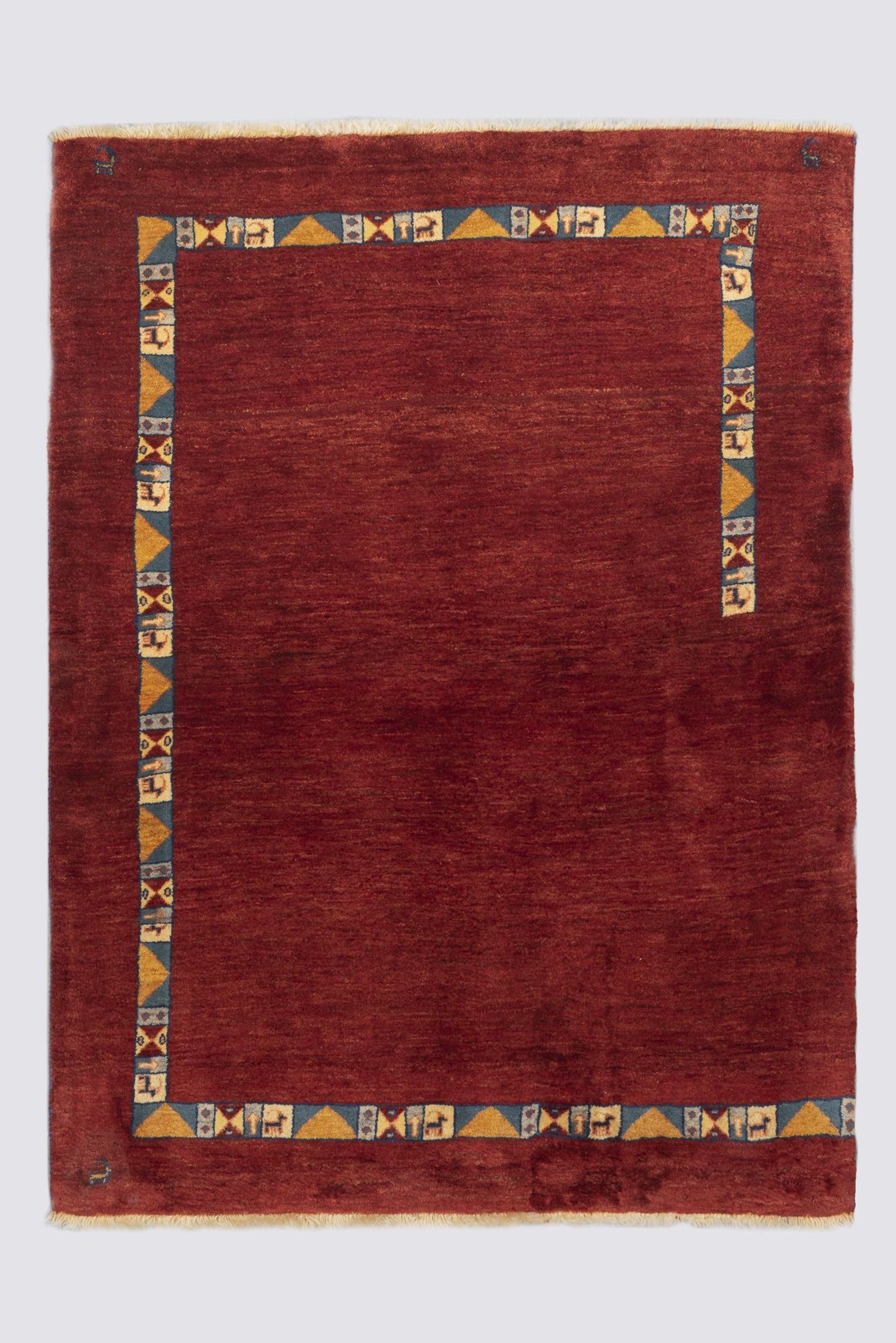
Representative photographs only. Marketplace examples rely on seller descriptions; CraftPersia has not independently authenticated their maker, origin, or rights status. Follow each source link for the listing context.
Used in these crafts
A hand-knotted pile textile woven across Iran in city workshops, village looms and pastoral camps, distinguished by regional structure, palette and design vocabulary.
The workshop carpet tradition of Tabriz in East Azerbaijan, characterised by drawn cartoons, a distinctive hook-knife weaving method and a wide range of fineness grades.
A thick, coarsely knotted pile rug woven mainly by pastoral and village weavers of the Zagros, with open fields, few motifs and a directly personal design language.
A patterned Iranian brocade woven with supplementary wefts, historically in silk and wool, associated above all with Yazd and Kerman.
A flat, pileless woven textile made across Iran by interlocking or slit-weaving coloured weft threads over a warp, used as floor covering, storage bag, saddle cover and tent divider depending on region.
A narrow-strip flatwoven textile, usually made in warp-faced bands on a portable loom and then sewn together into a wider cloth, traditionally used as bedding cover, floor spread or door hanging by village and pastoral households.
A hand-embroidered wool textile from Kerman in which coloured silk or wool threads are worked in dense chain and satin stitching over a woollen ground, typically in a limited palette against a natural or dyed field.
A non-woven wool textile made by matting and pressing raw wool fibres with moisture, heat and friction rather than by weaving, traditionally produced across Iran for floor coverings, cloaks and protective mats.
A northern Iranian needlework tradition associated with Rasht in Gilan, combining wool felt or broadcloth appliqué with chain-stitch embroidery for covers, hangings and saddle cloths.
Traditional Iranian string-puppet theatre, and the craft of making its carved and costumed puppets, including the well-known character Mobarak.
Hand-knotted city carpets from Kashan, often in wool or silk, known for medallion designs and deep reds and blues.
Very finely knotted city carpets from Nain, recognisable by ivory and blue palettes with silk highlights.
Durable, geometric village carpets from the Heris area of East Azerbaijan, with large angular medallions.
Village and tribal carpets from the Chaharmahal and Bakhtiari region, best known for the garden (khesti) design of repeated panels.