
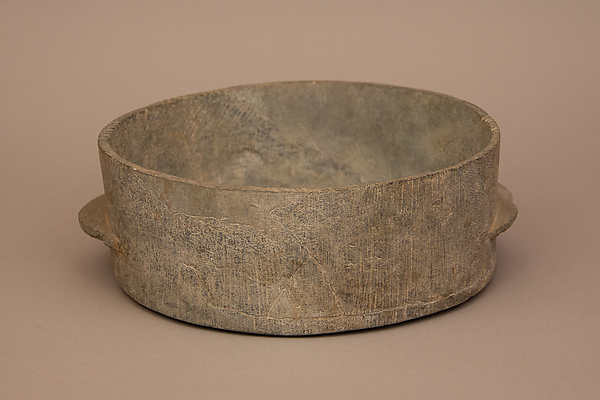
Vessel · 9th century · Stone; carved and incised · Iran
The Metropolitan Museum of Art, 40.170.294 · CC0 · Museum record
One catalogued Iranian example whose museum medium line names this material; not a defining specimen.
Origin
Local quarries, including soapstone near Mashhad.
Properties
- Heavy
- Carvable
- Stains easily
Preparation
Quarry, block out and carve with chisels and abrasives.
Care & preservation
Avoid acid cleaners on marble.
General guidance only. For valuable or fragile pieces, consult a qualified conservator before cleaning or treatment.
Stone in Iranian building and craft
Iran has extensive marble and onyx-like travertine quarries. Translucent Yazd and Tabriz 'marble' (often aragonite/travertine) was used for window panes, tomb slabs, dados and the famous royal throne at Golestan Palace. Mashhad and Khorasan workshops carve soft stone vessels.
Naming problems
In trade, 'marble' covers true marble, travertine, onyx and even serpentine. Mashhad stone pots are usually soft steatite-like stone, not marble. Record the source's term and the observed properties.
Care
Calcite stones etch with acids, including lemon and vinegar. Clean with water only and protect from staining oils.
Practical questions
- Is 'Yazd marble' true marble? Often it is travertine/aragonite.
- Can I clean with vinegar? No; it etches.
| Observation | Useful description | Not established |
|---|---|---|
| Translucent banded stone | Onyx-type stone | True marble |
| Soft grey pot | Soft stone | Marble |
| Dull etched spot | Acid damage | Age |
References and further reading
- [1] H. E. Wulff, The Traditional Crafts of Persia, MIT Press, 1966.Historical process context; not evidence for an individual object.
- [2] Encyclopaedia Iranica ↗Peer-reviewed entries on crafts and materials.
These sources provide context, not authentication or provenance for an individual object. Editorial interpretations remain under review.
Used in these crafts
The carving of marble, limestone, alabaster and softer stones for architectural elements, gravestones, inscriptions and vessels.