
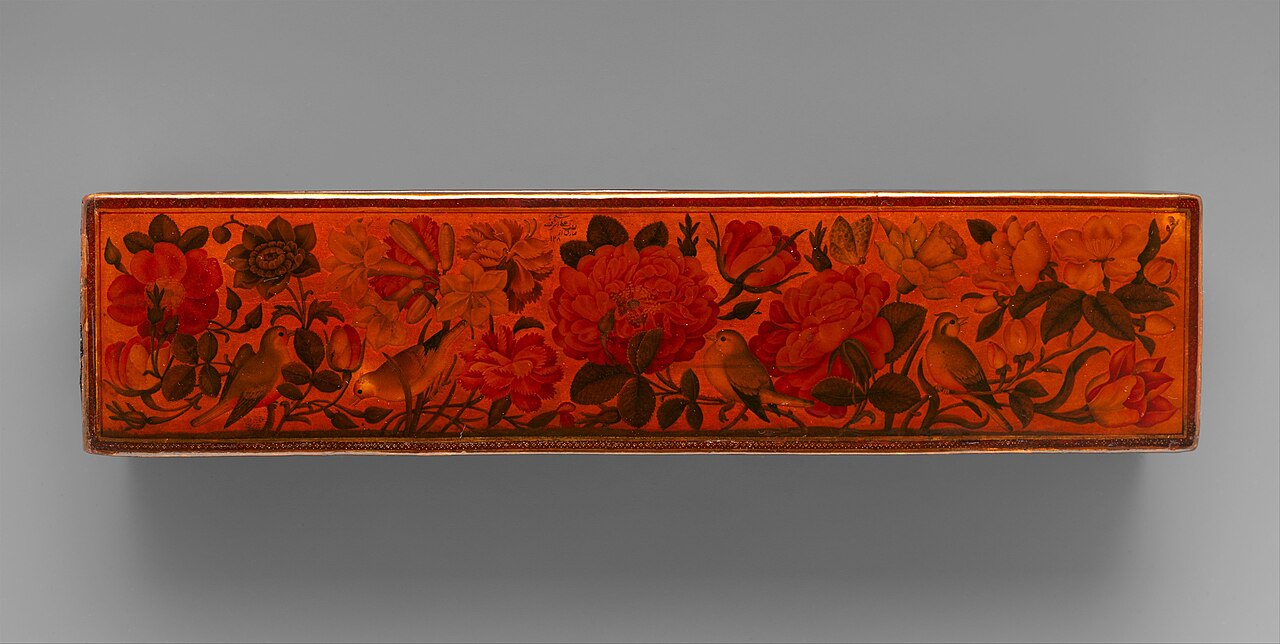
Lacquer pen box (qalamdan) · 19th century · Papier-mache with lacquer painting; Metropolitan Museum of Art · Iran
Creator:Muhammad Sadiq · CC0 · Wikimedia Commons record
One catalogued Iranian example whose museum medium line names this material; not a defining specimen.
Origin
Regional resins, oils and binders vary by period and workshop.
Properties
- Glossy finish
- Brittleness varies
- Can be solvent-sensitive
Preparation
Apply thin coats and dry or cure before further painting and polishing.
Care & preservation
Do not test solvents or wax without a conservator.
General guidance only. For valuable or fragile pieces, consult a qualified conservator before cleaning or treatment.
A coating term, not one chemistry
In Persian decorative arts, lacquer is often a catalogue term for painted and varnished objects, including papier-mâché pen boxes and mirror cases. It should not automatically be equated with East Asian urushi. Resins, oils, binders, pigments and later coatings can vary. Retain the collection's material description rather than assigning a recipe from gloss alone. A glossy finish does not identify its chemistry, age or place of manufacture.
Support, paint and protective layers
The support, preparation, paint and transparent coating form a layered object. Papier-mâché and wood move differently from the coating above them; cracks and losses may involve several layers. A painted lid may also have been paired with a different base. Examine overall fit, interior surfaces and edges in photographs. Do not lift a flake to see what is underneath: retaining loose material is part of conservation, not a buyer's identification test.
Motifs, inscriptions and attribution
Bird-and-flower painting, portraits and narrative scenes can appear across several supports and periods. A familiar motif alone cannot establish a Qajar date. Signatures may be later additions or difficult to read; record their location and obtain a careful transcription. Compare a claimed date with a collection entry and documented provenance, distinguishing a source attribution from an independently confirmed result. Repairs and repainting should be disclosed even when the object remains visually attractive.
Handling and treatment boundaries
Support the base with two hands and avoid pressure on a loose lid, hinge or projecting edge. Keep the object away from direct sun, heat and water; do not use alcohol, wax, solvent or a furniture-polish test. A coating can be vulnerable even when it appears hard. Flaking, tackiness, whitening or distorted supports warrant conservation assessment. For collecting, request condition photographs and distinguish original decoration from retouching without demanding destructive tests.
Practical questions
- Does lacquer always mean urushi? No; Persian catalogue usage requires material context.
- Can a signature alone establish authorship? No; reading, condition and provenance need review.
| Observation | Useful description | Not established |
|---|---|---|
| Glossy coating | Surface finish | Resin chemistry |
| Bird-and-flower scene | Pictorial subject | A Qajar date |
| Flaking edge | Condition concern | Safe cleaning method |
References and further reading
- [1] H. E. Wulff, The Traditional Crafts of Persia, MIT Press, 1966.Historical process context; not evidence for the origin of an individual object.
- [2] Canadian Conservation Institute — Caring for cultural objects ↗General preventive care; treatment requires assessment of the actual object.
These sources provide context, not authentication or provenance for an individual object. Editorial interpretations remain under review.
Documented material and craft examples
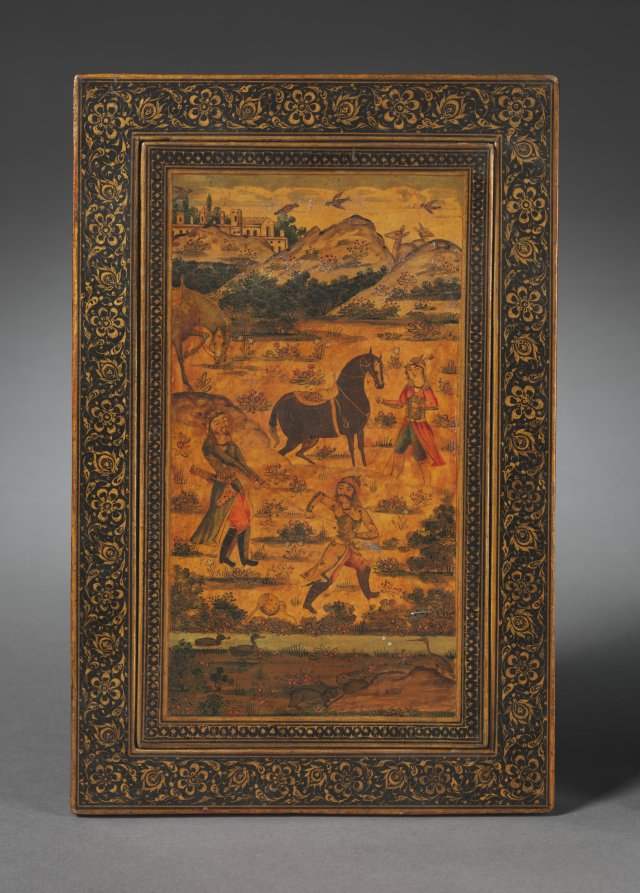
Representative photographs only. Marketplace examples rely on seller descriptions; CraftPersia has not independently authenticated their maker, origin, or rights status. Follow each source link for the listing context.
Used in these crafts
A decorative technique in which papier-mâché or wooden objects, such as boxes, mirror cases and pen boxes, are painted with fine miniature-style scenes or floral ornament and then sealed under multiple coats of clear lacquer varnish.
The hand binding of manuscripts and books with leather or lacquer covers, often with a flap (lisan) and stamped, cut or gilded decoration.