
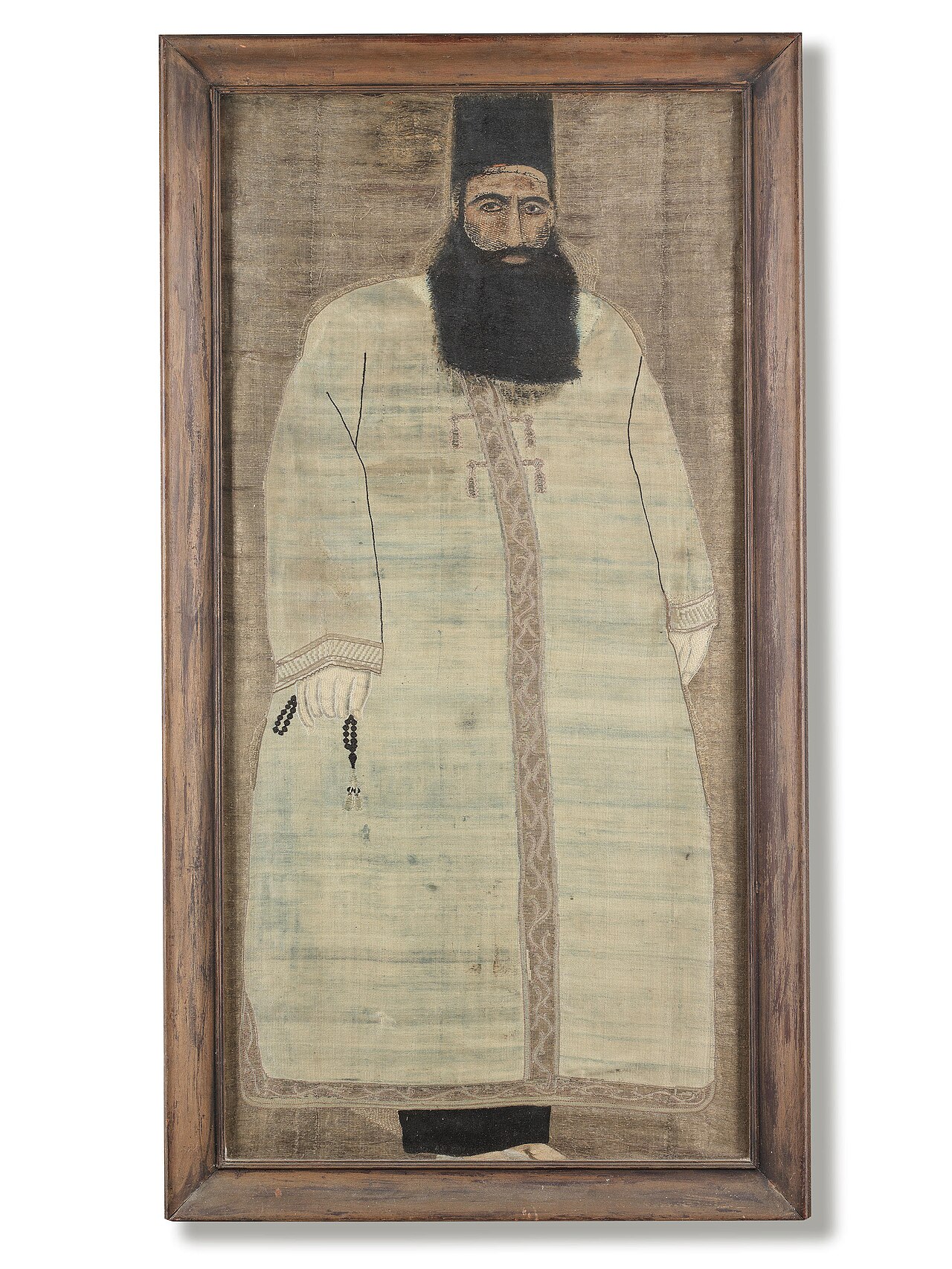
Qajar silk and metal-thread brocade panel · late 19th century · Silk and metal thread brocade with painted details · Iran
Bonhams · Public domain · Wikimedia Commons record
One catalogued Iranian example whose museum medium line names this material; not a defining specimen.
Origin
Made from metal strip or wire in specialist workshops; historical composition varies.
Properties
- Reflective
- Can tarnish
- Sensitive to abrasion
Preparation
Flatten or wrap metal around a thread core; lay and stitch it over a design.
Care & preservation
Support flat; avoid polishing, abrasion and humid storage.
General guidance only. For valuable or fragile pieces, consult a qualified conservator before cleaning or treatment.
Metal strips, wire and wrapped cores
Metal thread can be a strip, wire or a metal-bearing layer wrapped around a fibre core. Precious-metal surfaces may cover a different metal beneath, and modern reflective threads may use metallised polymer. Gold or silver colour is not a fineness measurement. Record the catalogue's exact material wording and distinguish metal composition from the core fibre. Neither shine nor tarnish identifies the maker or establishes an Iranian origin.
Couching and woven pattern are not the same
Couching lays a decorative thread on a ground and secures it with smaller stitches. In brocaded cloth, pattern threads participate in weaving instead. A raised line could also be supported by padding. The face may conceal attachment stitches and the reverse can help explain construction. Inspect without bending brittle metal thread or separating it from the ground. Sermeh-duzi and zari-bafi should not be treated as interchangeable names for all metallic decoration.
Mixed-material ageing
A metal layer and its silk, cotton or other support can deteriorate differently. Tarnish, loose wraps, broken stitches and worn cores are distinct observations. Polishing metal attached to cloth may stain or abrade the textile and remove a thin plated surface. Wet cleaning must account for dyes, adhesives and corrosion as well as the fabric. Do not cut a loose decorative end or pull a snag; stabilisation belongs to a qualified textile conservator.
Storage and purchase questions
Support heavy decoration so that hanging or folding does not load weak stitches. Avoid sharp creases through metal-bearing areas and keep packing surfaces from catching exposed loops. Ask for actual-object close-ups, reverse photographs and disclosures of missing work or replacement thread. A seller's “gold embroidery” may describe colour rather than solid gold; obtain a material explanation before treating it as a precious-metal purchase.
Practical questions
- Does gold-coloured thread contain gold? Not necessarily; a material description or examination is needed.
- Can attached thread be polished like jewellery? No; the textile and plating may be damaged.
| Observation | Useful description | Not established |
|---|---|---|
| Wrapped core | Thread construction | Precious-metal fineness |
| Small securing stitches | Couching attachment | A weaving structure |
| Raised decoration | Relief or padding | Date or workshop |
References and further reading
- [1] H. E. Wulff, The Traditional Crafts of Persia, MIT Press, 1966.Historical process context; not evidence for the origin of an individual object.
- [2] Canadian Conservation Institute — Caring for cultural objects ↗General preventive care; treatment requires assessment of the actual object.
These sources provide context, not authentication or provenance for an individual object. Editorial interpretations remain under review.
Documented material and craft examples
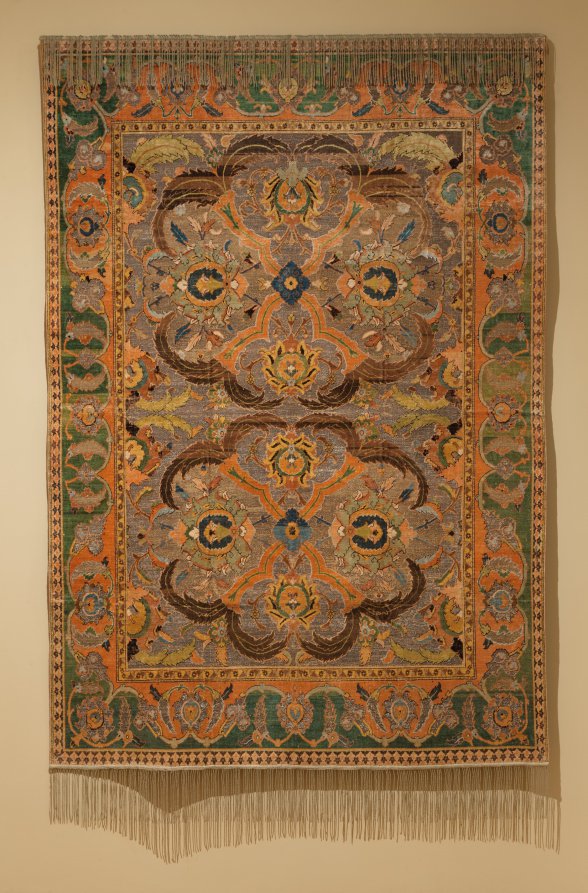
Representative photographs only. Marketplace examples rely on seller descriptions; CraftPersia has not independently authenticated their maker, origin, or rights status. Follow each source link for the listing context.
Used in these crafts
A metal-thread embroidery technique in which fine gold or silver wire, or wire-wrapped thread, is couched onto velvet or other heavy cloth to create raised, reflective patterns, historically used on ceremonial garments and furnishings.
A silk weaving technique producing a cut or voided pile on a foundation weave, used in Iran for garments, cushion covers and furnishing panels, with figured Safavid velvets among the most studied survivals.
A figured silk weaving technique in which supplementary wefts, often including gold- or silver-wrapped thread, create pictorial or floral designs on a silk ground.