
Preservation
Endangered crafts
صنایع در خطرA craft is at risk when fewer people learn it than stop practising it. These labels are editorial judgements from the sources cited on each entry, not official census figures.
15 traditions need attention
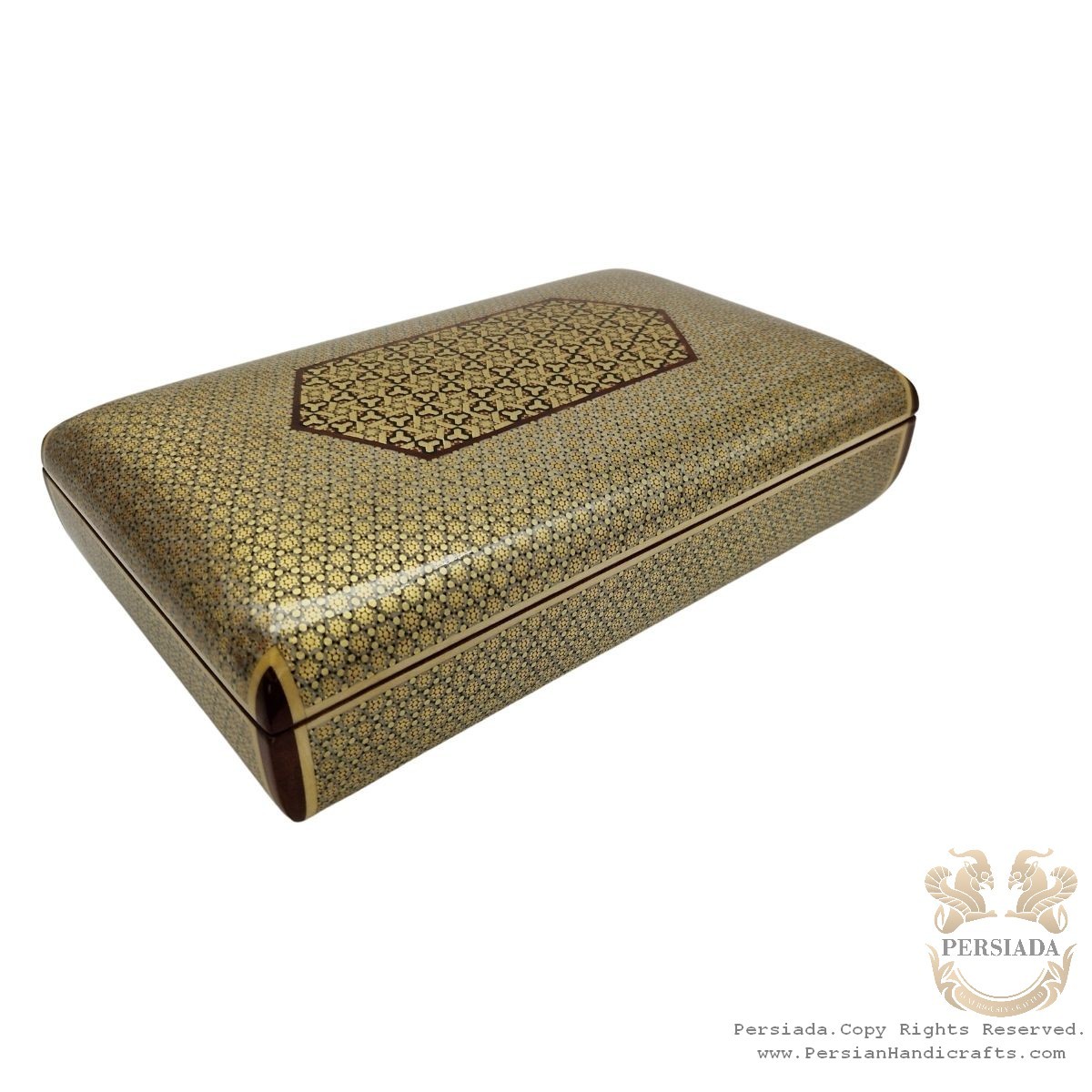
A Persian inlay art in which fine rods of wood, bone and metal are bundled into star units, sliced into thin sheets and applied to a wooden surface to form dense geometric tessellation.
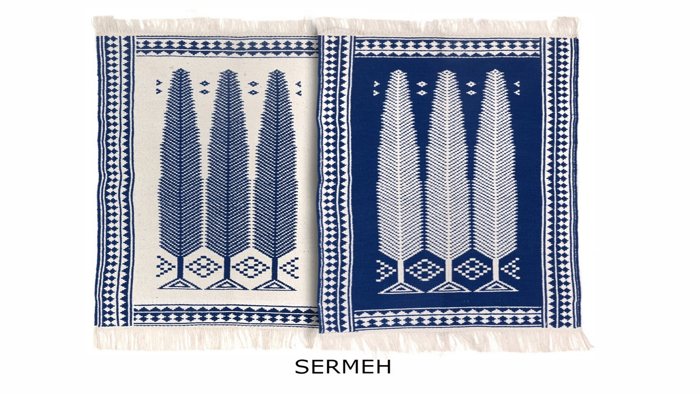
A dense, pileless cotton floor covering woven on a horizontal loom, historically centred on the town of Meybod near Yazd, known for its plain-weave structure and geometric pattern created through warp and weft colour arrangement.
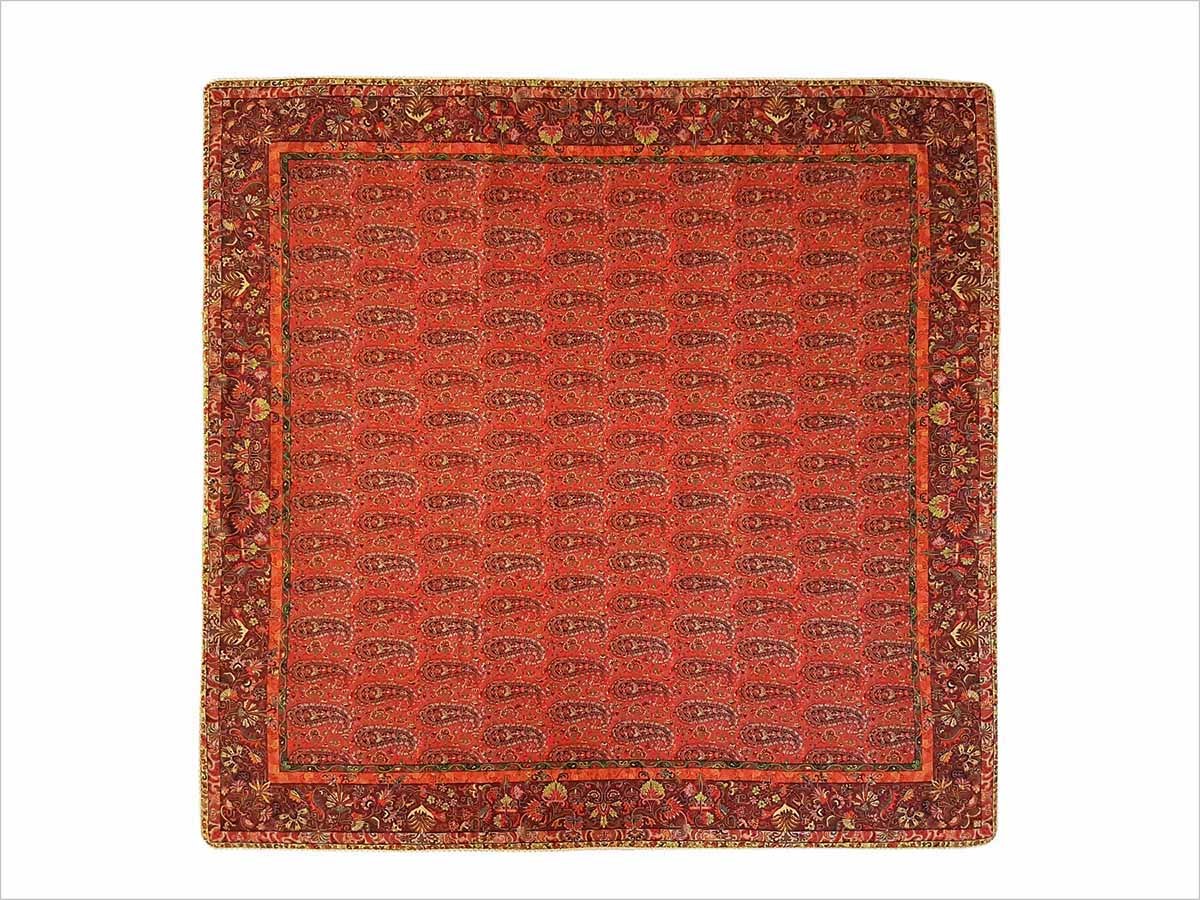
A patterned Iranian brocade woven with supplementary wefts, historically in silk and wool, associated above all with Yazd and Kerman.
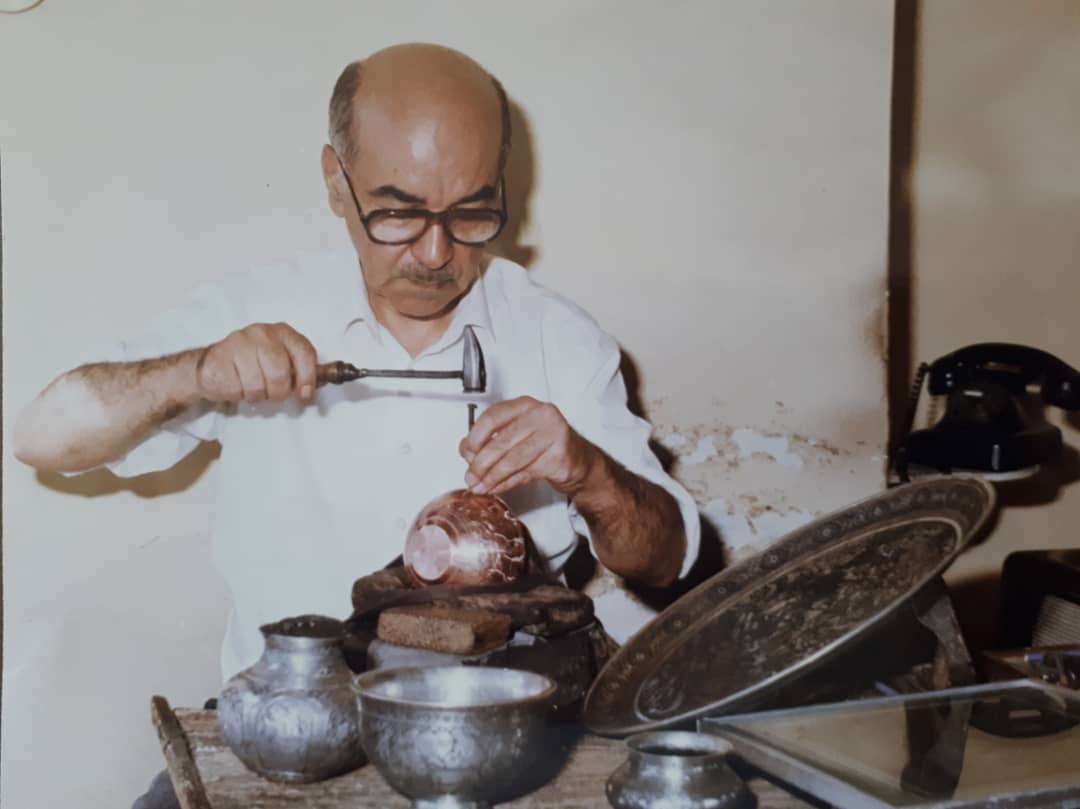
The Iranian tradition of decorating copper, brass and silver vessels with small chisels struck by hammer, working the metal into line, ground and relief.
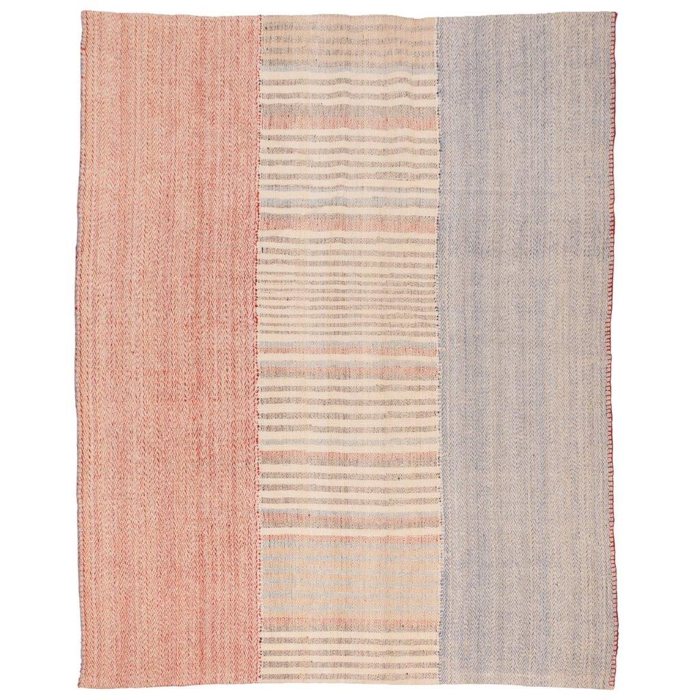
A narrow-strip flatwoven textile, usually made in warp-faced bands on a portable loom and then sewn together into a wider cloth, traditionally used as bedding cover, floor spread or door hanging by village and pastoral households.
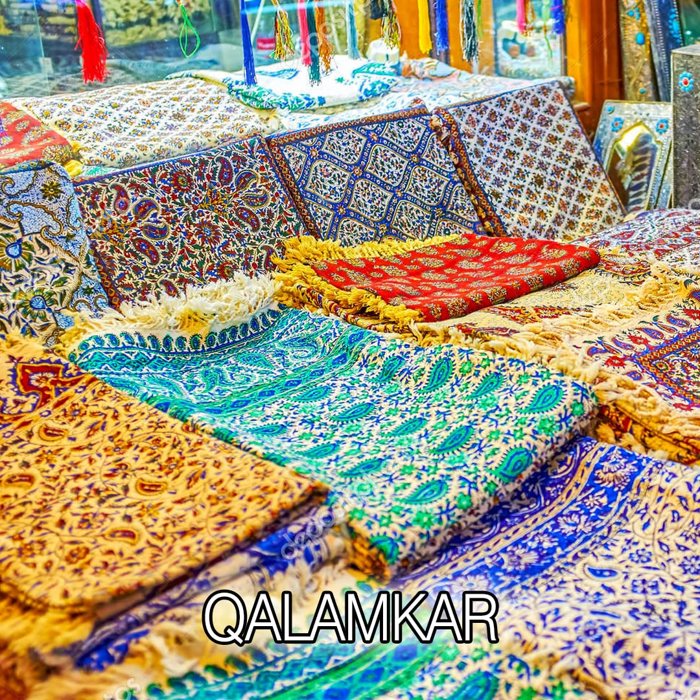
A resist-dyed and block-printed cotton textile, historically associated with Isfahan, in which carved wooden blocks stamp repeating floral and figural patterns onto cloth in successive colour stages.
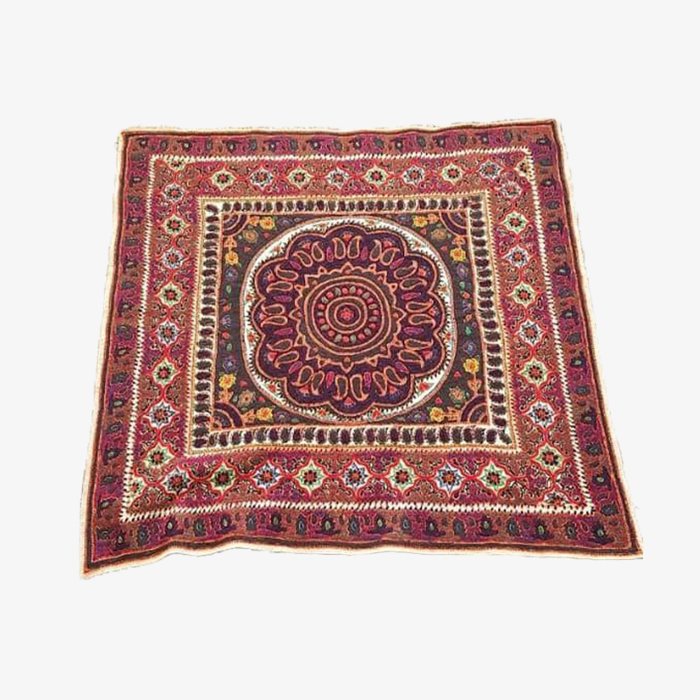
A hand-embroidered wool textile from Kerman in which coloured silk or wool threads are worked in dense chain and satin stitching over a woollen ground, typically in a limited palette against a natural or dyed field.
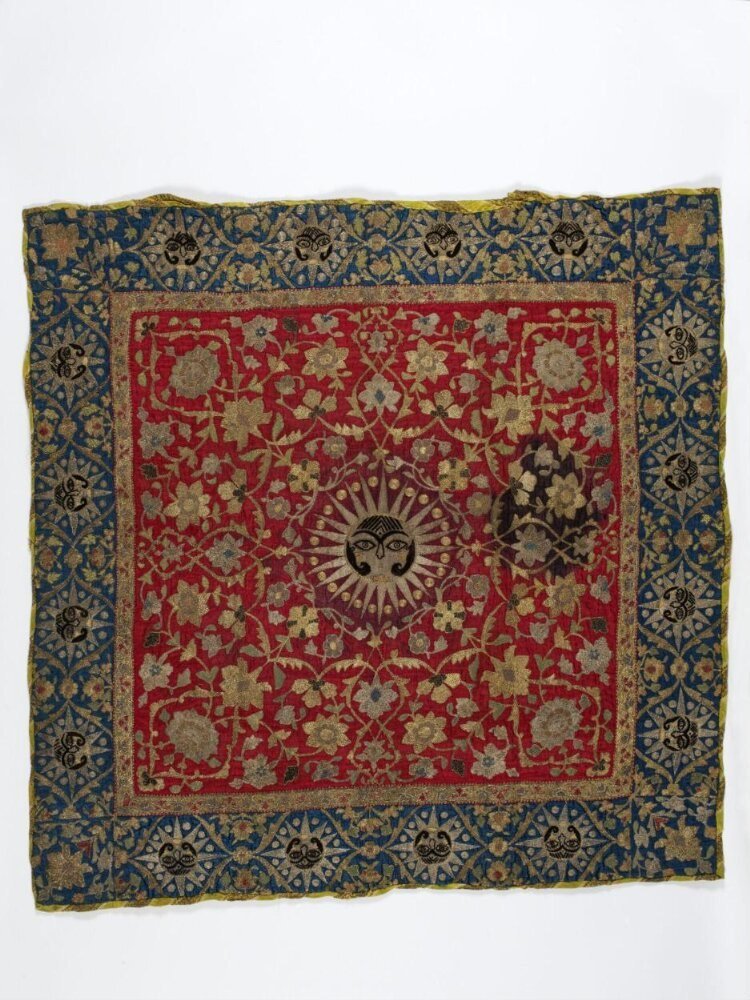
A metal-thread embroidery technique in which fine gold or silver wire, or wire-wrapped thread, is couched onto velvet or other heavy cloth to create raised, reflective patterns, historically used on ceremonial garments and furnishings.
%22%20fill%3D%22none%22%20stroke%3D%22%231f5f63%22%20stroke-opacity%3D%22.12%22%2F%3E%3C%2Fpattern%3E%3C%2Fdefs%3E%3Crect%20width%3D%22800%22%20height%3D%22600%22%20fill%3D%22%23e8ecee%22%2F%3E%3Crect%20width%3D%22800%22%20height%3D%22600%22%20fill%3D%22url(%23p)%22%2F%3E%3Crect%20x%3D%22250%22%20y%3D%22270%22%20width%3D%22300%22%20height%3D%2260%22%20rx%3D%2230%22%20fill%3D%22%23f4f6f7%22%20stroke%3D%22%231f5f63%22%20stroke-opacity%3D%22.25%22%2F%3E%3Ctext%20x%3D%22400%22%20y%3D%22307%22%20text-anchor%3D%22middle%22%20font-family%3D%22Georgia%2Cserif%22%20font-size%3D%2220%22%20fill%3D%22%231f5f63%22%3ENo%20photograph%20yet%3C%2Ftext%3E%3C%2Fsvg%3E)
A non-woven wool textile made by matting and pressing raw wool fibres with moisture, heat and friction rather than by weaving, traditionally produced across Iran for floor coverings, cloaks and protective mats.
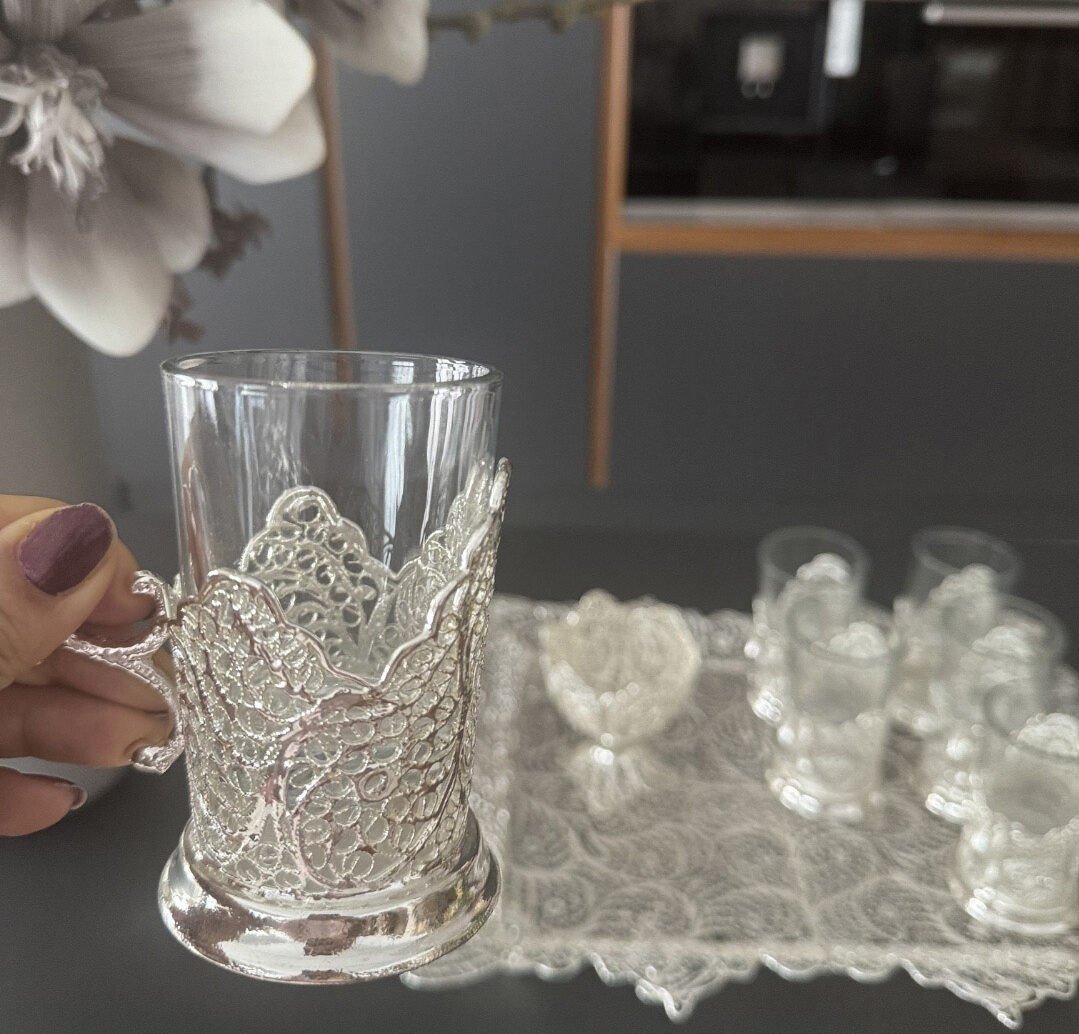
A metalworking technique in which fine drawn wires of silver or gold, often twisted or beaded, are soldered into openwork lattices and coiled floral forms to build jewellery, vessels and decorative panels.
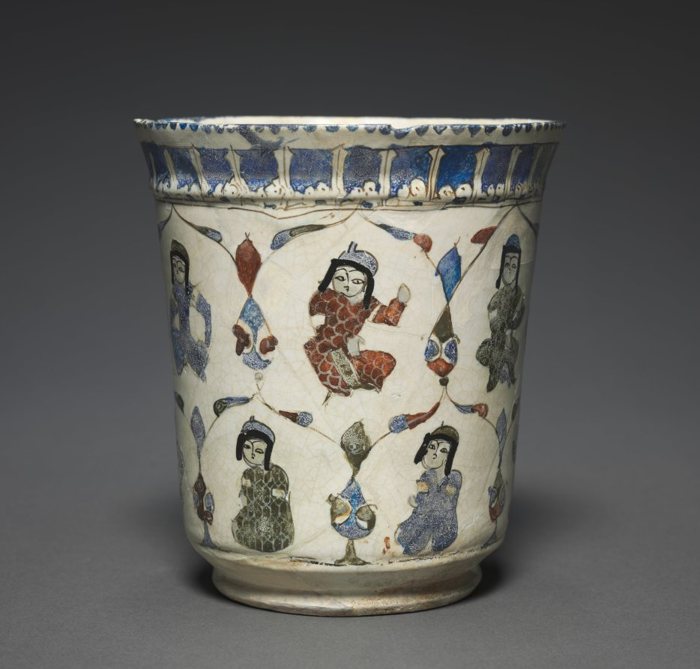
A historic overglaze-enamelled stonepaste ware produced mainly in Iran during the twelfth and early thirteenth centuries, decorated with figural and courtly scenes painted in multiple colours applied after glazing and fixed by a low second firing.
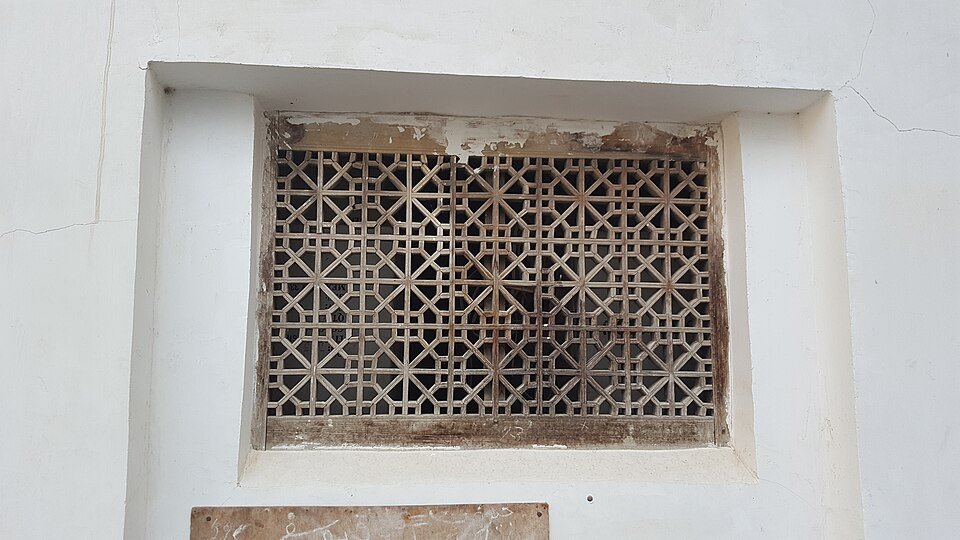
A joinery technique for building geometric lattice screens and panels from small, precisely cut wooden pieces assembled without glue or nails, using interlocking notched joints to form windows, doors and room dividers with openwork star and polygon patterns.
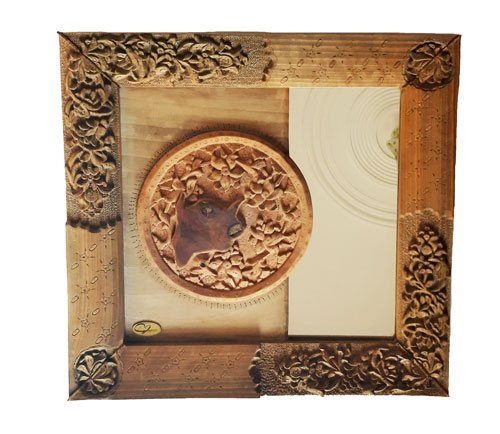
A relief wood-carving technique in which solid panels, furniture and architectural elements are carved directly with chisels to produce raised or recessed floral, arabesque and geometric ornament, distinct from inlay techniques that build a surface from separate pieces.
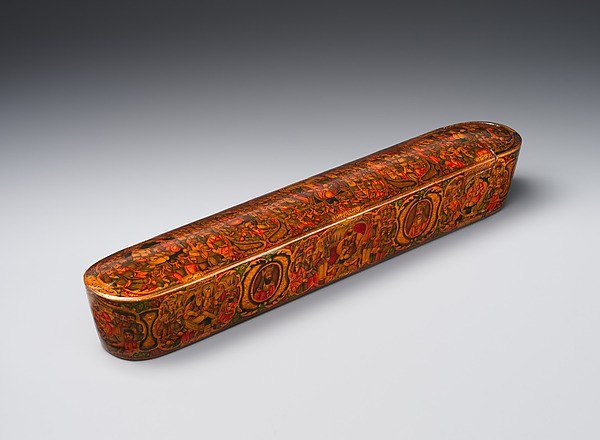
A decorative technique in which papier-mâché or wooden objects, such as boxes, mirror cases and pen boxes, are painted with fine miniature-style scenes or floral ornament and then sealed under multiple coats of clear lacquer varnish.
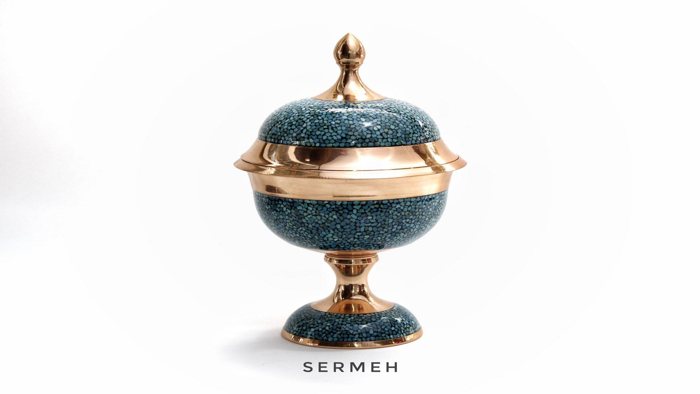
A decorative technique, associated particularly with Mashhad, in which small chips of turquoise are set edge to edge with adhesive onto a metal object's surface to create a dense mosaic-like covering, most often seen on vessels, jewellery and decorative plates.
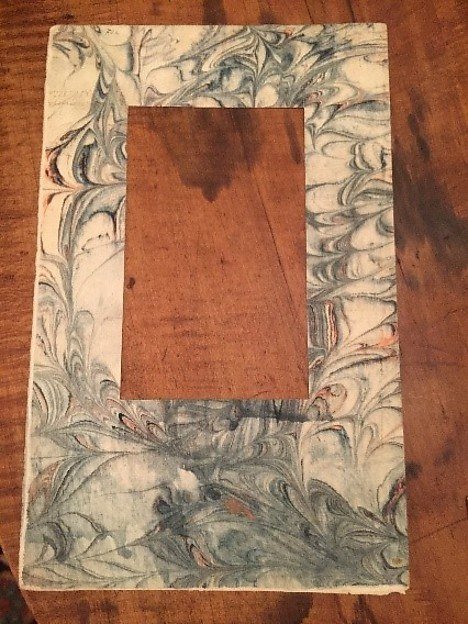
A decorative paper technique in which pigments are floated and manipulated on a thickened liquid bath and then transferred to a sheet of paper by careful contact, producing swirling, veined patterns historically used for manuscript covers, borders and endpapers.
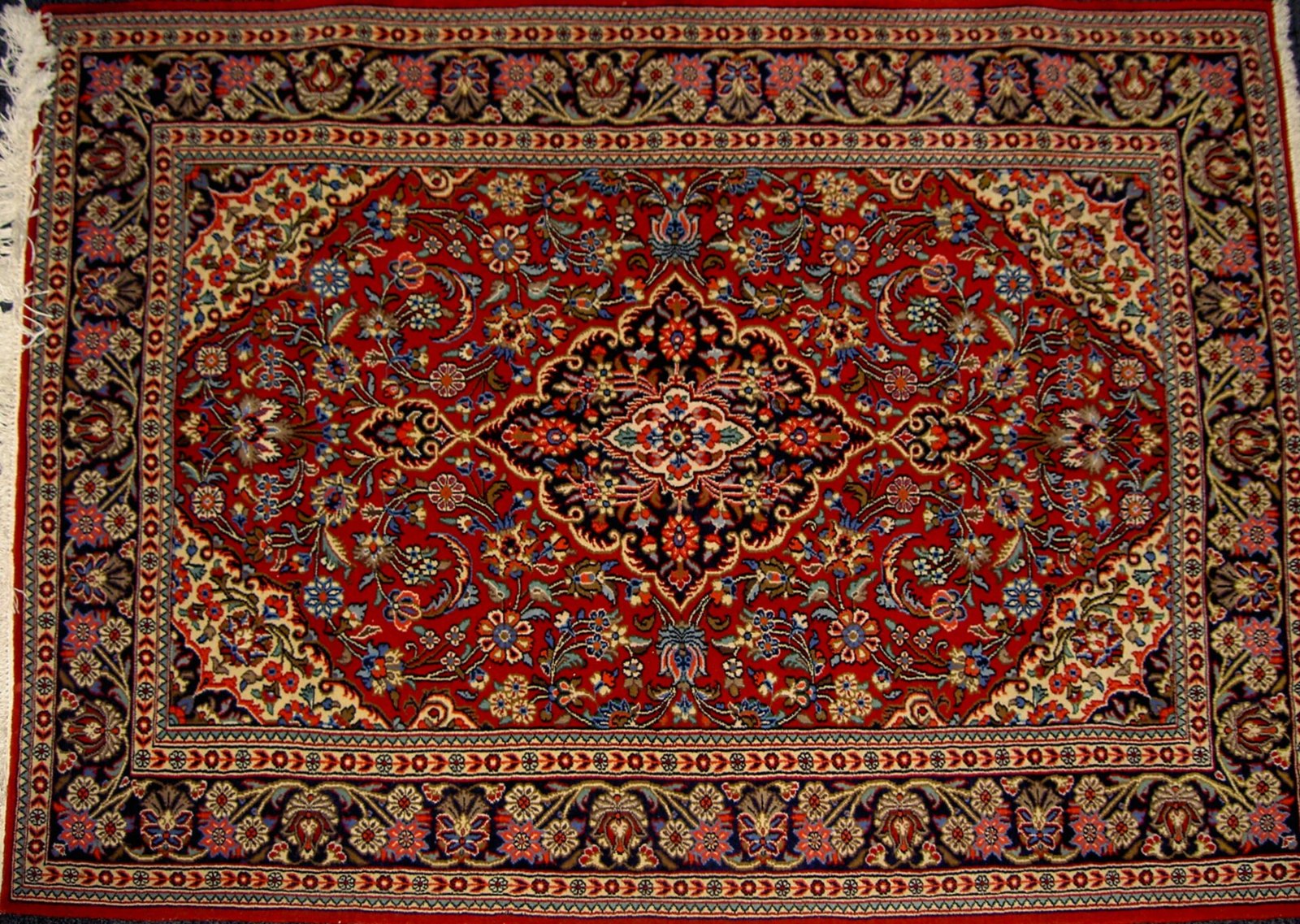
A hand-knotted pile textile woven across Iran in city workshops, village looms and pastoral camps, distinguished by regional structure, palette and design vocabulary.
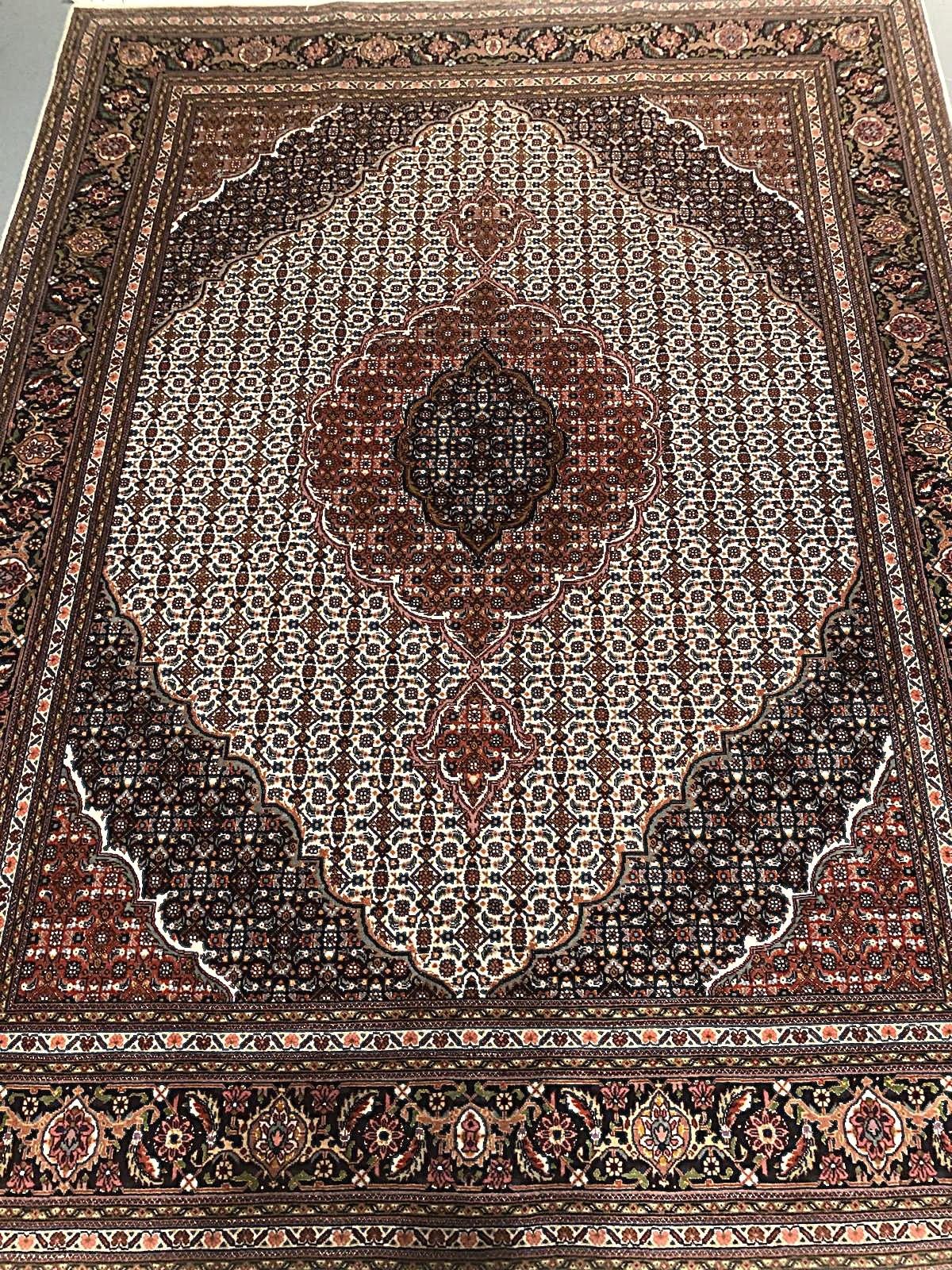
The workshop carpet tradition of Tabriz in East Azerbaijan, characterised by drawn cartoons, a distinctive hook-knife weaving method and a wide range of fineness grades.
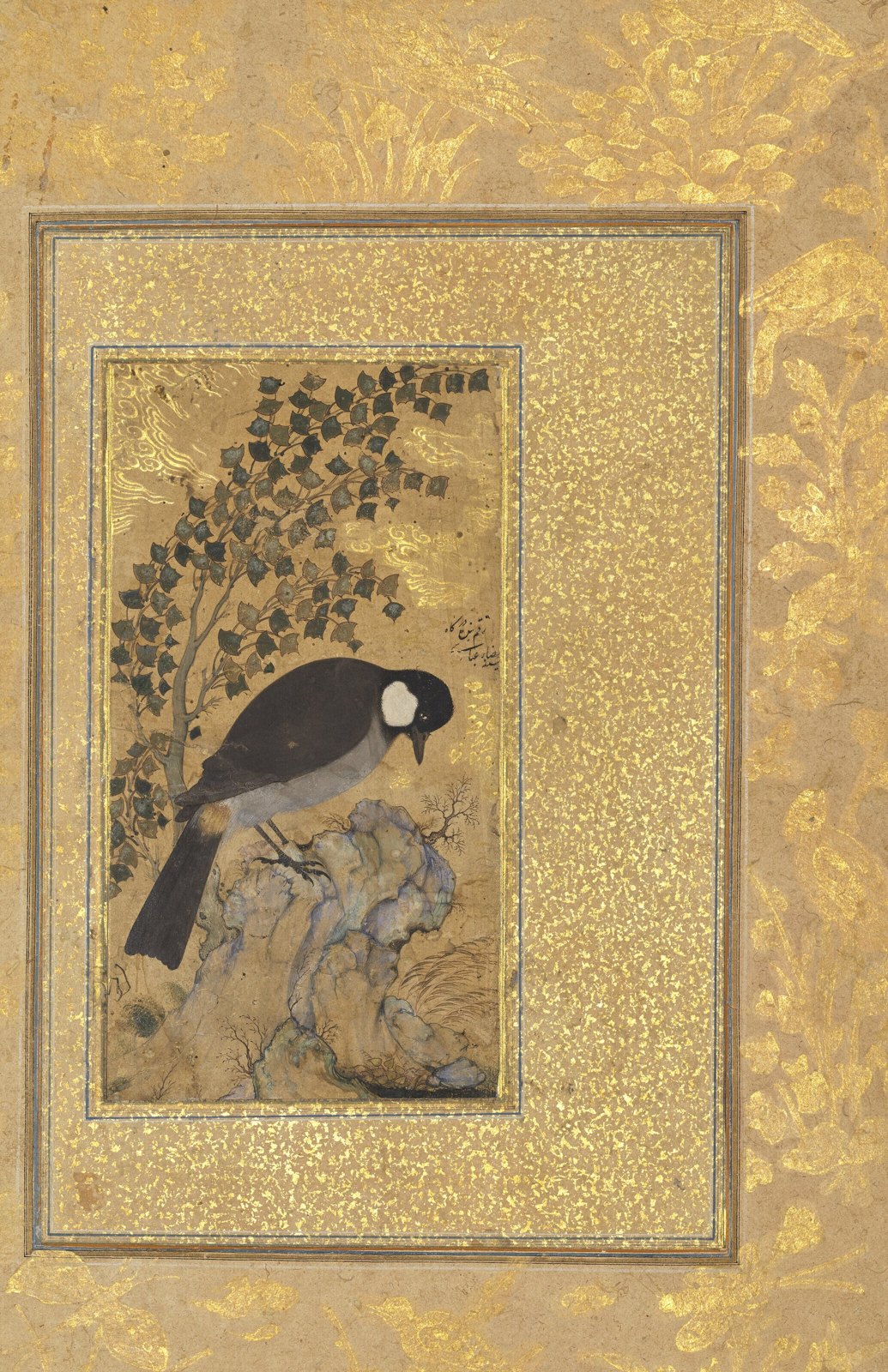
The Iranian tradition of small-scale painting made for manuscripts and albums, built from fine line, flat luminous colour and layered spatial convention rather than single-point perspective.
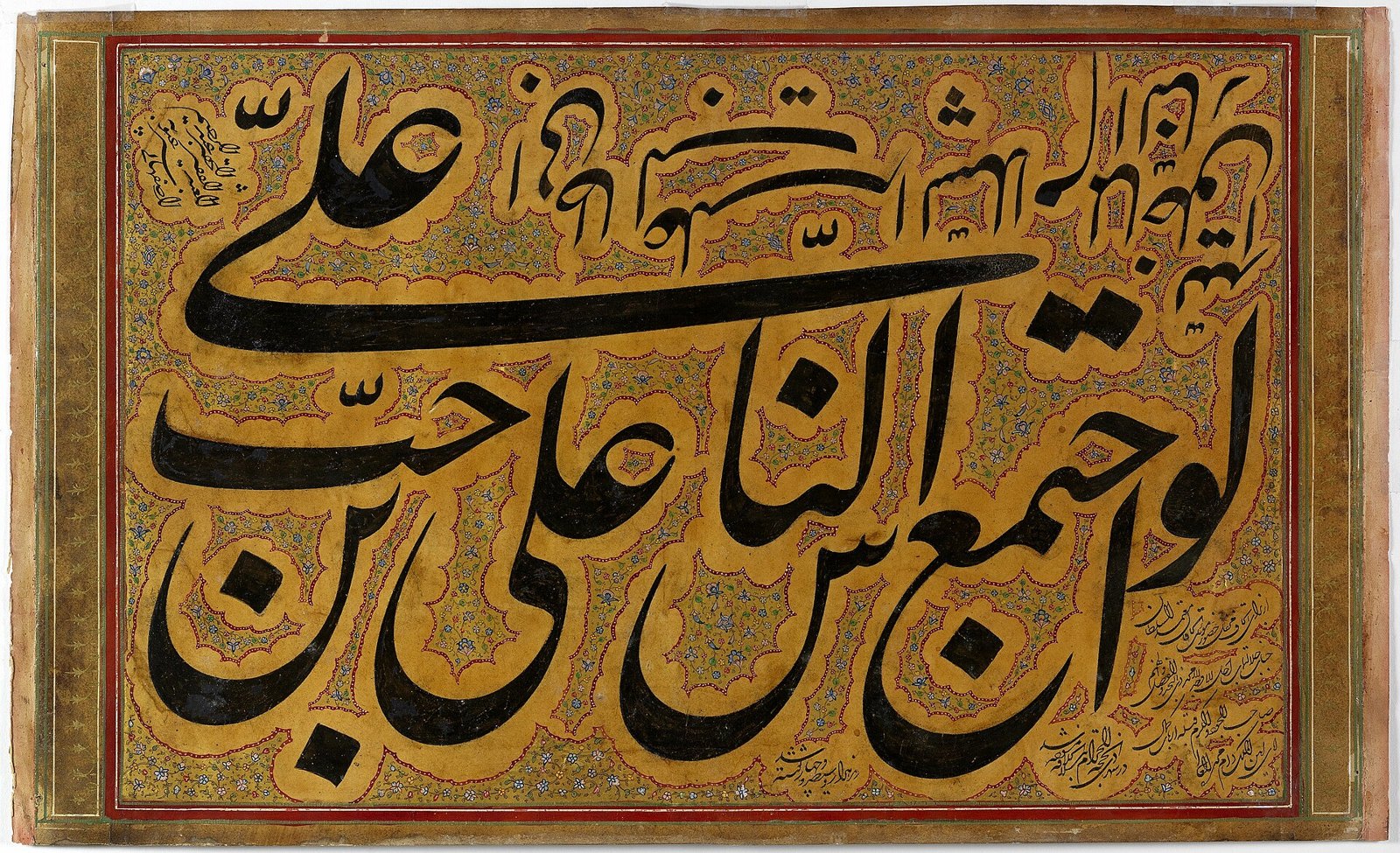
A hanging cursive script developed in Iran for Persian poetry, distinguished by its sloping baseline, sharply contrasted thick and thin strokes, and sweeping final letters.
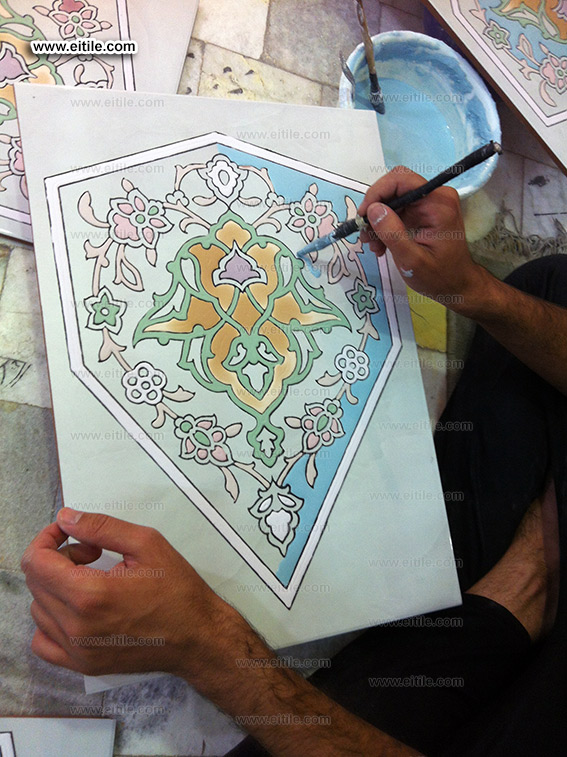
Square polychrome tiles painted with several overglaze colours and fired together, allowing large architectural schemes to be produced faster than cut tile mosaic.
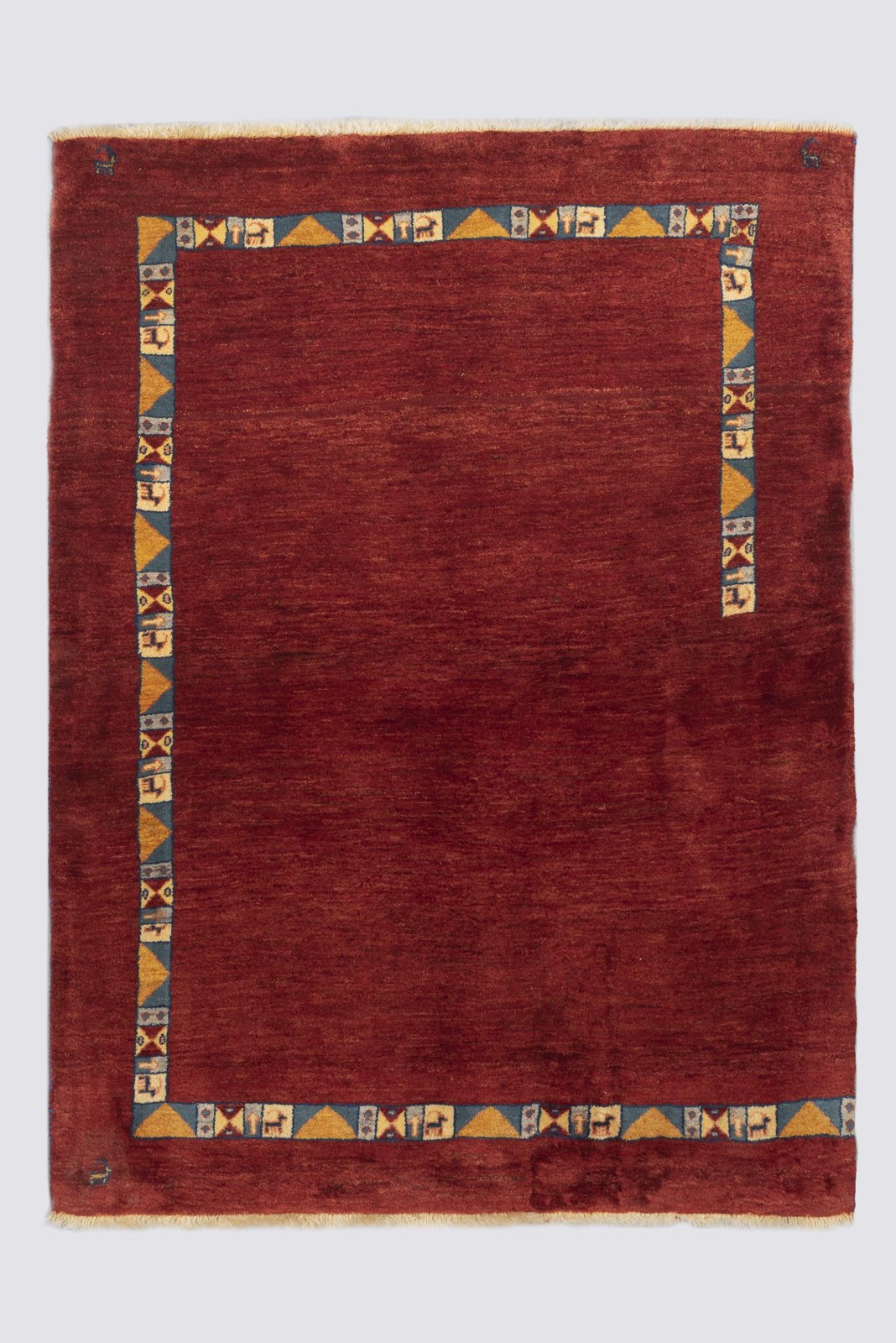
A thick, coarsely knotted pile rug woven mainly by pastoral and village weavers of the Zagros, with open fields, few motifs and a directly personal design language.
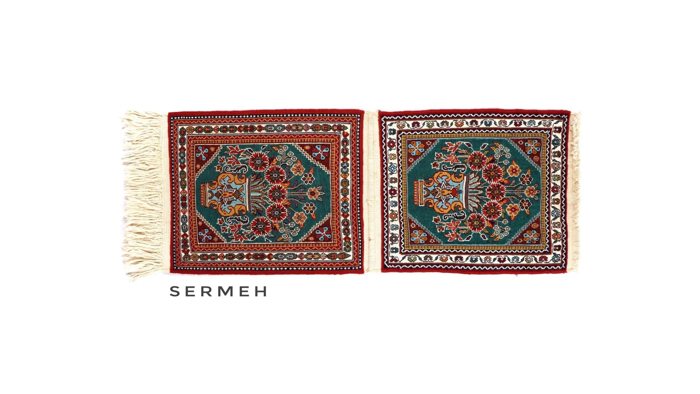
A flat, pileless woven textile made across Iran by interlocking or slit-weaving coloured weft threads over a warp, used as floor covering, storage bag, saddle cover and tent divider depending on region.
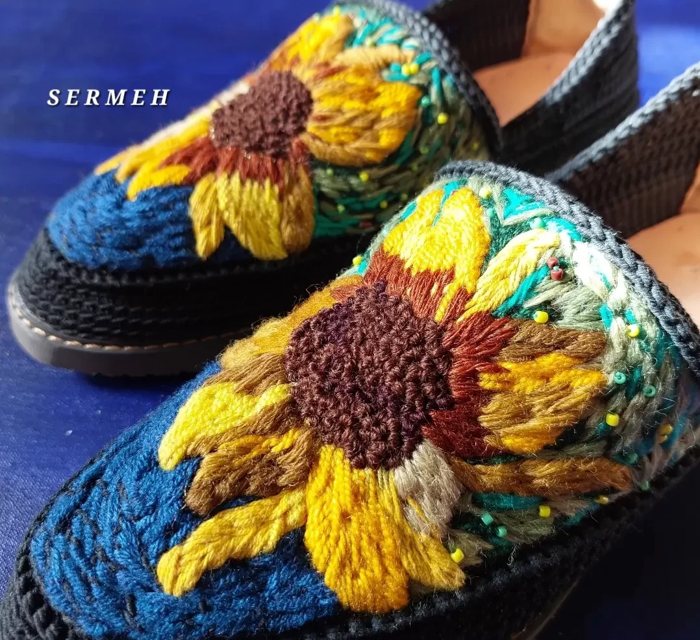
A traditional handmade summer shoe with a cotton-thread woven or crocheted upper and a sole historically made of pressed cotton fabric or leather, produced in a number of Iranian towns known for the craft.
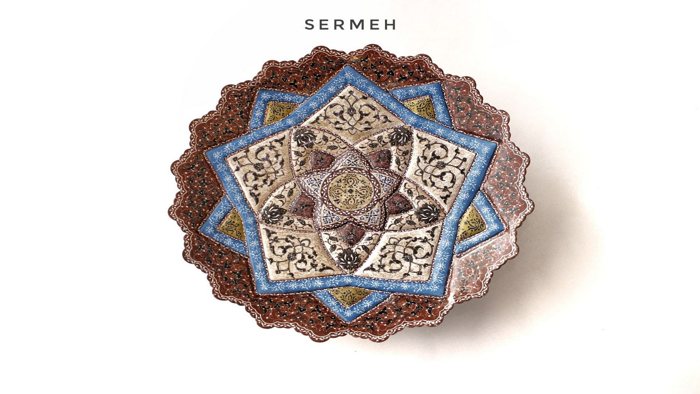
A decorative technique in which powdered coloured glass is fused by heat onto the surface of gold, silver or copper objects, producing a smooth, glossy coloured surface, historically practised in Isfahan on vessels, jewellery and decorative panels.
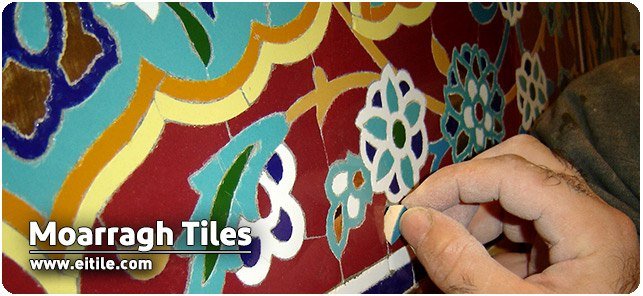
A technique of architectural revetment in which monochrome glazed tiles are cut into small individual pieces to a template and set together, glaze face down, into a mortar bed to form complex polychrome patterns and inscriptions.

A regional pottery tradition centred on the town of Lalejin near Hamadan, producing thrown and press-moulded glazed and unglazed earthenware, from utilitarian storage vessels to decorative tableware, in a large number of household workshops.
Buy from named makers
Ask who made an object and where. A named workshop is easier to support again and to verify later.
Pay for time, not just material
Hand production is slow. Very low prices for 'handmade' work usually mean imitation or unpaid labour.
Share documentation
Photographs, workshop notes and interviews help keep technical knowledge on record. Send corrections and sources to the editors.