
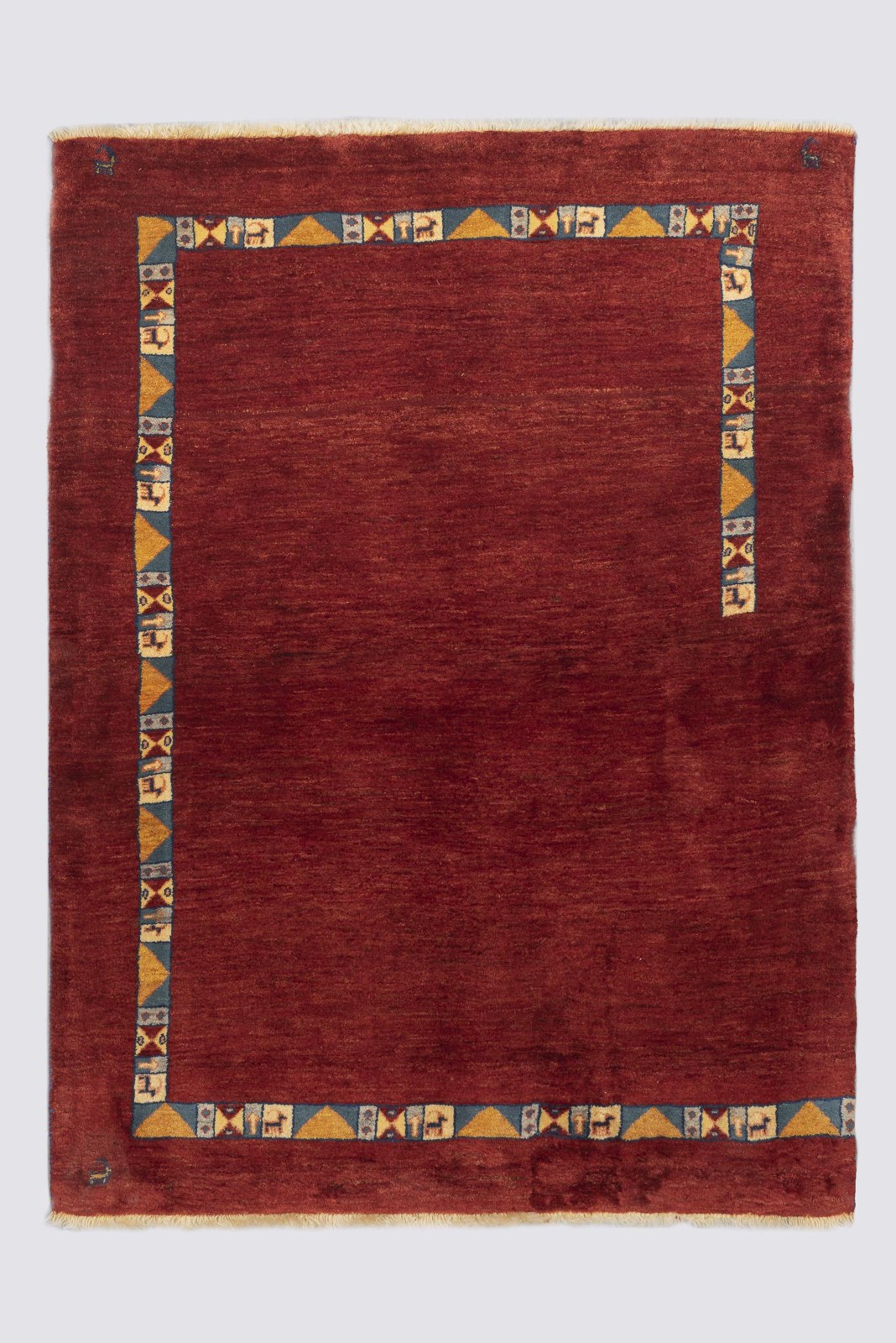
Representative image from an independent shop or archive, not a photograph of the listed object. The seller, price, date, materials, provenance and documentation described on this page have not been verified against the pictured item. Colour varies between screens.
Qashqai Gabbeh Rug
An open-field pastoral gabbeh with pronounced abrash across the ground and a scattered animal row. Woven without a cartoon; borders are deliberately irregular.
- Craft
- Gabbeh
- Region
- Shiraz
- Technique
- Knotted pile weaving
- Materials
- Hand-spun wool, natural dyes, wool foundation
- Dimensions
- 150 × 210 cm
- Weight
- 11 kg
- Date
- c. 2019
Condition
Very good; light even pile wear
Provenance
Acquired from the weaving household by the cooperative.
Documentation
Cooperative purchase record. No independent dye analysis.
This is illustrative sample documentation, not evidence for the pictured object. No seller or object claim has been independently verified. The archive does not certify authenticity.
Care
Follow the preservation guidance in the Gabbeh entry: light, humidity and physical support matter more than cleaning.
About Gabbeh
Definition
Gabbeh has a long pile, low knot count and heavy handle. Designs are composed at the loom rather than from a cartoon, so figures — animals, trees, human forms, bands of colour — are placed by judgement and are rarely symmetrical.
History
Gabbeh was long made for domestic use in pastoral households and attracted little commercial attention until the later twentieth century, when it was marketed internationally. That demand supported weavers but also introduced designed, workshop-made versions.
Identification
Genuinely pastoral gabbeh shows pronounced abrash, irregular borders and a wool foundation. Commercial versions woven to a design are more regular and often use a cotton foundation; both are legitimate products, but they are not the same thing and should not be sold as such.
General background on the craft, not a statement about any individual object; dates and attributions summarise common positions in the literature and remain under review. Read the full Gabbeh entry.
Checklist before buying Gabbeh
Inspect
- Turn the rug over: hand-knotted gabbeh shows each knot on the back, with a slightly irregular grid.
- Gabbeh pile is long and the designs are sparse; look for hand-spun wool with natural variation in colour (abrash).
- Check the ends and sides: the fringe should be the warp itself and the sides overcast by hand.
- Ask whether the colours have been tested for bleeding; never wet-test an old or valuable piece yourself.
Red flags
- Tufted or machine-made 'gabbeh style' rugs with a glued cloth or latex backing.
- Listings that give no place of weaving, or name a country outside Iran.
Ask the seller
- Where and by whom was this made, and roughly when?
- What are the fibre and dye (wool, silk, cotton; natural or synthetic)?
- Can you show a close-up photo of the back and the edges?