
Origin
Prepared from glass frits and metal oxides.
Properties
- Glassy
- Brittle when struck
- Colour fixed by firing
Preparation
Grind, apply wet, then fire in stages.
Care & preservation
Protect from knocks; chipped enamel cannot be simply touched up.
General guidance only. For valuable or fragile pieces, consult a qualified conservator before cleaning or treatment.
Glass fused to metal
Vitreous enamel is powdered coloured glass fused onto metal by firing. Isfahan minakari typically uses a white enamel ground on copper (or silver and gold) and paints colours on it before several firings. The colours derive from metal oxides.
Enamel or paint?
True enamel has a glassy, hard surface that resists scratching; cold enamel or epoxy paint imitations are softer and may lift at edges. Inspect the reverse and rim, where copper and counter-enamel are visible.
Care
Enamel chips on impact and can crack if the metal bends. Do not use it for acidic food or put it in a dishwasher.
Practical questions
- What colours enamel? Metal oxides in the glass.
- How to spot paint imitation? Softer surface lifting at edges.
| Observation | Useful description | Not established |
|---|---|---|
| Hard glassy surface | Fired enamel | Isfahan maker |
| Soft lifting edge | Possible cold enamel | — |
| Counter-enamel on back | Fired construction | Age |
References and further reading
- [1] H. E. Wulff, The Traditional Crafts of Persia, MIT Press, 1966.Historical process context; not evidence for an individual object.
- [2] Encyclopaedia Iranica ↗Peer-reviewed entries on crafts and materials.
These sources provide context, not authentication or provenance for an individual object. Editorial interpretations remain under review.
Documented material and craft examples
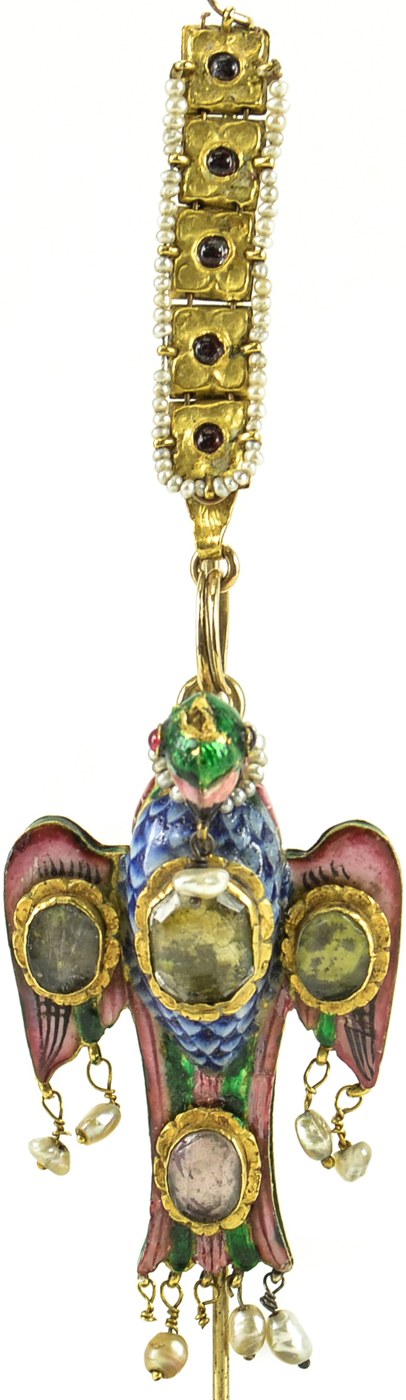
Representative photographs only. Marketplace examples rely on seller descriptions; CraftPersia has not independently authenticated their maker, origin, or rights status. Follow each source link for the listing context.
Used in these crafts
A decorative technique in which powdered coloured glass is fused by heat onto the surface of gold, silver or copper objects, producing a smooth, glossy coloured surface, historically practised in Isfahan on vessels, jewellery and decorative panels.