EndangeredKhatamkariخاتمکاری
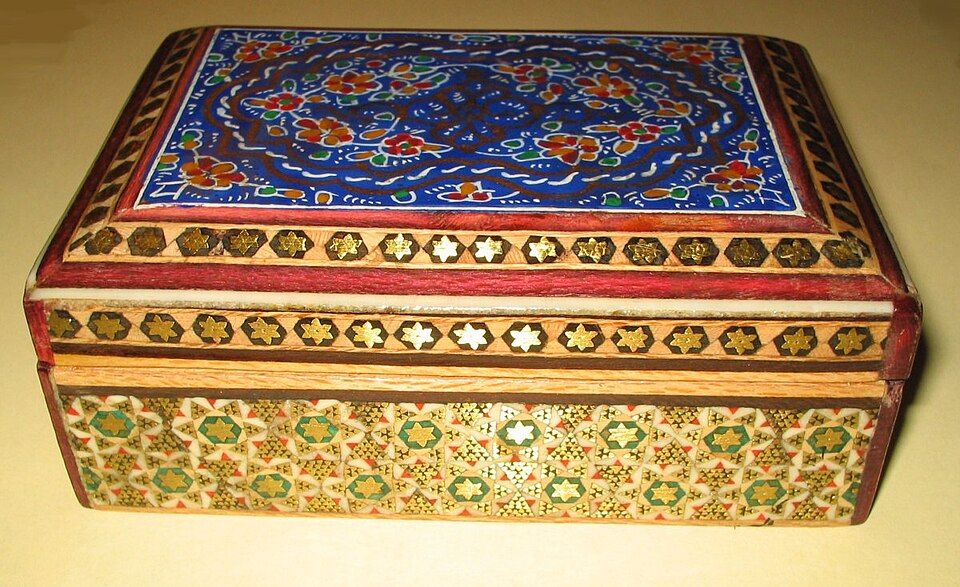
A Persian inlay art in which fine rods of wood, bone and metal are bundled into star units, sliced into thin sheets and applied to a wooden surface to form dense geometric tessellation.
Read entry → At riskTermehترمه
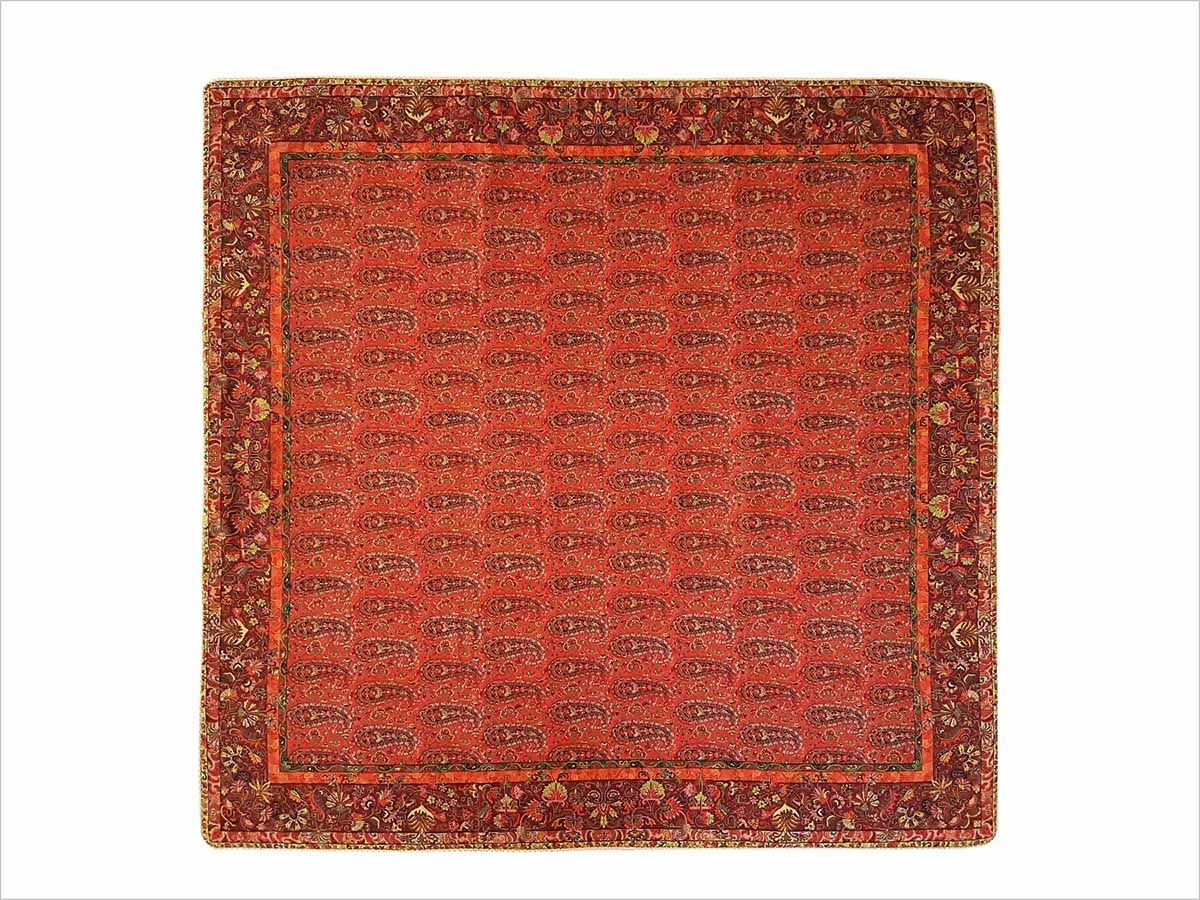
A patterned Iranian brocade woven with supplementary wefts, historically in silk and wool, associated above all with Yazd and Kerman.
Read entry → At riskQalam-zaniقلمزنی
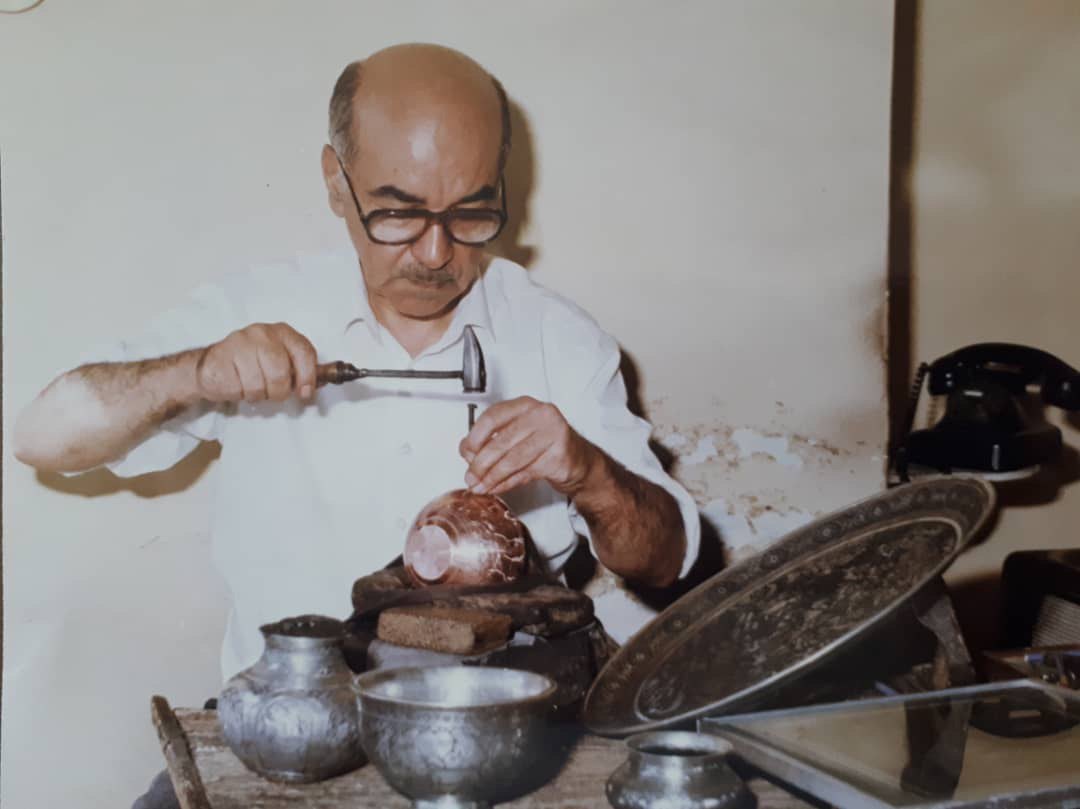
The Iranian tradition of decorating copper, brass and silver vessels with small chisels struck by hammer, working the metal into line, ground and relief.
Read entry → At riskJajimجاجیم
A narrow-strip flatwoven textile, usually made in warp-faced bands on a portable loom and then sewn together into a wider cloth, traditionally used as bedding cover, floor spread or door hanging by village and pastoral households.
Read entry → At riskQalamkar block printingقلمکار
A resist-dyed and block-printed cotton textile, historically associated with Isfahan, in which carved wooden blocks stamp repeating floral and figural patterns onto cloth in successive colour stages.
Read entry → At riskPateh embroidery (Kerman)پته
A hand-embroidered wool textile from Kerman in which coloured silk or wool threads are worked in dense chain and satin stitching over a woollen ground, typically in a limited palette against a natural or dyed field.
Read entry → At riskSermeh-duziسرمهدوزی
A metal-thread embroidery technique in which fine gold or silver wire, or wire-wrapped thread, is couched onto velvet or other heavy cloth to create raised, reflective patterns, historically used on ceremonial garments and furnishings.
Read entry → At riskNamad feltنمد
A non-woven wool textile made by matting and pressing raw wool fibres with moisture, heat and friction rather than by weaving, traditionally produced across Iran for floor coverings, cloaks and protective mats.
Read entry → EndangeredZilu (Meybod)زیلو
A pileless, reversible cotton floor covering associated especially with Meybod near Yazd, woven on a vertical loom with ground heddles and pattern harnesses that control its geometric, often two-colour design.
Read entry → At riskFiligree (Malileh)ملیلهکاری
A metalworking technique in which fine drawn wires of silver or gold, often twisted or beaded, are soldered into openwork lattices and coiled floral forms to build jewellery, vessels and decorative panels.
Read entry → At riskMina'i wareسفال مینایی
A historic overglaze-enamelled stonepaste ware produced mainly in Iran during the twelfth and early thirteenth centuries, decorated with figural and courtly scenes painted in multiple colours applied after glazing and fixed by a low second firing.
Read entry → At riskGereh-chini latticeگرهچینی
A joinery technique for building geometric lattice screens and panels from small, precisely cut wooden pieces assembled without glue or nails, using interlocking notched joints to form windows, doors and room dividers with openwork star and polygon patterns.
Read entry → At riskWood carving (Monabbat)منبتکاری
A relief wood-carving technique in which solid panels, furniture and architectural elements are carved directly with chisels to produce raised or recessed floral, arabesque and geometric ornament, distinct from inlay techniques that build a surface from separate pieces.
Read entry → At riskPersian lacquer paintingلاکیکاری
A decorative technique in which papier-mâché or wooden objects, such as boxes, mirror cases and pen boxes, are painted with fine miniature-style scenes or floral ornament and then sealed under multiple coats of clear lacquer varnish.
Read entry → At riskTurquoise inlay (Firuzeh-kubi)فیروزهکوبی
A decorative technique, associated particularly with Mashhad, in which small chips of turquoise are set edge to edge with adhesive onto a metal object's surface to create a dense mosaic-like covering, most often seen on vessels, jewellery and decorative plates.
Read entry → EndangeredVelvet weaving (Makhmal-bafi)مخملبافی
A silk weaving technique producing a cut or voided pile on a foundation weave, used in Iran for garments, cushion covers and furnishing panels, with figured Safavid velvets among the most studied survivals.
Read entry → EndangeredBrocade weaving (Zari-bafi)زریبافی
A figured silk weaving technique in which supplementary wefts, often including gold- or silver-wrapped thread, create pictorial or floral designs on a silk ground.
Read entry → At riskRasht embroidery (Rasht-duzi)رشتیدوزی
A northern Iranian needlework tradition associated with Rasht in Gilan, combining wool felt or broadcloth appliqué with chain-stitch embroidery for covers, hangings and saddle cloths.
Read entry → At riskNeedlework embroidery (Suzan-duzi)سوزندوزی
A broad term for Iranian needle embroidery on cotton, silk or wool grounds, including counted, darned and satin-stitch work used on covers, garments and prayer cloths.
Read entry → At riskInlaid metalworkفلزکاری ترصیعشده
Decoration of brass, bronze or steel vessels by setting silver, copper or gold into cut recesses, producing figurative scenes, inscriptions and ornament in contrasting colour.
Read entry → EndangeredSteel openwork (Fulad-kari)فولادکاری
The chiselling and piercing of steel into plaques, standards (alam), locks and fittings, often with inscriptions or arabesque openwork.
Read entry → At riskGlassmakingشیشهگری
Iranian glass includes Sasanian cut glass, early Islamic mould-blown and cut vessels, and later blown bottles and rosewater sprinklers, with a small studio glassblowing tradition today.
Read entry → EndangeredLustreware (Zarrin-fam)زرینفام
A ceramic decoration in which metallic oxides are painted onto a glazed surface and fired in a reducing kiln to produce a metallic sheen, associated especially with Kashan.
Read entry → EndangeredBone and ivory carvingاستخوانتراشی
The carving of bone and, historically, ivory into figurines, plaques, combs and inlay elements, also used as a component in khatam.
Read entry → At riskMat and basket weaving (Hasir-bafi)حصیربافی
The weaving of mats, baskets, fans and containers from date-palm leaves, reeds and rushes, practised especially in southern and northern Iran.
Read entry → EndangeredTraditional bookbinding (Sahhafi)صحافی سنتی
The hand binding of manuscripts and books with leather or lacquer covers, often with a flap (lisan) and stamped, cut or gilded decoration.
Read entry → EndangeredPuppetry (Kheimeh-shab-bazi)خیمهشببازی
Traditional Iranian string-puppet theatre, and the craft of making its carved and costumed puppets, including the well-known character Mobarak.
Read entry → 
 Read the full entry →