
Origin
Iranian and other sources; visual inspection alone cannot establish a mine of origin.
Properties
- Porous
- Sensitive to chemicals
- Variable colour
Preparation
Select small fragments and fit them closely into a prepared metal surface.
Care & preservation
Avoid cleaners, immersion and impact.
General guidance only. For valuable or fragile pieces, consult a qualified conservator before cleaning or treatment.
Mineral, colour and treatment
Turquoise is a hydrated copper-aluminium phosphate. Its blue-to-green appearance can vary with composition, inclusions and treatment. A dark matrix is not a geographic fingerprint: visually similar stones come from more than one deposit. Neyshabur is historically associated with Iranian turquoise, but a mine attribution for an individual piece requires documentation.
Natural stone versus treated material
Stabilisation, dyeing, surface coatings and reconstituted fragments are different interventions and should be disclosed separately. They can affect durability, appearance and value. Ask whether the identification concerns the stone itself or only its colour. A seller’s phrase “Persian turquoise” may describe a sales category rather than a tested mine origin.
Buying and documenting inlaid objects
For firuzeh-kubi, inspect the boundaries between fragments, setting compound and metal support. Loose pieces, gaps and repaired patches matter more to handling than colour intensity. Request an invoice naming the maker where known, mineral description, any treatment declaration and photographs of the actual object. Seek a qualified gemologist if a purchase depends on material identity.
Care without damaging the setting
Keep turquoise away from perfume, oils, household cleaners and prolonged immersion. Cleaners intended for metal can damage stone or setting materials. Support an inlaid vessel by its base rather than decorative sections; isolate loose fragments without gluing them at home. Store with a padded support and avoid sudden impacts.
References and further reading
- [1] H. E. Wulff, The Traditional Crafts of Persia, MIT Press, 1966.Historical process reference; not authentication of an individual object.
- [2] Canadian Conservation Institute, preventive conservation and CCI Notes. ↗Consult material-specific guidance; treatment requires assessment.
These sources provide context, not authentication or provenance for an individual object. Editorial interpretations remain under review.
Documented material and craft examples
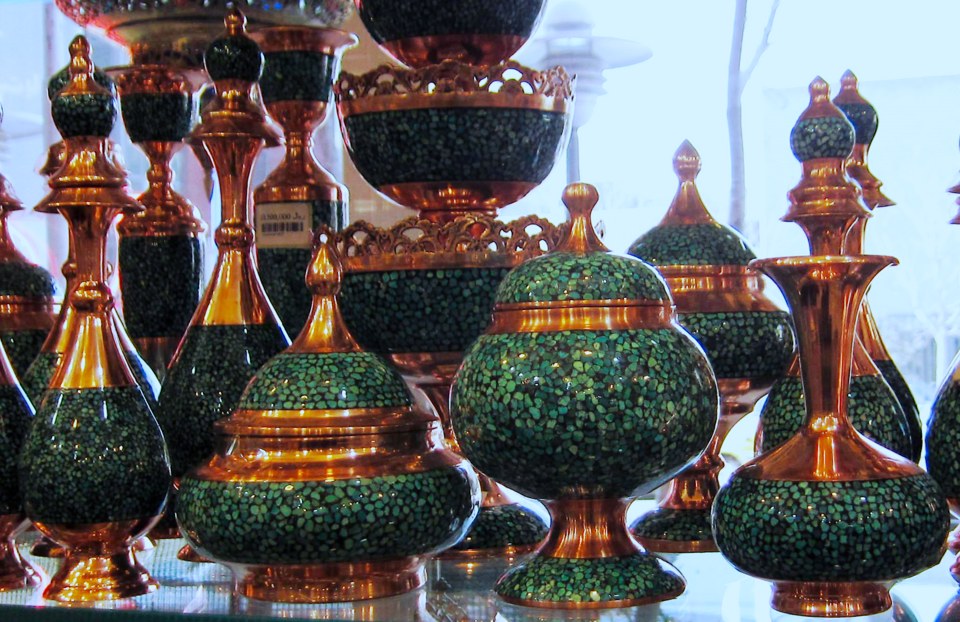
Representative photographs only. Marketplace examples rely on seller descriptions; CraftPersia has not independently authenticated their maker, origin, or rights status. Follow each source link for the listing context.
Used in these crafts
A decorative technique, associated particularly with Mashhad, in which small chips of turquoise are set edge to edge with adhesive onto a metal object's surface to create a dense mosaic-like covering, most often seen on vessels, jewellery and decorative plates.
Iranian jewellery ranges from gold and gem-set court ornaments to silver tribal adornment, often combining enamel, turquoise, pearls and coloured stones.