
Origin
Handmade or machine-made paper; individual fibres need identification.
Properties
- Absorbent
- Light-sensitive
- Humidity-sensitive
Preparation
Size and burnish as needed before colour application.
Care & preservation
Store flat in archival enclosures; limit light and avoid moisture.
General guidance only. For valuable or fragile pieces, consult a qualified conservator before cleaning or treatment.
Support, sizing and surface
Paper fibres, sizing and surface preparation influence how ink and paint sit on a sheet. Burnishing can smooth a sized surface; it does not identify a date or workshop. Handmade sheets may show laid or chain lines, but paper structure alone cannot authenticate a manuscript. Record dimensions, both faces and any watermark before drawing conclusions.
Marbling, calligraphy and painting
Abr-o-bad transfers floating colour from a liquid bath onto a sheet. Calligraphy uses prepared paper for controlled pen strokes, while painting may add opaque colour, gold and separate borders. A single album page can combine materials from several campaigns of work. Distinguish original support from later mounting and repair papers.
Mounting and condition evidence
Ask whether a sheet has been trimmed, detached from a book, backed or adhered to board. Stains, tide lines, insect channels and tears should be mapped rather than erased with household treatments. A mount can conceal inscriptions or earlier repairs on the reverse. Removal should be discussed with a paper conservator, not attempted to check a sales claim.
Storage and display
Use conservation-quality enclosures and support the whole sheet during handling. Keep light exposure low, avoid direct sunlight, and separate vulnerable pigments from rubbing surfaces. Do not flatten a cockled sheet with water or heat. Fragile media, mould and stuck pages require individual professional assessment.
References and further reading
- [1] H. E. Wulff, The Traditional Crafts of Persia, MIT Press, 1966.Historical process reference; not authentication of an individual object.
- [2] Canadian Conservation Institute, preventive conservation and CCI Notes. ↗Consult material-specific guidance; treatment requires assessment.
These sources provide context, not authentication or provenance for an individual object. Editorial interpretations remain under review.
Documented material and craft examples
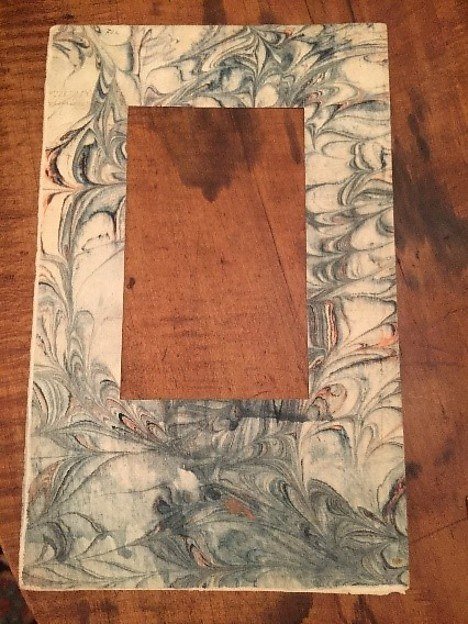
Representative photographs only. Marketplace examples rely on seller descriptions; CraftPersia has not independently authenticated their maker, origin, or rights status. Follow each source link for the listing context.
Used in these crafts
A decorative paper technique in which pigments are floated and manipulated on a thickened liquid bath and then transferred to a sheet of paper by careful contact, producing swirling, veined patterns historically used for manuscript covers, borders and endpapers.
A decorative technique in which papier-mâché or wooden objects, such as boxes, mirror cases and pen boxes, are painted with fine miniature-style scenes or floral ornament and then sealed under multiple coats of clear lacquer varnish.
The decoration of manuscript pages and album leaves with gold and coloured pigments in geometric and floral designs framing text or painting.
The hand binding of manuscripts and books with leather or lacquer covers, often with a flap (lisan) and stamped, cut or gilded decoration.
The Iranian tradition of small-scale painting made for manuscripts and albums, built from fine line, flat luminous colour and layered spatial convention rather than single-point perspective.
A hanging cursive script developed in Iran for Persian poetry, distinguished by its sloping baseline, sharply contrasted thick and thin strokes, and sweeping final letters.