
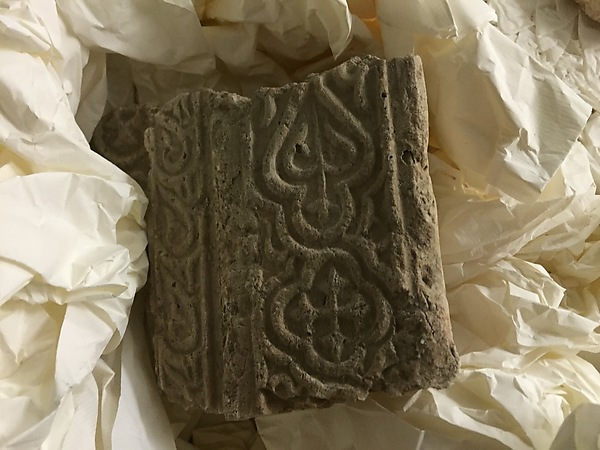
Stucco · probably 8th–12th century · Plaster · Iran
The Metropolitan Museum of Art, 40.170.661a–e · CC0 · Museum record
One catalogued Iranian example whose museum medium line names this material; not a defining specimen.
Origin
Burnt gypsum, widely available across Iran.
Properties
- Sets quickly
- Carvable
- Weakened by damp
Preparation
Mix, apply to the wall and carve before it fully hardens.
Care & preservation
Keep dry; water damage causes loss.
General guidance only. For valuable or fragile pieces, consult a qualified conservator before cleaning or treatment.
Gach in architecture
Gypsum plaster (gach) sets quickly and carves easily when fresh, making it the medium of Iranian stucco (gach-bori) from Sasanian palaces to Ilkhanid mihrabs and Qajar houses. Muqarnas, latticed windows and mirrorwork (āyeneh-kāri) are often built on plaster.
Working the material
Craftsmen work in layers, carving before full set or cutting set plaster with sharp tools, and use moulds for repeats. Fine detail depends on timing as much as on skill. Restoration often replaces lost areas with new plaster, so monuments mix periods.
Moisture
Gypsum dissolves slowly in water and is damaged by rising damp and salts. Keep loose stucco fragments dry and supported.
Practical questions
- Why plaster for ornament? It sets fast and carves easily.
- Is monument stucco all original? Often not.
| Observation | Useful description | Not established |
|---|---|---|
| Crisp carved relief | Skilled carving | Original period |
| Identical repeats | Moulded work | Modern date |
| Powdery surface | Moisture damage | Age |
References and further reading
- [1] H. E. Wulff, The Traditional Crafts of Persia, MIT Press, 1966.Historical process context; not evidence for an individual object.
- [2] Encyclopaedia Iranica ↗Peer-reviewed entries on crafts and materials.
These sources provide context, not authentication or provenance for an individual object. Editorial interpretations remain under review.
Used in these crafts
The carving and moulding of gypsum plaster into architectural ornament, including mihrabs, inscriptions, muqarnas and wall panels.