
Origin
Precious metal supplied as wire or sheet; composition and fineness vary.
Properties
- Ductile
- Tarnishes
- Can be soldered
Preparation
Draw, twist, form and join wire elements.
Care & preservation
Avoid aggressive polishing of fragile filigree and old patina.
General guidance only. For valuable or fragile pieces, consult a qualified conservator before cleaning or treatment.
Alloy and construction
Silver used in craft objects is usually an alloy rather than chemically pure metal. Fineness, solder and any plating should be recorded separately. A silver-coloured surface can also be a coating over another metal. Weight, colour and a magnet test cannot establish alloy composition or country of manufacture.
Wire filigree and sheet work
Malileh arranges fine wires into joined openwork. A vessel may combine a load-bearing frame with delicate decorative curls; cast ornament can imitate an openwork appearance. Inspect actual wire boundaries and solder joins without bending them. In sheet work, forming, engraving and later repair are separate stages to describe.
Hallmarks and purchase records
Photograph every mark clearly and ask which authority or workshop is said to have applied it. Marks can be worn, copied or added later. Request the basis for a fineness claim and seek professional non-destructive assessment where value depends on metal content. Do not apply acid tests to decorated or historical objects at home.
Tarnish and fragile joins
Tarnish is a surface change, not automatically dirt or a reliable age indicator. Repeated polishing removes material and may weaken wires or erase detail. Handle filigree with support under the whole object, use dry clean storage, and keep it away from sulphur-emitting materials. Ask a metals conservator before treating mixed-metal or mounted work.
References and further reading
- [1] H. E. Wulff, The Traditional Crafts of Persia, MIT Press, 1966.Historical process reference; not authentication of an individual object.
- [2] Canadian Conservation Institute, preventive conservation and CCI Notes. ↗Consult material-specific guidance; treatment requires assessment.
These sources provide context, not authentication or provenance for an individual object. Editorial interpretations remain under review.
Documented material and craft examples
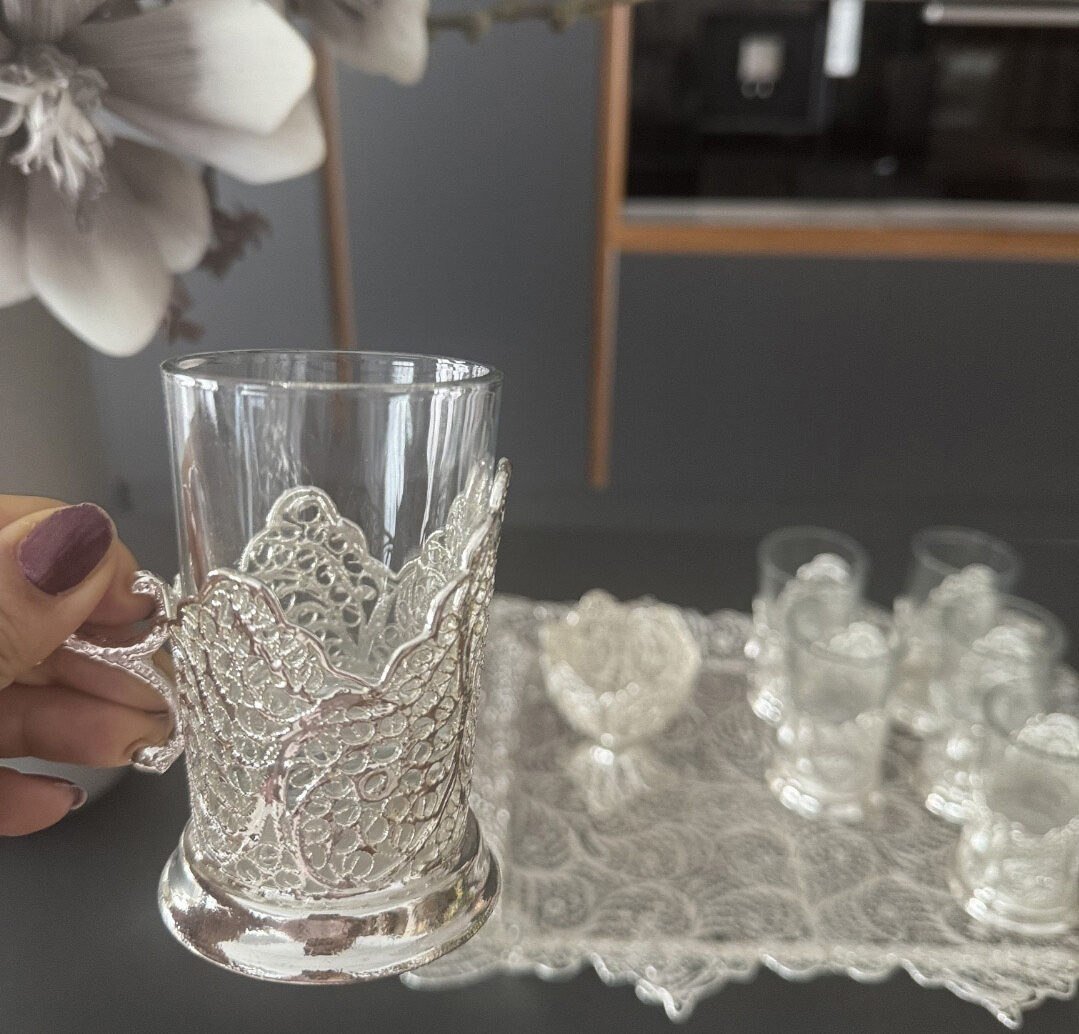
Representative photographs only. Marketplace examples rely on seller descriptions; CraftPersia has not independently authenticated their maker, origin, or rights status. Follow each source link for the listing context.
Used in these crafts
A metalworking technique in which fine drawn wires of silver or gold, often twisted or beaded, are soldered into openwork lattices and coiled floral forms to build jewellery, vessels and decorative panels.
Decoration of brass, bronze or steel vessels by setting silver, copper or gold into cut recesses, producing figurative scenes, inscriptions and ornament in contrasting colour.
Iranian jewellery ranges from gold and gem-set court ornaments to silver tribal adornment, often combining enamel, turquoise, pearls and coloured stones.
The Iranian tradition of decorating copper, brass and silver vessels with small chisels struck by hammer, working the metal into line, ground and relief.
A decorative technique in which powdered coloured glass is fused by heat onto the surface of gold, silver or copper objects, producing a smooth, glossy coloured surface, historically practised in Isfahan on vessels, jewellery and decorative panels.