
Process, step by step
- Lay out wool
- Wet and agitate fibres
- Roll, rinse and dry
Variations
Some work integrates coloured wool inlays or separately felted pieces.
Conservation
Dry thoroughly and inspect for moth damage.
Felt without a loom
Namad is made by matting wool fibres with moisture, heat, soap or alkaline water and pressure rather than by weaving. Masters first lay out coloured wool for the design, cover it with a background layer, roll the bundle in a reed mat or cloth and work it for hours by rolling, pressing with forearms and feet, and rubbing. The fibres' scales interlock and the mass shrinks into a dense sheet.
Design laid in, not added
In traditional namad the pattern becomes part of the felt as the layers fuse, so outlines are slightly soft. Sharp printed or glued designs on a uniform felt sheet indicate a different, industrial product. Thickness, density and shrinkage vary with wool and working time; regional centres include Kerman, Mazandaran, Isfahan and Kurdish and Turkmen communities.
Felt garments and shepherd cloaks
Beyond floor covers, felt is shaped into seamless cloaks (kapenak) and hats for shepherds, valued for warmth and water resistance. Shaped felting uses a resist template so that layers do not join where an opening is needed. These items are now rare in daily use and are documented in ethnographic collections and living-heritage projects.
Care
Felt is especially attractive to moths because it is pure, unspun wool. Vacuum gently through a screen, avoid wet cleaning that can cause further shrinkage or dye run, and store rolled rather than folded, with regular inspection.
Practical questions
- Is felt woven? No; fibres are matted by moisture and pressure.
- Why are outlines soft? The design fuses into the felt.
| Observation | Useful description | Not established |
|---|---|---|
| Soft-edged inlaid design | Traditional laid-in felting | A particular town |
| Sharp printed pattern | Surface application | Handmade felt |
| Seamless cloak | Shaped felting | Date of making |
References and further reading
- [1] H. E. Wulff, The Traditional Crafts of Persia, MIT Press, 1966.Historical process context; not evidence for an individual object.
- [2] Canadian Conservation Institute — Caring for cultural objects ↗General preventive care; treatment requires assessment of the actual object.
These sources provide context, not authentication or provenance for an individual object. Editorial interpretations remain under review.
Documented material and craft examples
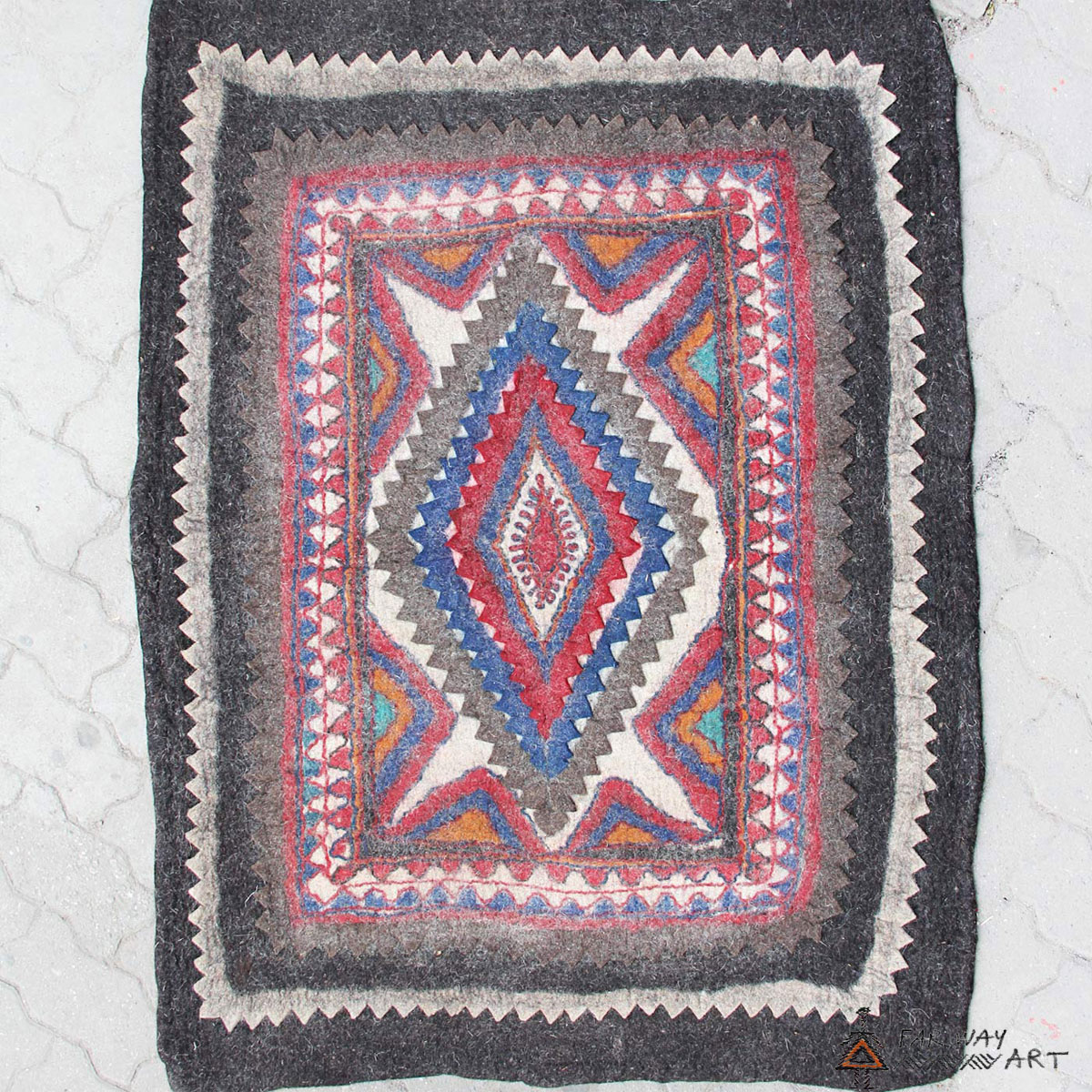
Representative photographs only. Marketplace examples rely on seller descriptions; CraftPersia has not independently authenticated their maker, origin, or rights status. Follow each source link for the listing context.
Used in these crafts
A non-woven wool textile made by matting and pressing raw wool fibres with moisture, heat and friction rather than by weaving, traditionally produced across Iran for floor coverings, cloaks and protective mats.