
Process, step by step
- Draw thin metal wire
- Bend and arrange motifs
- Join and clean the structure
Variations
Openwork and applied wirework have different structural supports.
Conservation
Fragile joins and tarnish require specialist care.
Malileh: drawn and twisted wire
Filigree (malileh) uses fine silver wire drawn through progressively smaller holes, often twisted in pairs and flattened, then bent into scrolls and cells that fill a heavier frame. Elements are joined with solder and the piece is cleaned and polished. Zanjan is the best-known Iranian centre; Isfahan and Tabriz also have workshops.
Open and backed filigree
Openwork filigree lets light through the cells; backed filigree is soldered onto a sheet. Some pieces combine filigree with granulation or enamel. Cast imitations reproduce the look in a single moulded piece: under magnification they lack the twisted wire texture and individual solder joins. The archive accepts only handmade work from Iranian makers, so a technique description should be paired with maker information.
Silver standard and hallmarks
Filigree is usually made from high-purity silver because it is easier to draw and solder. Iranian pieces may carry a purity mark, but many workshop items are unmarked. A stamp is the maker's or assayer's claim; testing by a jeweller can confirm alloy without damage when done with appropriate instruments.
Cleaning delicate wirework
Fine wire bends easily and solder joints can fail. Avoid abrasive polishes and dips that pool in cells; clean with a soft brush and a silver cloth on frame areas only. Store in anti-tarnish paper or bags, separately from heavier objects.
Practical questions
- How can cast imitation be spotted? Look for missing twist texture and separate joins.
- Is all Zanjan filigree marked? No; many pieces are unmarked.
| Observation | Useful description | Not established |
|---|---|---|
| Twisted wire texture | Wire construction | Zanjan maker |
| Uniform moulded surface | Possible casting | Country of origin |
| Purity stamp | Marked claim | Tested alloy |
References and further reading
- [1] H. E. Wulff, The Traditional Crafts of Persia, MIT Press, 1966.Historical process context; not evidence for an individual object.
- [2] Canadian Conservation Institute — Caring for cultural objects ↗General preventive care; treatment requires assessment of the actual object.
These sources provide context, not authentication or provenance for an individual object. Editorial interpretations remain under review.
Documented material and craft examples
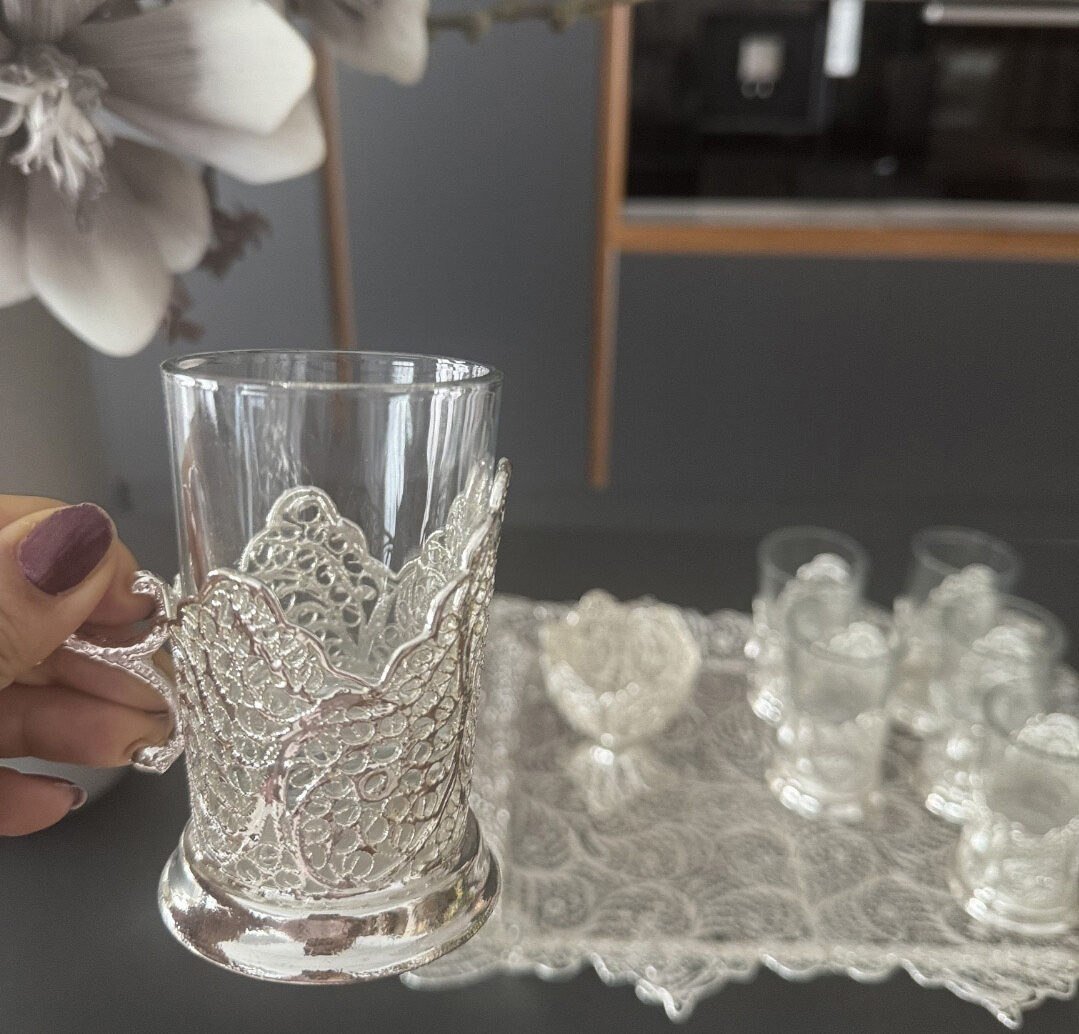
Representative photographs only. Marketplace examples rely on seller descriptions; CraftPersia has not independently authenticated their maker, origin, or rights status. Follow each source link for the listing context.
Used in these crafts
A metalworking technique in which fine drawn wires of silver or gold, often twisted or beaded, are soldered into openwork lattices and coiled floral forms to build jewellery, vessels and decorative panels.
Iranian jewellery ranges from gold and gem-set court ornaments to silver tribal adornment, often combining enamel, turquoise, pearls and coloured stones.