
Process, step by step
- Draw the motif
- Lay metal thread along the design
- Catch it in place with small stitches
Variations
Solid and wrapped metal threads behave differently.
Conservation
Tarnished threads should not be polished on cloth.
Laid and tied thread
In couching, metal thread too stiff to pass through cloth is laid on the surface and tied down with fine stitches. Sermeh-duzi of Isfahan and Shiraz uses gold- or silver-coloured thread over padding on velvet or satin.
Not brocade
Couched thread sits on the cloth surface; in brocade metal thread is woven in. Turning the textile over shows the difference.
Tarnish
Most modern thread is metallised plastic or plated copper. Do not polish; store flat in acid-free tissue.
Ceremonial Radiance and Courtly Workshops
Metal-thread couching, broadly celebrated under terms such as sermeh-duzi and deh-yek-duzi, has long been associated with courtly ceremonies, religious furnishings, and elite apparel in Iran. Historically flourishing in imperial capitals including Isfahan, Shiraz, Tabriz, and Kashan, this craft catered to the Safavid, Zand, and Qajar aristocracy. Because threads wound with drawn gold or silver wire were too stiff to pass repeatedly through heavy velvet or silk satin without snapping, artisans secured them onto the surface using fine silk anchoring stitches. Historically, royal ateliers embellished velvet saddlecloths, Quran cases, prayer mats, and state robes with raised floral compositions, often elevated with interior cotton padding. The visual richness of couched metalwork signified social status and piety alike. Over the twentieth century, as pure precious metal threads grew scarce, workshops adapted by employing silver-plated copper alloys and metallised synthetic yarns, broadening access while preserving centuries-old decorative vocabularies.
Material Verification and Conservation Ethics
When assessing couched metal embroidery, always examine the reverse of the textile. Genuine couched work keeps the metallic thread anchored strictly on the front surface, revealing only delicate tacking stitches of silk or cotton on the underside. In contrast, woven brocades or mechanically embroidered metal motifs carry metallic strands through the foundation fabric. Inspect the metal surface under magnification: antique threads often consist of a fine silk or cotton core wrapped spirally with a flattened metal ribbon (kalabatun), which may show genuine tarnish or micro-abrasions from handling. Modern metallic threads often rely on plastic film coated with aluminium, lacking metallic patina. Never attempt to brighten tarnished metal threads using liquid silver polishes, abrasive cloths, or immersion baths, as chemicals will degrade the textile ground and strip fine gilded coatings. Support heavy padded embroideries on flat, padded archival boards wrapped in acid-free tissue to prevent distortion under their own weight.
Practical questions
- Is sermeh thread real gold? Usually not.
- How differ from brocade? Couched on the surface.
| Observation | Useful description | Not established |
|---|---|---|
| Raised gold motifs | Padded couching | Gold content |
| Thread only on face | Couched work | Isfahan |
| Dark tarnish | Metal ageing | Age |
References and further reading
- [1] H. E. Wulff, The Traditional Crafts of Persia, MIT Press, 1966; A. U. Pope & P. Ackerman, A Survey of Persian Art, 1938–39.Historical context; not evidence for an individual object.
- [2] Encyclopaedia Iranica ↗Peer-reviewed entries on crafts, motifs and terms.
These sources provide context, not authentication or provenance for an individual object. Editorial interpretations remain under review.
Documented material and craft examples
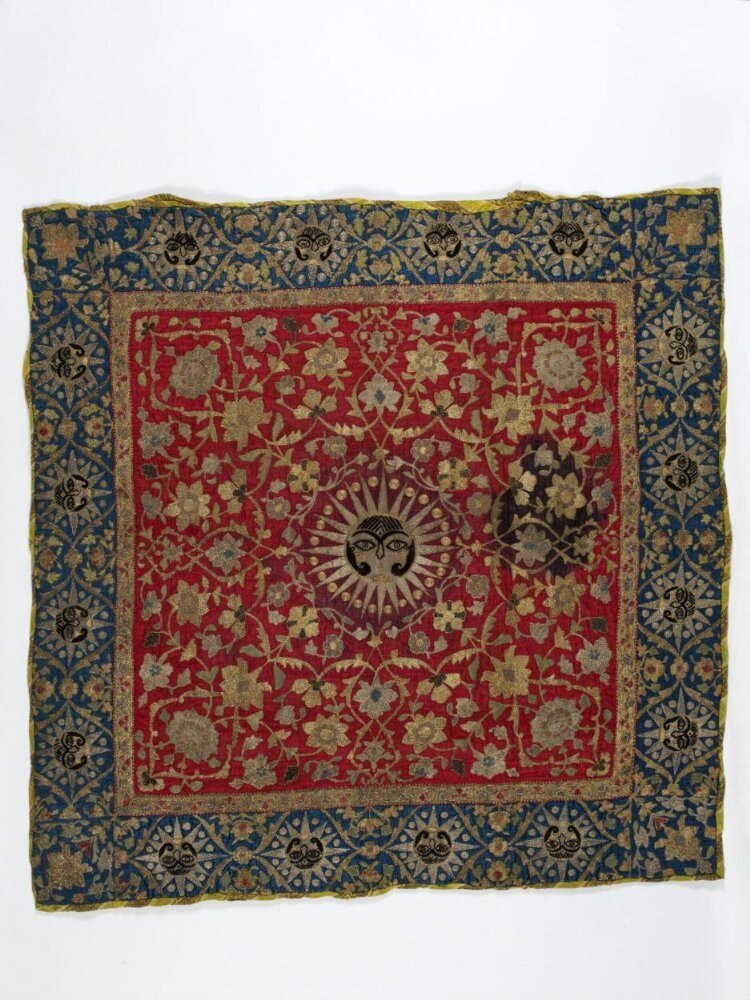
Representative photographs only. Marketplace examples rely on seller descriptions; CraftPersia has not independently authenticated their maker, origin, or rights status. Follow each source link for the listing context.
Used in these crafts
A metal-thread embroidery technique in which fine gold or silver wire, or wire-wrapped thread, is couched onto velvet or other heavy cloth to create raised, reflective patterns, historically used on ceremonial garments and furnishings.