
Process, step by step
- Prepare metal
- Apply ground coat
- Paint or apply enamel
- Fire and cool
Variations
Do not confuse with enamel-paint on pottery.
Conservation
Do not abrade or soak damaged enamel.
Enamel is a fired glassy layer
Metal enamelling applies glass-based material to a prepared support and fuses it by firing. Ground coats, painting and later firings depend on the workshop process; a universal temperature cannot be inferred from the word minakari. Metal type and shape influence how the coating behaves as it cools.
Historical enamel is not one contemporary style
Iranian historical enamelled jewellery and contemporary painted copper vessels are different object categories. A museum ornament can illustrate enamel, but should not be described as a modern Isfahan plate. Ceramic overglaze painting is another fired-colour process, applied to pottery rather than metal.
Inspect loss, cracks and later repainting
Look at exposed edges, chips and the transition between coating and substrate. Cold paint, resin and printed transfers can imitate a glossy decorative surface. Ask for the maker’s process and record repaired areas; neither gloss nor irregular brushwork proves firing. Never heat or scratch an object to test its coating.
Display and handling
Handle by supported metal areas rather than thin rims or chipped enamel. Avoid impacts and sudden temperature changes. Do not soak damaged coatings or polish across their edges; cleaning products can attack exposed metal and repairs. Food-contact suitability needs a declaration for the particular contemporary vessel, not a general craft claim.
References and further reading
- [1] H. E. Wulff, The Traditional Crafts of Persia, MIT Press, 1966.Historical process reference; not authentication of an individual object.
- [2] Canadian Conservation Institute, preventive conservation and CCI Notes. ↗Consult material-specific guidance; treatment requires assessment.
These sources provide context, not authentication or provenance for an individual object. Editorial interpretations remain under review.
Documented material and craft examples
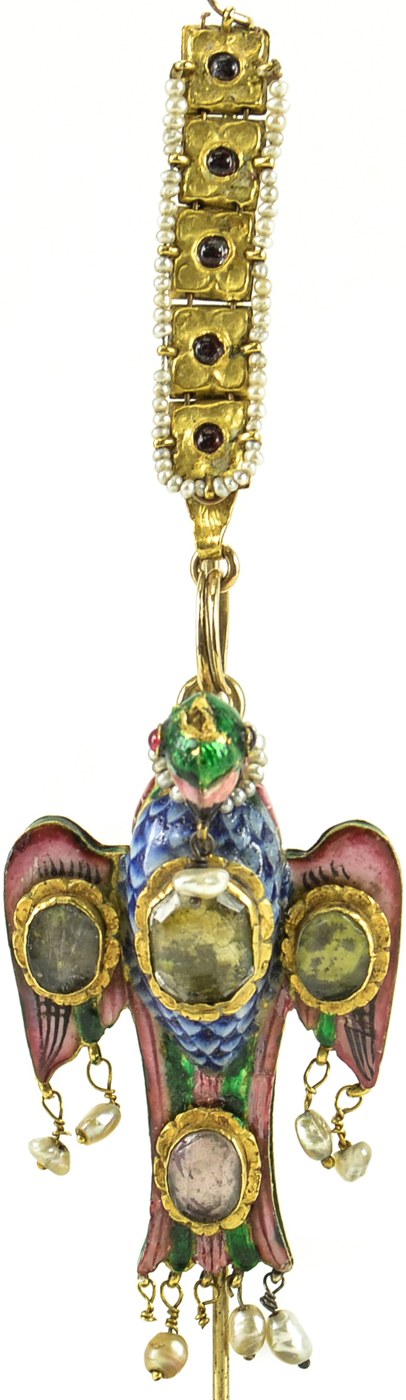
Representative photographs only. Marketplace examples rely on seller descriptions; CraftPersia has not independently authenticated their maker, origin, or rights status. Follow each source link for the listing context.
Used in these crafts
A decorative technique in which powdered coloured glass is fused by heat onto the surface of gold, silver or copper objects, producing a smooth, glossy coloured surface, historically practised in Isfahan on vessels, jewellery and decorative panels.
Iranian jewellery ranges from gold and gem-set court ornaments to silver tribal adornment, often combining enamel, turquoise, pearls and coloured stones.