
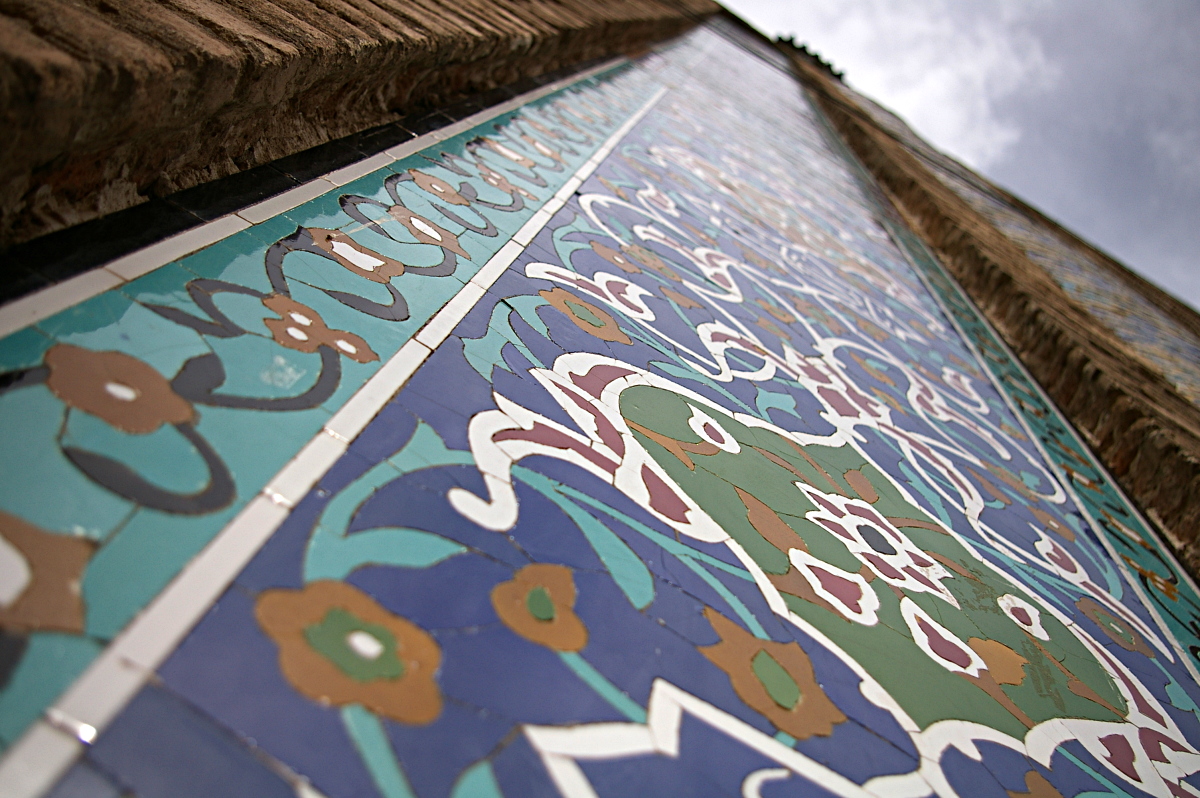
Cut-tile mosaic, Jameh Mosque of Qazvin · date not stated · Cut glazed tile mosaic · Iran
Emesik · CC BY-SA 3.0 · Wikimedia Commons record
One catalogued Iranian example whose museum title or technique line names this process; not a defining specimen.
Process, step by step
- Cut glazed tiles by colour
- Assemble fragments face-down
- Back and install sections
Variations
Mosaic is assembled from separate pieces, unlike painted seven-colour tile.
Conservation
Water behind the wall destabilises mortar.
Moarraq: cutting colour from glazed tiles
In moarraq, tiles are glazed in single colours and fired; craftsmen then cut them into small shaped pieces following a full-scale design and assemble them face-down, filling the back with mortar to form a panel. Because each colour is fired separately at its ideal temperature, moarraq achieves clean, brilliant colours. It flourished from the Timurid period and appears on major monuments in Isfahan, Yazd, Mashhad and elsewhere.
Moarraq versus haft-rang
Haft-rang (seven-colour) tiles are painted with several colours on one square tile and fired once, a faster method that spread widely under the Safavids. In haft-rang, colours sit side by side on one tile surface with fine dark outlines; in moarraq, every colour area is a separate piece of tile with mortar joints. Looking for joint lines is the simplest observation.
Restoration and modern workshops
Monument tilework has been restored repeatedly, so a panel on an old building may combine original and replacement pieces. Contemporary workshops in Isfahan and elsewhere produce moarraq for restoration and for new commissions. A modern panel can be genuine handmade Iranian work without being historic; the two claims should be stated separately.
Care of tile panels
Panels are heavy and their mortar can weaken with moisture and salts. Mount on a rigid support, keep away from damp walls and avoid acidic cleaners that attack mortar and glaze. Loose fragments should be bagged and labelled for a conservator.
Practical questions
- How do I tell moarraq from haft-rang? Look for mortar joints between colours.
- Is modern moarraq authentic? It can be genuine handmade work, but not historic.
| Observation | Useful description | Not established |
|---|---|---|
| Joints between colours | Cut-tile mosaic | Timurid date |
| Colours on one square | Haft-rang painting | Safavid date |
| Panel on an old building | Monument context | All pieces original |
References and further reading
- [1] H. E. Wulff, The Traditional Crafts of Persia, MIT Press, 1966.Historical process context; not evidence for an individual object.
- [2] Canadian Conservation Institute — Caring for cultural objects ↗General preventive care; treatment requires assessment of the actual object.
These sources provide context, not authentication or provenance for an individual object. Editorial interpretations remain under review.
Documented material and craft examples
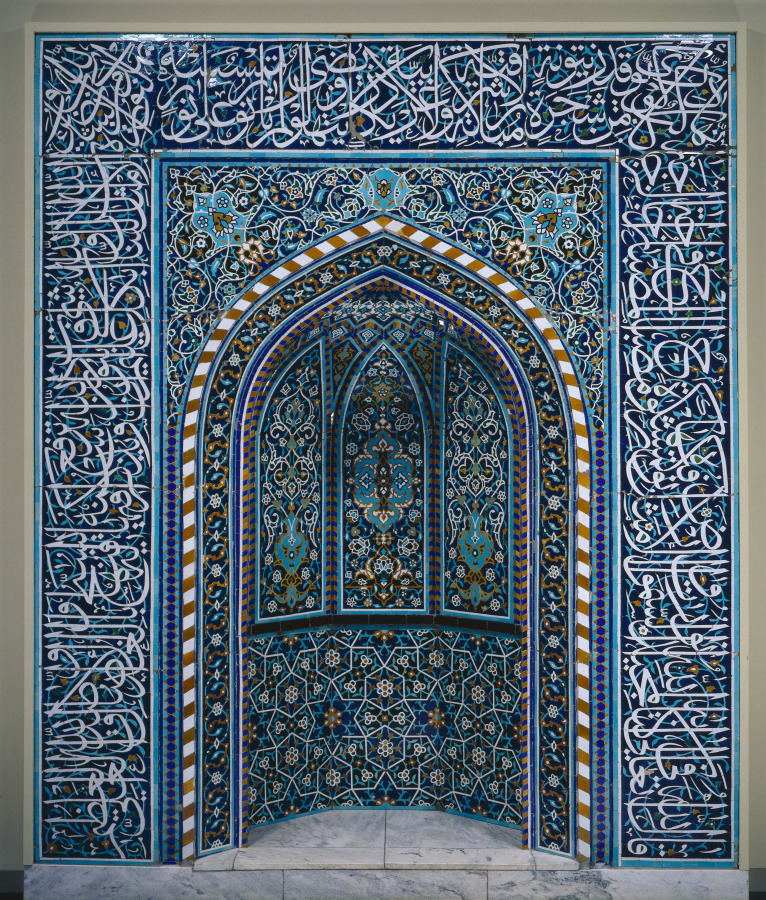
Representative photographs only. Marketplace examples rely on seller descriptions; CraftPersia has not independently authenticated their maker, origin, or rights status. Follow each source link for the listing context.
Used in these crafts
A technique of architectural revetment in which monochrome glazed tiles are cut into small individual pieces to a template and set together, glaze face down, into a mortar bed to form complex polychrome patterns and inscriptions.