
Process, step by step
- Glaze and fire the ware
- Paint enamel over the glaze
- Fire again at lower heat
Variations
Mina’i ware is a historical ceramic category, not metal minakari.
Conservation
Do not wash flaking surface decoration.
Painting on a fired glaze
Overglaze enamelling applies coloured glassy pigments on top of an already fired glaze, followed by a second, lower-temperature firing. The best-known Iranian example is minai (haft-rang) ware made mainly in Kashan in the late twelfth and early thirteenth centuries, which allowed a fuller palette than underglaze painting.
References: [1]
Recognising overglaze
Overglaze colours sit on the surface and can wear or flake, leaving 'ghost' outlines, while underglaze colours are sealed beneath. Minai is also a field heavily affected by restoration and overpainting; raking light and ultraviolet examination by specialists are standard.
References: [1]
Not the same as metal minakari
Contemporary Isfahan minakari enamels copper or silver and is a different craft, although both use vitreous enamel. Keep the ceramic technique and the metal craft distinct in descriptions.
References: [1]
Care
Never wash or rub overglaze decoration. Display away from vibration and keep fragments for a conservator.
References: [1]
Practical questions
- Is minai the same as minakari? No; one is ceramic, the other metal.
- Why is minai often restored? Overglaze colours wear easily.
| Observation | Useful description | Not established |
|---|---|---|
| Colours raised on glaze | Overglaze technique | Kashan origin |
| Unusually fresh figures | Possible overpaint | Original decoration |
| Worn ghost outlines | Lost enamel | Age |
References and further reading
- [1] A. U. Pope & P. Ackerman (eds.), A Survey of Persian Art, Oxford University Press, 1938–39.Broad historical context; individual claims need current scholarship.
- [2] Encyclopaedia Iranica ↗Peer-reviewed entries on motifs, crafts and terms.
These sources provide context, not authentication or provenance for an individual object. Editorial interpretations remain under review.
Documented material and craft examples
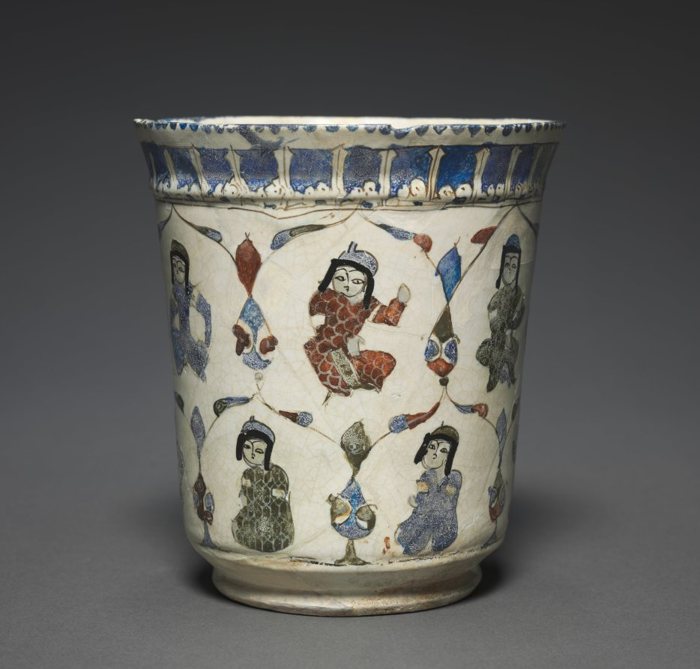
Representative photographs only. Marketplace examples rely on seller descriptions; CraftPersia has not independently authenticated their maker, origin, or rights status. Follow each source link for the listing context.
Used in these crafts
A historic overglaze-enamelled stonepaste ware produced mainly in Iran during the twelfth and early thirteenth centuries, decorated with figural and courtly scenes painted in multiple colours applied after glazing and fixed by a low second firing.