
Process, step by step
- Raise or spin the vessel and anneal it.
- Fill the interior with pitch for support.
- Transfer the design onto the surface.
- Outline with a tracing chisel, then work grounds and textures.
- Melt out the pitch and clean the piece.
- Patinate or polish to finish.
Variations
Grounds, tools and textures vary between workshops. Relief depth alone cannot distinguish hand work from stamped or cast manufacture.
Conservation
Avoid abrasive polish, which rounds chisel edges and flattens the design.
Tracing, chasing and cutting
Qalam-zani is a broad workshop term for work with metal tools and a hammer. Tracing and chasing displace metal, while some engraving removes it; raised relief may involve working from the reverse. Do not collapse these operations into one method. Tool shape, support, alloy and the desired effect determine the sequence.
Read the vessel as well as its decoration
A vessel can be raised, spun, cast or assembled before hand decoration. Look for seams, base attachment and the relationship between ornament and body construction. A handmade decorated surface does not imply that every earlier stage was handmade. Photograph an accessible reverse and base without removing linings or finishes.
Why relief depth is not authentication
Stamped and cast surfaces can have deep relief; careful hand work may be shallow. Toolmarks are comparison evidence, not a guarantee. Repeated defects across several examples can prompt questions, but manufacture should be supported by documented process and maker evidence. Silver-coloured objects may be plated rather than solid silver; ask for composition separately.
Polish, coatings and safe handling
Abrasive polish can reduce fine lines, strip plating and remove historical finishes. Stable patina differs from active corrosion; appearance alone may not identify the problem. Support large vessels by sound structural parts and avoid rubbing high points. Pitch removal and refinishing are manufacturing or treatment operations, not recommended household cleaning steps for an old object.
Practical questions
- Does deep relief prove hand chasing? No; cast and stamped work can also be deep.
- Should dark metal always be polished? No; assess corrosion, coating and historical surface first.
| Feature | What it can tell you | What it cannot establish |
|---|---|---|
| Deep relief | Surface profile | Hand manufacture |
| Tool traces | Possible working sequence | Iranian origin |
| Silver colour | Surface appearance | Solid silver composition |
References and further reading
- [1] H. E. Wulff, The Traditional Crafts of Persia, MIT Press, 1966.Historical craft-process context, not authentication of a specific object.
- [2] Canadian Conservation Institute — Caring for cultural objects ↗Preventive care; treatment must be assessed for the actual materials.
These sources provide context, not authentication or provenance for an individual object. Editorial interpretations remain under review.
Documented material and craft examples
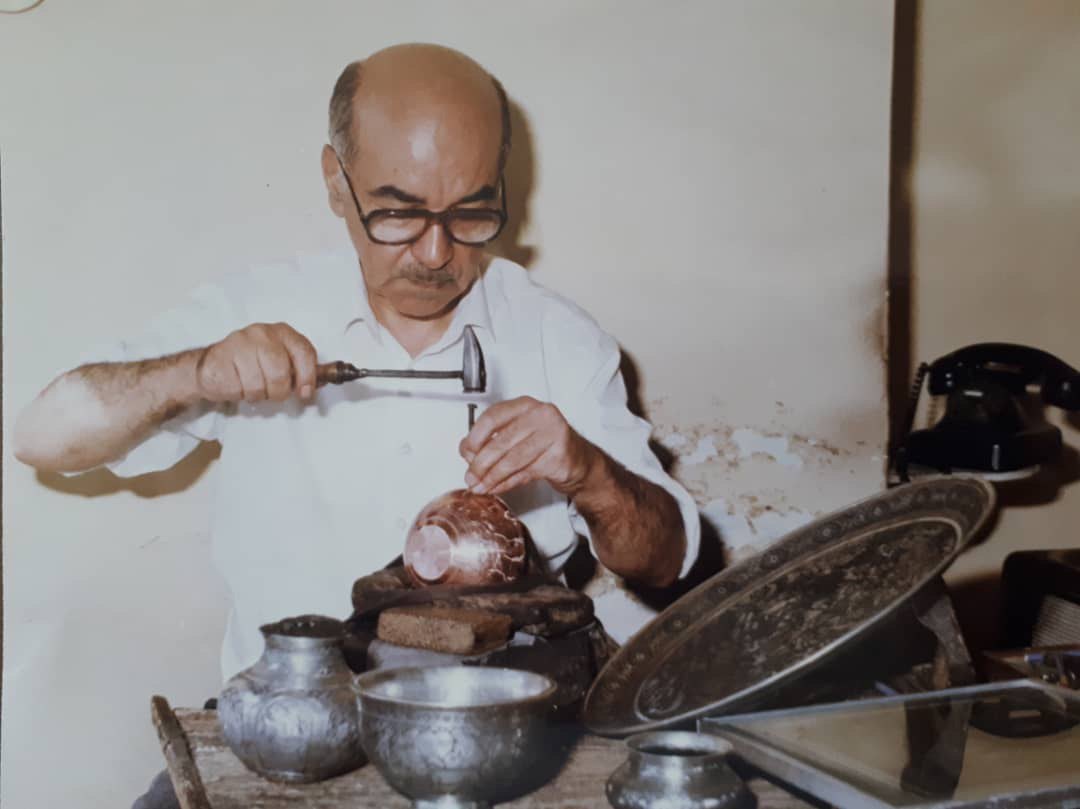
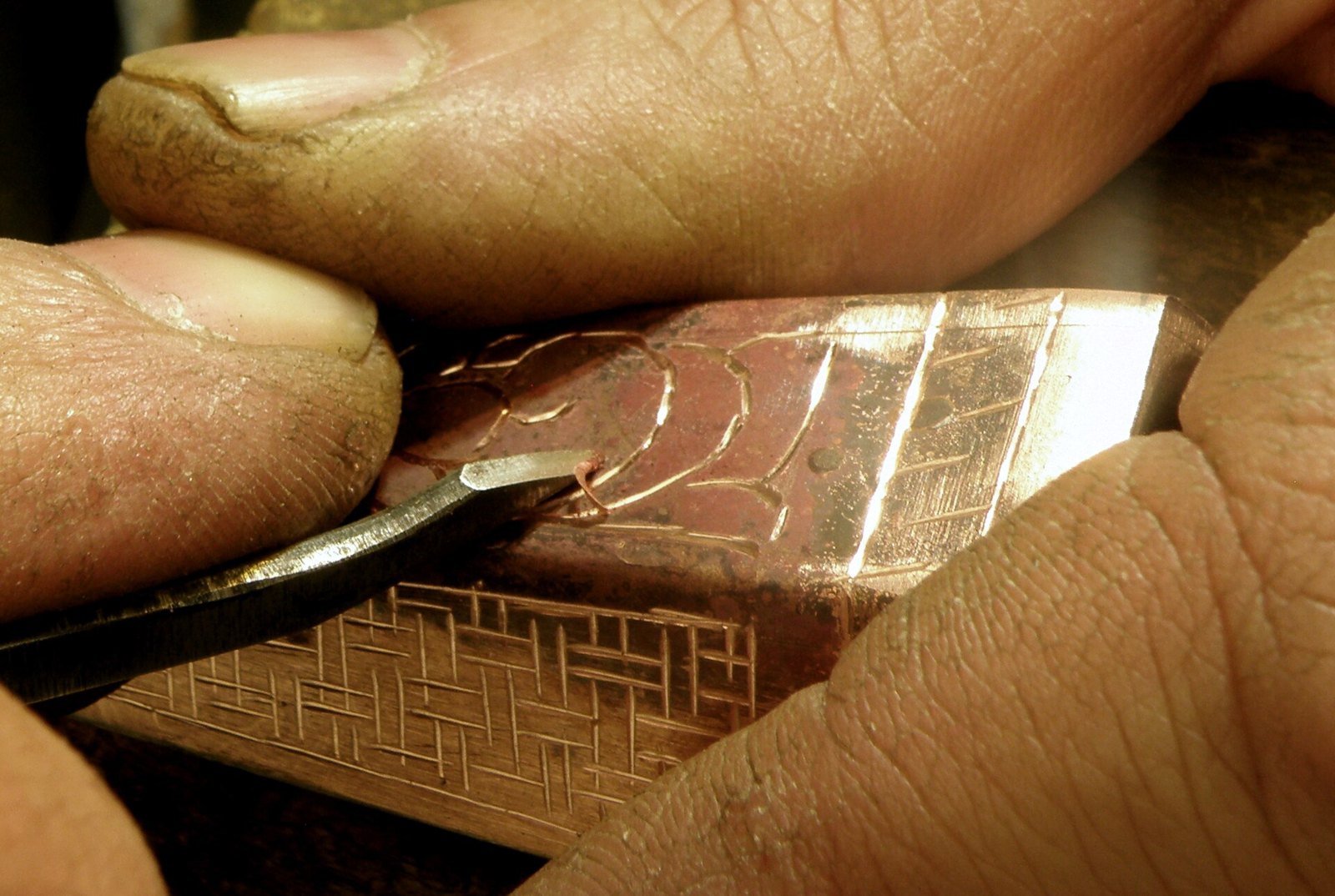
Representative photographs only. Marketplace examples rely on seller descriptions; CraftPersia has not independently authenticated their maker, origin, or rights status. Follow each source link for the listing context.
Used in these crafts
The Iranian tradition of decorating copper, brass and silver vessels with small chisels struck by hammer, working the metal into line, ground and relief.