Photos and details come from a third-party Etsy listing, shown here as an illustrative example. CraftPersia has not inspected the object or verified the seller's claims, and the listing may have changed or ended since it was viewed.
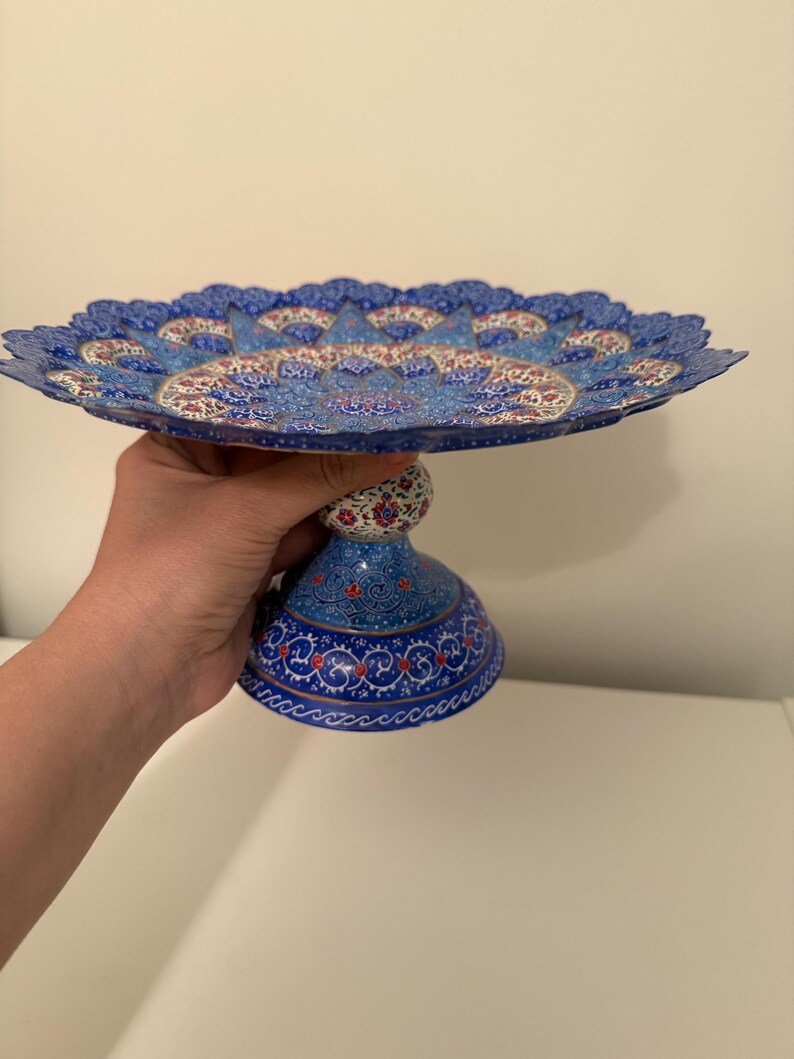
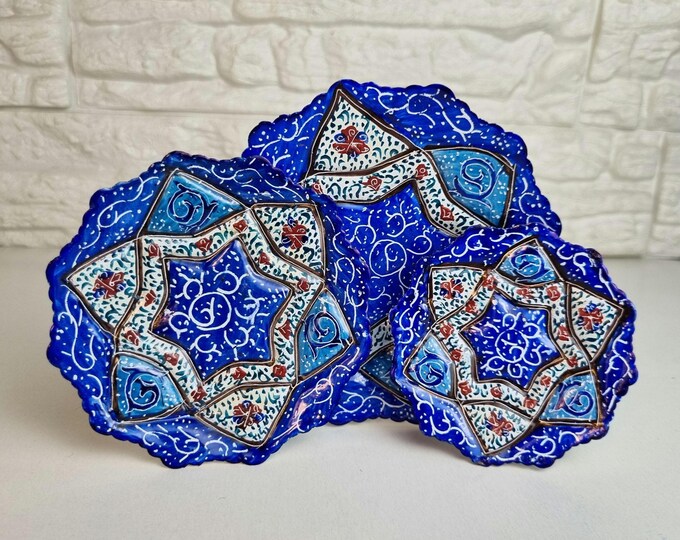
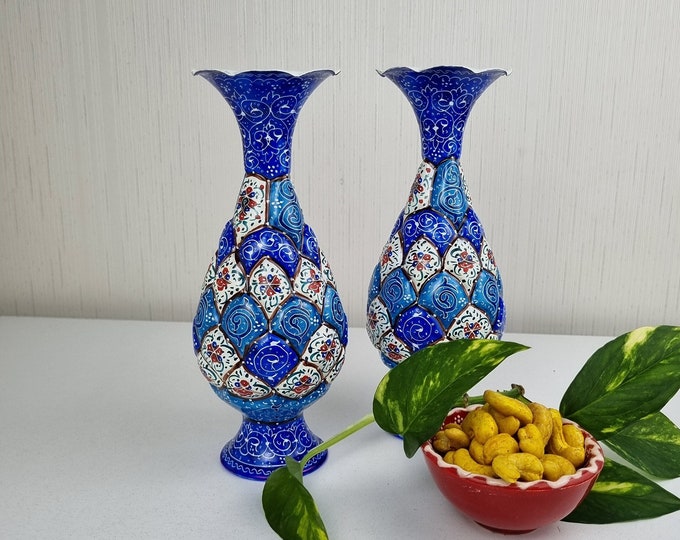
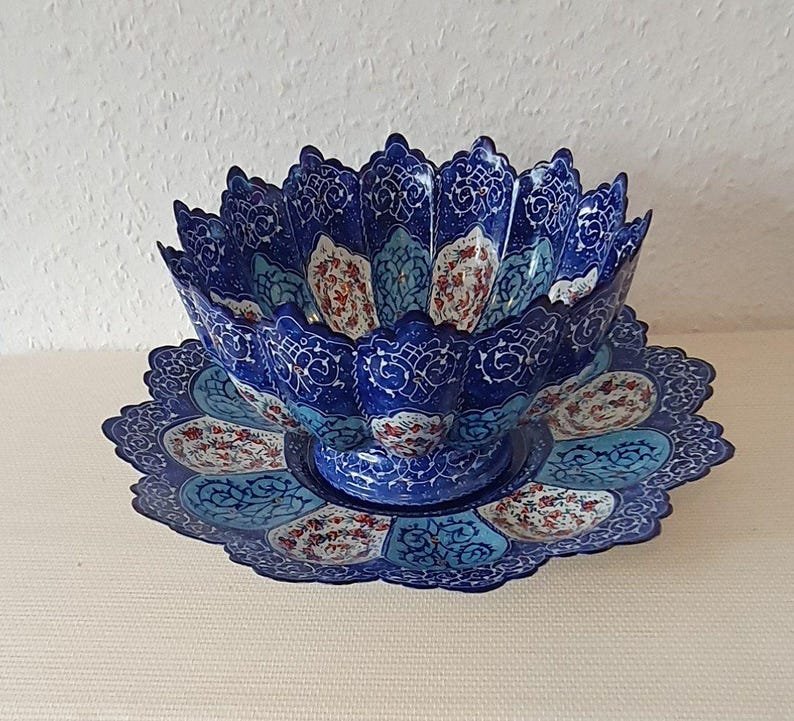
Handmade Persian Enamel Bowl and Plate Set, Minakari Art, Decorative Display
This is a beautiful handmade Persian enamel bowl and plate set featuring traditional Minakari artistry. Ideal for decorative display, it showcases intricate designs and craftsmanship.
- Craft
- Minakari enamel
- Region
- Isfahan
- Technique
- —
- Materials
- Enamel, Copper
- Dimensions
- Plate diameter 25 cm, Bowl diameter 18 cm
- Weight
- Not stated
- Date
- Listing viewed 29 Sep 2026
Condition
As described by the seller; not inspected by CraftPersia.
Provenance
Seller states: “this item is handmade in Iran”. Origin and maker not verified by CraftPersia.
Documentation
None reviewed.
This is illustrative sample documentation, not evidence for the pictured object. No seller or object claim has been independently verified. The archive does not certify authenticity.
Care
Follow the preservation guidance in the Minakari enamel entry: light, humidity and physical support matter more than cleaning.
About Minakari enamel
Definition
Minakari is the fusing of powdered glass, coloured with metal oxides, onto a metal surface through repeated firing, producing a smooth, durable and often brightly coloured decorative finish. The technique is applied to both flat panels and shaped vessels, and in its most refined form combines fired background colour with fine hand-painted figurative or floral decoration fired on top.
Isfahan is the city most closely associated with Iranian minakari, where workshops developed a characteristic palette, often built around a deep blue or turquoise ground, though enamelling on metal has a long, geographically wide history and Iranian minakari should be understood as one branch of that broader craft rather than an isolated invention.
History
Enamelling on metal is documented in Iran from at least the Safavid period, when Isfahan's court-supported metalworking workshops produced enamelled vessels and jewellery alongside other decorative arts. The precise origins and lines of technical transmission for Persian enamelling relative to other regional enamel traditions are not fully settled and are treated by scholars as part of a wider shared history of the craft across the region.
Production continued through the Qajar period with court and elite patronage, and in the twentieth century minakari expanded into a wider decorative and tourist market, applied to plates, bowls, jewellery and small decorative objects sold through Isfahan's bazaars and workshops, a shift that broadened output but also increased the range of quality found in the market.
Materials
Copper is the most common base metal for minakari objects because it takes and holds enamel well and is relatively affordable; gold and silver are used for finer, more costly pieces, valued partly because their surface interacts differently with translucent enamel colours. Enamel itself is powdered glass coloured with metal oxide pigments.
- Copper as the common base metal
- Gold or silver for finer minakari work
- Powdered glass enamel coloured with metal oxides
- Fine brushes for hand-painted decorative layers
General background on the craft, not a statement about any individual object; dates and attributions summarise common positions in the literature and remain under review. Read the full Minakari enamel entry.
Checklist before buying Minakari enamel
Inspect
- Enamel (minakari) is fired glass on metal, usually copper; it should be glossy and even, with no bubbles or lifting at the edges.
- Hand-painted enamel shows slight variation in line and colour; decals and printed transfers look perfectly identical.
- Check edges and rims for chips, where the copper base shows through.
Red flags
- Painted or printed metal sold as fired enamel.
- Decal-decorated pieces sold as hand-painted.
- Resin 'enamel effect' coatings.
Ask the seller
- Is the enamel fired and hand-painted?
- What is the base metal?
- Who painted it, and where (for example Isfahan)?