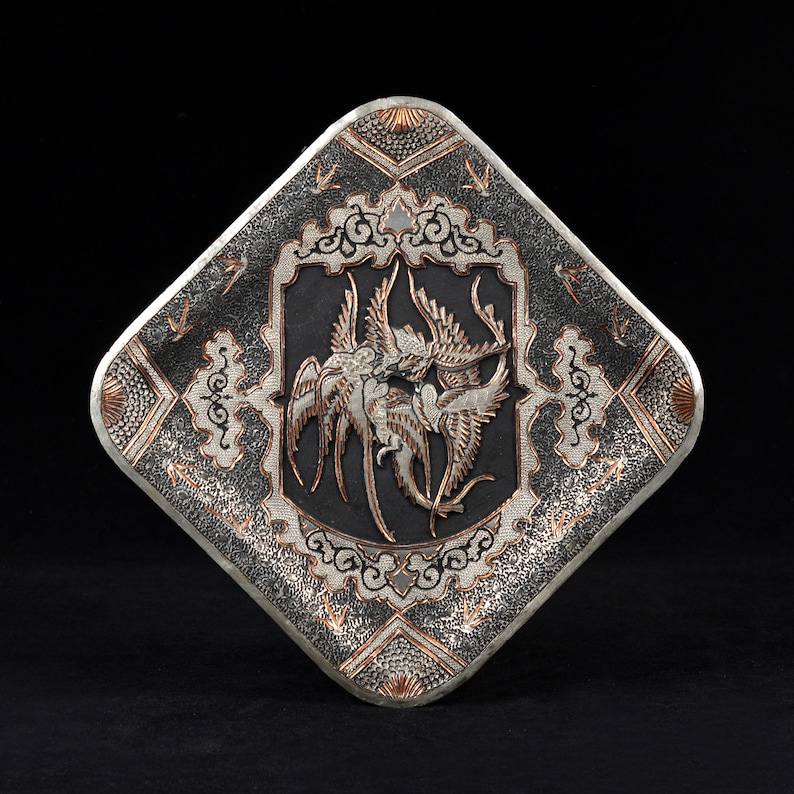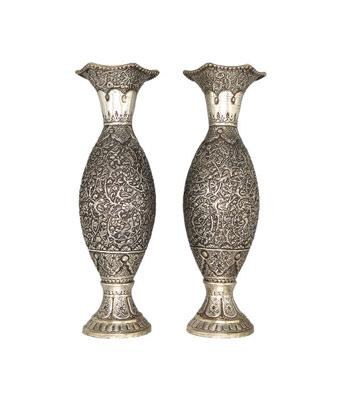
Representative image from an independent shop or archive, not a photograph of the listed object. The seller, price, date, materials, provenance and documentation described on this page have not been verified against the pictured item. Colour varies between screens.
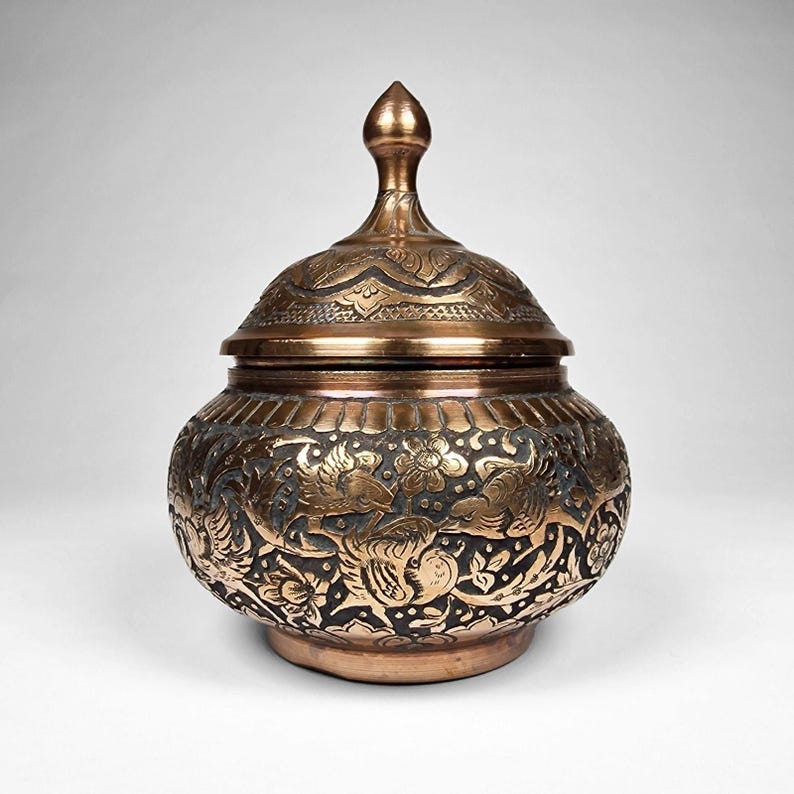
Engraved Brass Vessel
A raised brass vessel with a full arabesque scheme over a punched ground, worked entirely by hand chisel. The design reads faintly on the interior, as hand engraving does.
- Craft
- Qalam-zani
- Region
- Isfahan
- Technique
- Chisel engraving (qalam-zani)
- Materials
- Sheet brass
- Dimensions
- H 26 cm, D 17 cm
- Weight
- 1.4 kg
- Date
- 2024
Condition
New, unused
Provenance
Made by the seller.
Documentation
Signed on the foot; workshop certificate.
This is illustrative sample documentation, not evidence for the pictured object. No seller or object claim has been independently verified. The archive does not certify authenticity.
Care
Follow the preservation guidance in the Qalam-zani entry: light, humidity and physical support matter more than cleaning.
About Qalam-zani
Definition
Qalam-zani covers a family of related operations: tracing an outline, sinking grounds, raising relief from the front, and texturing with named punches. The metal is displaced rather than largely cut away, so the reverse of a hand-worked vessel carries the impression of the design.
History
Persian inlaid and engraved metalwork of the Seljuk period is widely represented in museum collections and set standards later workshops referred back to. Safavid and Qajar Isfahan produced trays, bowls, ewers and boxes in quantity, and the Isfahan bazaar remains the main centre today.
Technique
The vessel is filled with pitch so the metal is supported without being rigid. The engraver works seated, striking a chisel held between the fingers, advancing the line in a continuous rhythm. Grounds are then textured to throw the design forward.
General background on the craft, not a statement about any individual object; dates and attributions summarise common positions in the literature and remain under review. Read the full Qalam-zani entry.
Checklist before buying Qalam-zani
Inspect
- Hand-chased engraving (qalam-zani) is hammered with small chisels; lines vary slightly in depth and direction, and the back may show the pressure of the tool.
- Cast or etched imitations look uniform and soft-edged; machine-stamped pieces repeat exactly.
- Check for hallmarks or purity stamps on silver, and ask what the base metal is on copper and brass pieces.
- Look for wear on raised areas and for repairs at the rim and handles.
Red flags
- Cast or acid-etched reproductions sold as hand-engraved.
- 'Silver-tone' or 'silver-plated' wording on a piece described as silver.
Ask the seller
- Which metal is it (copper, brass, silver)?
- Was the decoration chased by hand?
- Who engraved it, and where (for example Isfahan)?