
Buying guide · 22 min
How to buy a Persian rug: appraisal, where to buy, negotiating and shipping
Editorial team · updated 2026-10-21
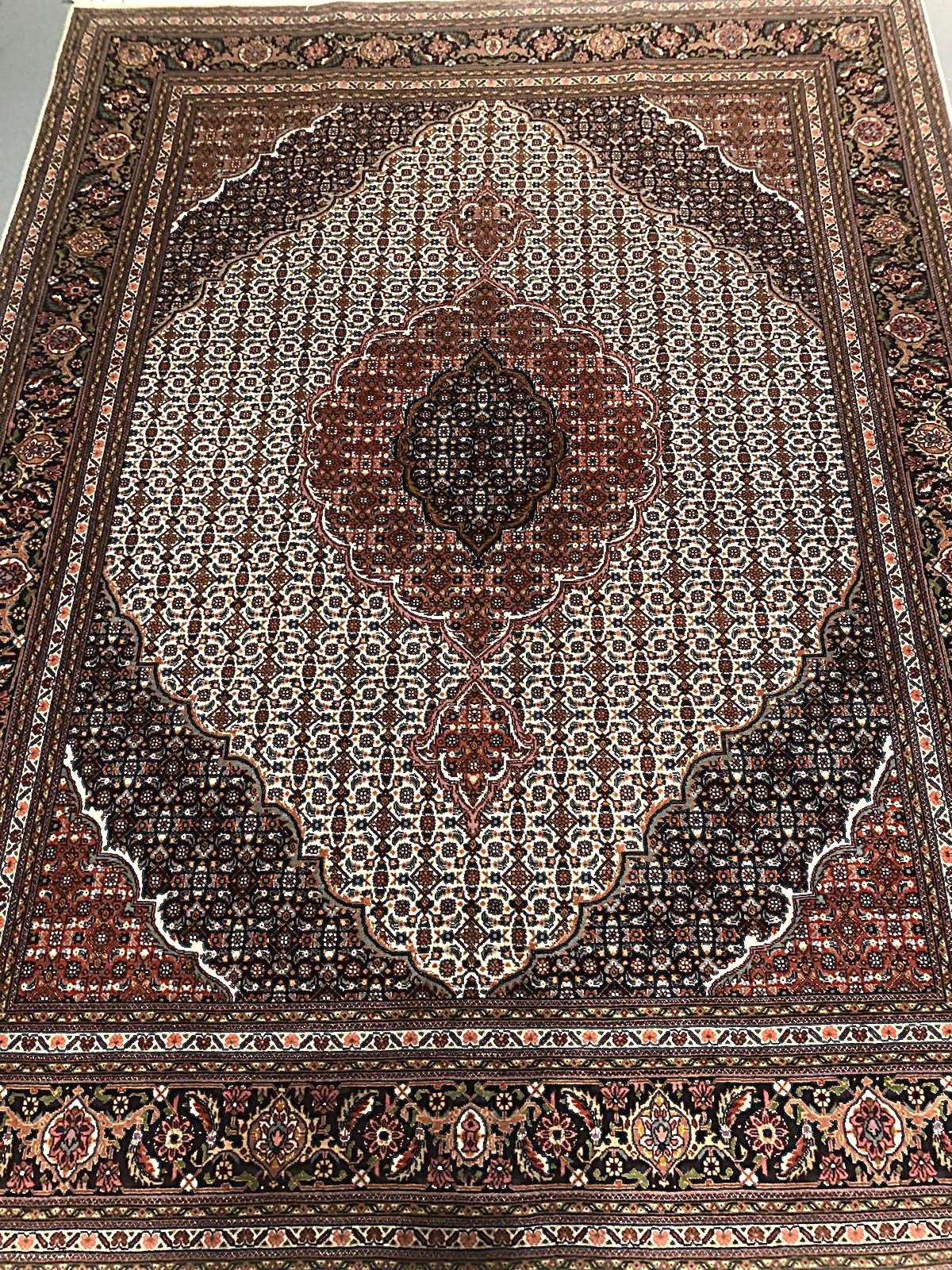
Listing image, 2025 · Arabesque Rugs (photographer not stated) · Permission status not reviewed · Photo source ↗
- Type
- Buying guide
- Reading
- 22 min
- Chapters
- 13
- Photos
- 6
The complete buyer's path: planning, where to buy, inspection, KPSI and labels, appraisal, negotiation, paperwork and safe shipping.
Inspect the piece
Turn it over. Hand-knotted pile shows individual knot nodes and slight row irregularity; machine-made pile is perfectly uniform and often has a glued or serged edge. The fringe should be the carpet's own warp ends, not a band stitched on.
Check wear honestly. Even low pile is not a fault in an older carpet, but reweaves, painted-in areas and reduced sizes should be disclosed and reflected in the price.
Questions worth asking
Ask for evidence rather than reassurance, and note which answers come with documentation.
- Where was it woven, and how is that known?
- Is the pile wool, silk, or a blend — and has it been tested?
- Are the dyes natural, synthetic, or both?
- Has it been repaired, rewoven or reduced in size?
- What is the return policy if an independent assessment disagrees?
Claims to treat with care
Phrases like fully authentic, museum quality and certified antique carry no fixed meaning on their own. A specific condition report, a named conservator or a dye analysis does. Where a seller is honest about uncertainty, that is a good sign rather than a bad one.
- Scope
- New and old hand-knotted rugs made in Iran or by Iranian makers
- Not covered
- Machine-made 'Persian style' rugs — excluded from this archive
- Golden rule
- Get every claim in writing before payment
- Related guides
- KPSI · reading a rug label · appraisal · safe shipping
1. Plan before you shop
Decide the job the rug must do before you look at a single piece. Measure the room and note the sizes that work — the rug sizes guide explains the traditional names (zaronim, dozar, ghali, runners) and how they map to metric dimensions. A rug that is nearly the right size is usually a worse buy than a slightly plainer rug in the right size.
Set a budget with headroom for delivery, and decide whether you want a new rug, a older used rug, or a documented antique. These are different markets with different sellers, different paperwork and different risks. Do not let a seller move you between categories mid-conversation: an 'antique' price needs antique evidence.
- Measure the room and photograph the space
- Fix a maximum total including shipping
- Decide: new, used, or documented antique
- List any constraints: pets, underfloor heating, children
- Shortlist three or more pieces before committing
2. Where to buy
Specialist rug dealers are the usual starting point: a good one lets you turn rugs over, take photographs, and take a piece home on approval. You pay for their expertise, their premises and their guarantee, so expect prices above auction estimates — in exchange you get someone accountable if a claim turns out to be wrong.
Auction houses sell new, used and antique rugs, often at lower hammer prices than retail, but the buyer's premium, taxes and shipping are added on top, sales are usually final, and catalogue descriptions are opinions, not guarantees. Read the conditions of sale before bidding and factor the premium into your maximum.
Online marketplaces and social-media sellers offer the widest choice and the weakest protection. Buy only with clear photographs of the actual piece — face, back, all four edges, both ends and any damage — plus a written returns policy. Be suspicious of stock photographs, of prices far below comparable pieces, and of any listing that says 'Persian style', 'Persian design' or 'oriental' without naming a place of making in Iran.
Buying in Iran, or directly from a weaving community or workshop, can mean fair prices and real provenance, but you take on export paperwork, currency rules, sanctions-related payment restrictions and shipping yourself. Check what your own country permits before travelling with money or goods.
- Dealer: highest price, strongest accountability
- Auction: lower hammer price, fees on top, few returns
- Online: widest choice, demand photos and returns
- In Iran: real provenance, you handle export and shipping
3. Inspect the piece
Turn the rug over. On a hand-knotted rug the design reads clearly on the back and you can see individual knots; slight irregularity between rows is normal and is not a defect. A perfectly regular grid, a glued fabric backing, or a fringe that is a separate sewn-on strip points to machine or tufted production — the authenticity guide covers these tests in detail.
Check the foundation and the pile separately. Ask what fibre each is made from — wool, cotton and silk behave differently and wear differently. Look along the edges and ends for repairs, reweaves and colour run, look for the bald patches and grit of moth damage, and check the rug lies flat. Raking light reveals old repairs that a front-on view hides.
Photograph everything, including anything wrong. Your photographs, with the seller's written description, are your evidence if the piece arrives different from what was sold.
- Back: knots visible, slight irregularity normal
- Fringe: warp threads, not a sewn-on strip
- Fibres: ask separately about pile and foundation
- Edges, ends, moth, repairs, colour run, flatness
- Photograph face, back, edges and every flaw
4. Judge quality claims: KPSI and the label
KPSI — knots per square inch — is an area measurement: count complete knots across a measured horizontal interval, count rows along a measured vertical interval on the back, and multiply only after expressing both per inch. The KPSI guide works through examples and warns against squaring a single direction or counting every coloured bump as a knot.
Use density as one fact among many, never as a grade. A fine city workshop rug and a coarse tribal gabbeh are different traditions, not better and worse — the KPSI guide's whole point is that density alone does not establish origin, quality or price. A seller who leads with a very high knot count and nothing else is selling a number, not a rug.
Labels, certificates and shop tags are claims, not evidence. The label-reading guide explains the fields you will meet — stated origin, 'raj' counts, fibre statements, 'silk' that may mean mercerised cotton or viscose — and the central rule: preserve the exact wording, ask who stands behind each claim, and never treat a label as proof of origin. A written invoice naming the seller, the piece, the claimed origin, fibres, age and price is worth more than any woven-in signature.
- KPSI = horizontal count × vertical count, per inch
- Never square one direction; uneven spacing is common
- Density permits fine drawing; it is not a quality grade
- Labels are claims: record wording, ask for the evidence
- The invoice is the document that matters
5. When to get an appraisal
For an ordinary new decorative rug from a reputable dealer, the dealer's written description plus your own inspection is usually enough. Commission an independent appraisal when real money depends on facts you cannot verify yourself: an antique attribution, a claimed master workshop, an insurance schedule, or an estate or resale decision.
Choose an appraiser with no stake in the sale — not the seller, and not someone the seller insists on. The appraisal guide describes what a proper appraisal covers: construction, materials, condition, comparable sales, and a written report that states its purpose (insurance, fair market or auction estimate), because the same rug has different values for different purposes.
Keep expectations honest: an appraisal is a documented opinion at a date, not a guarantee of a future sale price, and no appraisal can rescue a purchase where the written claims were vague. If the seller resists independent examination, treat that resistance as information.
- Worth it: antique claims, insurance, estates, resale
- Appraiser must be independent of the seller
- State the purpose: insurance ≠ fair market ≠ auction
- An opinion at a date, not a price guarantee
6. How to negotiate
Negotiation is normal in much of the rug trade, including in Iran's bazaars, and a polite, informed buyer usually does better than an aggressive one. Do your comparison first: know roughly what similar size, age, condition and quality pieces sell for across at least two or three sellers, so your offer is anchored in the market rather than in the asking price.
Ask open questions before discussing money — the answers tell you whether the seller knows the piece. Then make a reasonable opening offer below your maximum and let the seller respond. Silence is acceptable; you never have to fill it. If you are buying several pieces, negotiate the bundle rather than each rug separately.
Stay factual: point to specific condition issues you have documented (a repair, low pile, a reduced end) rather than disparaging the rug. Never negotiate a price you are not prepared to pay — in bazaar etiquette an accepted price is a commitment. And agree the full picture: the price, what it includes (delivery, underlay, cleaning), and the written description that goes on the invoice.
If the price will not move, ask for value instead: delivery, an underlay, professional cleaning before dispatch, or a written returns period. A seller who will not move on anything and will not put claims in writing is telling you to walk away.
- Compare similar pieces across sellers first
- Ask about the piece before mentioning money
- Open below your maximum; let silence work
- Negotiate bundles, and the full package not just price
- If price is fixed, trade for delivery, underlay or returns
7. Paperwork and payment
Before any money moves, assemble the file: the seller's written description (origin, fibres, age, condition, repairs), your inspection photographs, the price and what it includes, the returns terms, and for older pieces whatever provenance exists. Pay by a method that gives you a record and some recourse; avoid cash for distance purchases.
For anything described as antique, check the export and import rules that apply in both countries before paying — genuine antiques can carry legal restrictions, and 'the seller will handle it' is not a compliance strategy. The architectural-fragment rule in this archive applies here too: material removed from historic buildings may be illegal to sell or export at all.
- Written description: origin, fibres, age, condition, repairs
- Your photographs of the actual piece
- Price, inclusions, returns terms in writing
- Traceable payment for distance purchases
- Check export/import rules for antiques before paying
8. Shipping and receiving
The shipping guide covers the mechanics in detail; the essentials are these. A rug travels rolled, pile facing inward, around a tube if possible — never folded — wrapped in breathable material, not sealed plastic that traps moisture. Ask how the seller packs before you agree the price, and put the packing method in the written agreement.
Insure the shipment for the full value and use a tracked, signed-for service. For international delivery, agree in writing who pays any customs duties and import taxes — these are usually the buyer's cost and can be significant, so get an estimate before committing. Keep every document: invoice, description, photographs, tracking and customs paperwork.
When the rug arrives, unroll it promptly and compare it against your photographs and the written description while the returns window is open. Check the back, the ends and any documented repairs, and photograph anything that does not match. Report discrepancies immediately and in writing.
- Rolled pile-inward, on a tube, breathable wrap — never folded
- Full-value insurance, tracked and signed for
- Agree who pays customs and import taxes in writing
- Inspect on arrival against your photographs, immediately
Technique and evidence
A hand-knotted carpet, a hand-tufted rug and a machine-woven rug differ in construction, not simply in how 'handmade' they look. Compare the reverse, fringe attachment and backing. Some hand-knotted pieces are deliberately regular; irregularity is not proof of authenticity.
Collecting and next steps
Request photographs of the actual piece from both faces and every edge, a written condition report, fibre statement, repair history, dimensions and returns policy. For old pieces, request acquisition history and seek independent specialist advice if origin or age affects price.
The steps here are educational; identification, conservation and valuation of an individual object require appropriate independent expertise.
Related photographs and screened examples
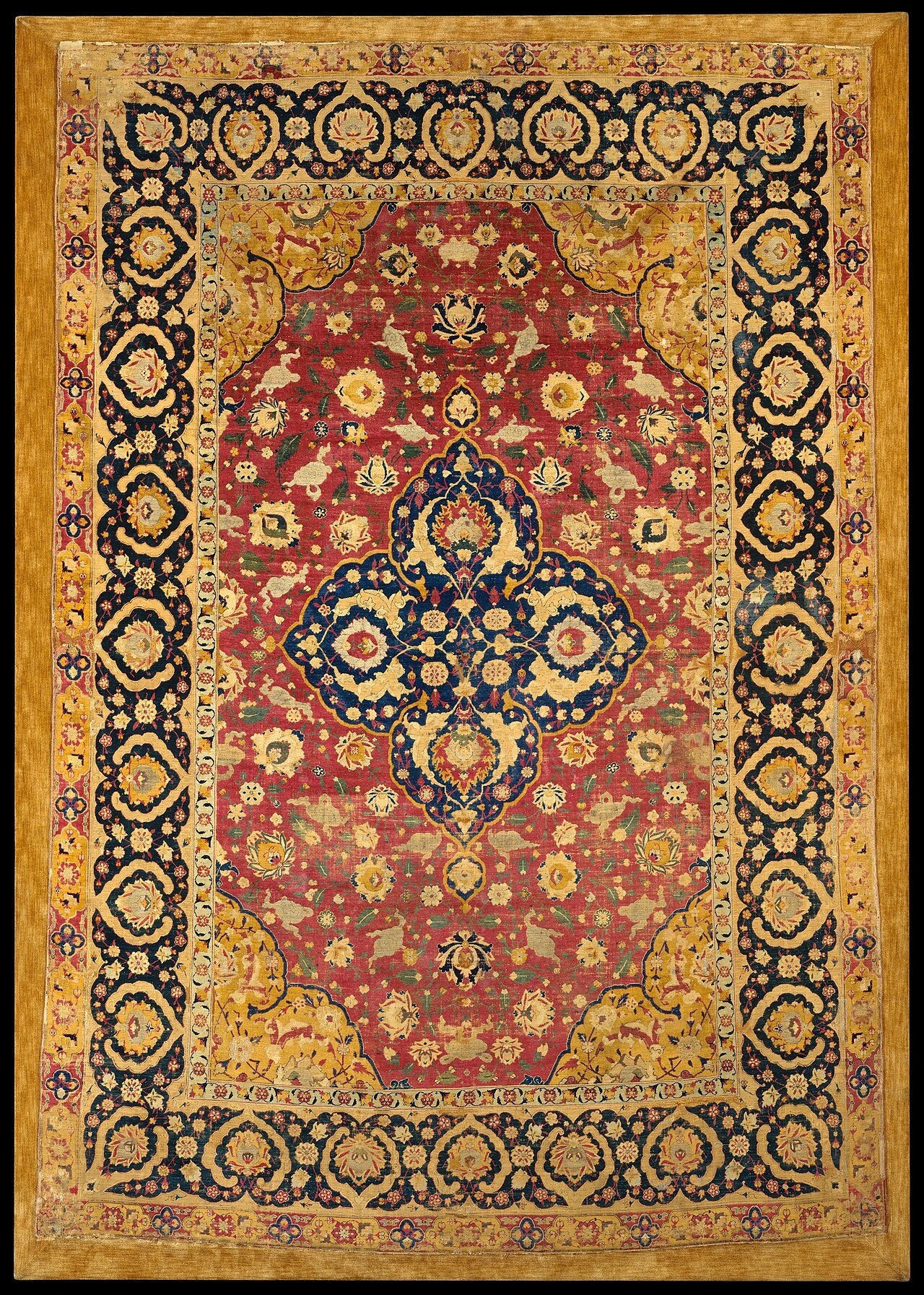
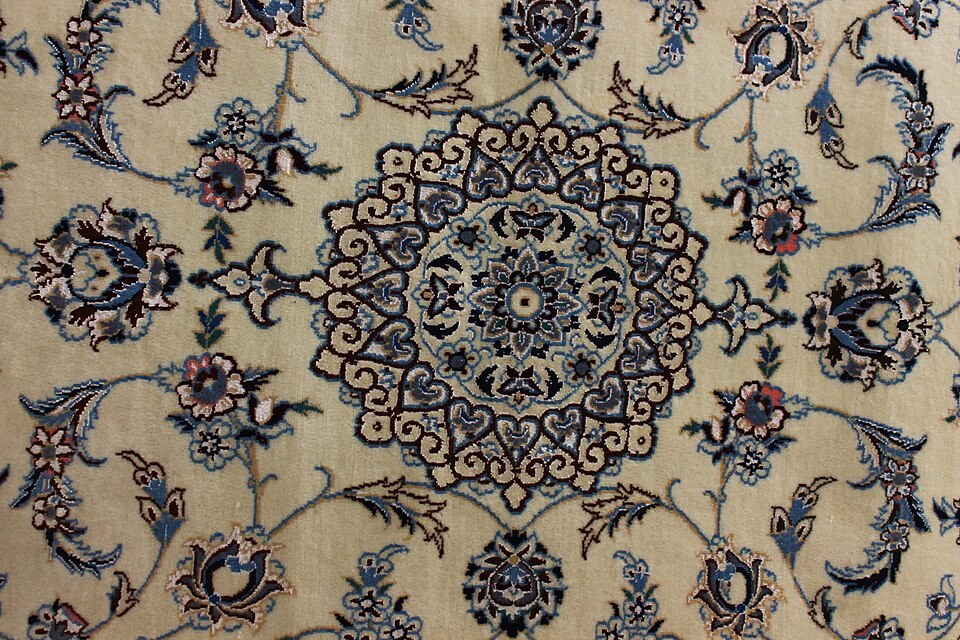
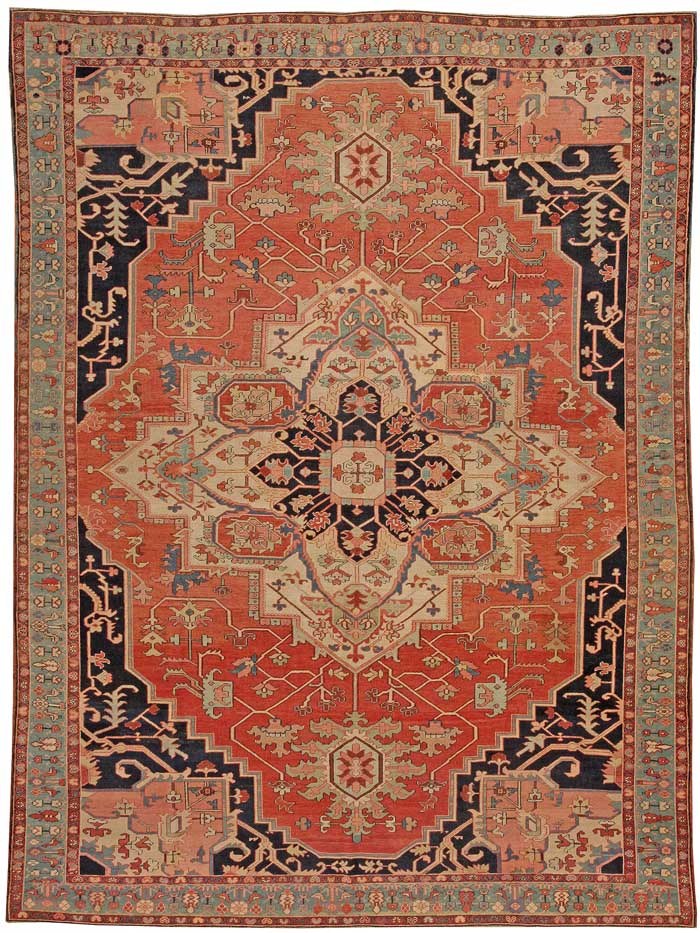
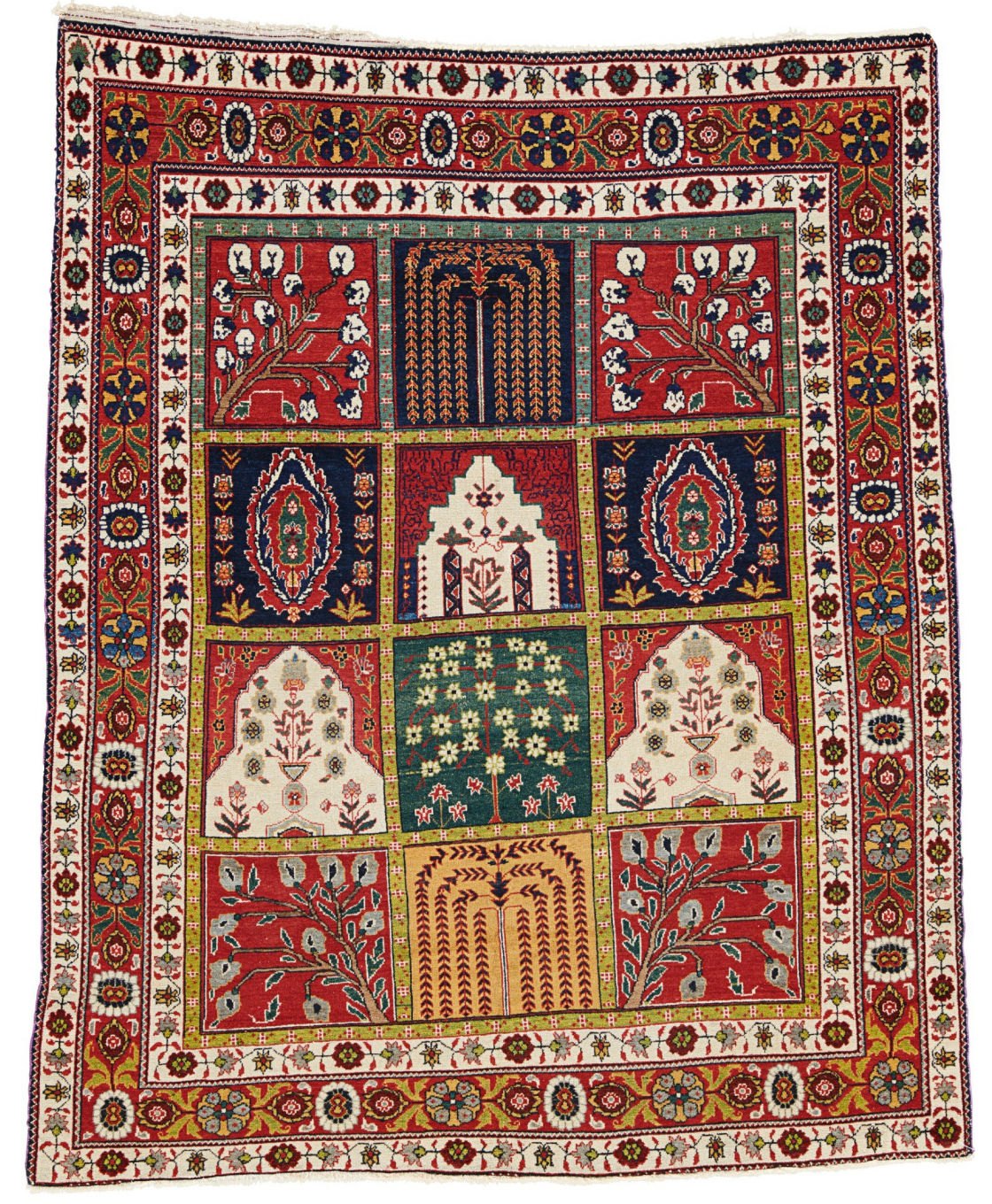

Representative photographs only. Marketplace examples rely on seller descriptions; CraftPersia has not independently authenticated their maker, origin, or rights status. Follow each source link for the listing context.
Indicative ranges compiled from general trade and reference literature; individual pieces vary widely. Not a valuation or grading tool.
| Channel | Price level | Protection | Main risk |
|---|---|---|---|
| Specialist dealer | Highest | Written guarantee, approval period, accountability | Paying retail for a misdescribed piece |
| Auction house | Lower hammer price | Catalogue opinion only; sales usually final | Premium, taxes and no returns |
| Online marketplace | Widest range | Platform-dependent; often weak | Stock photos, style-only imports, no returns |
| Direct in Iran | Can be fair | Your own documentation | Export, payment and shipping complexity |
| Step | What you do | What success looks like |
|---|---|---|
| Research | Price three comparable pieces across sellers | A defensible market range |
| Question | Ask origin, fibres, age, repairs — open questions | Seller demonstrates real knowledge |
| Offer | Open below your maximum, citing condition facts | A counter-offer you can work with |
| Package | Add delivery, underlay, returns to the discussion | Value even where price is fixed |
| Commit | Only offer what you will pay; get it in writing | Invoice matching every claim |
| Stage | Requirement | Why |
|---|---|---|
| Packing | Rolled pile-inward on a tube, breathable wrap | Folding cracks foundations; plastic traps moisture |
| Insurance | Full declared value | Loss or damage in transit |
| Customs | Written agreement on who pays duties | Import taxes can be a large surprise |
| Arrival | Immediate inspection against photographs | Returns windows are short |
| Subject | What differs | What to do |
|---|---|---|
| Hand-knotted | Visible knot rows in foundation | Get construction and repair photos |
| Hand-tufted | Yarn inserted through base, usually backed | Ask about backing and adhesive condition |
| Machine-woven | Mechanically repeated structure | Ask for maker and materials |
Timeline
- Before viewing
Set size and budget; compare several pieces.
- At inspection
Photograph face, reverse, edges and damage.
- Before payment
Obtain written claims, terms and independent review if needed.
References and further reading
- [1] CraftPersia, What is KPSI and does it matter? ↗How knot density is measured and why it is not a quality grade.
- [2] CraftPersia, Reading a Persian rug label ↗Why labels and certificates are claims, not evidence.
- [3] CraftPersia, Getting a Persian rug appraised ↗What an independent appraisal covers and when to commission one.
- [4] CraftPersia, How to ship a handmade rug safely ↗Packing, insurance and customs mechanics.
- [5] UNESCO, Traditional skills of carpet weaving in Fars (2010). ↗Documents a living weaving practice; does not authenticate any rug.
- [6] UNESCO, Traditional skills of carpet weaving in Kashan (2010). ↗Explains a living hand-weaving practice; does not authenticate a listed rug.
These sources provide context, not authentication or provenance for an individual object. Editorial interpretations remain under review.