
Beginner guide · 9 min
How Persian carpets are made
Editorial team · updated 2026-08-19
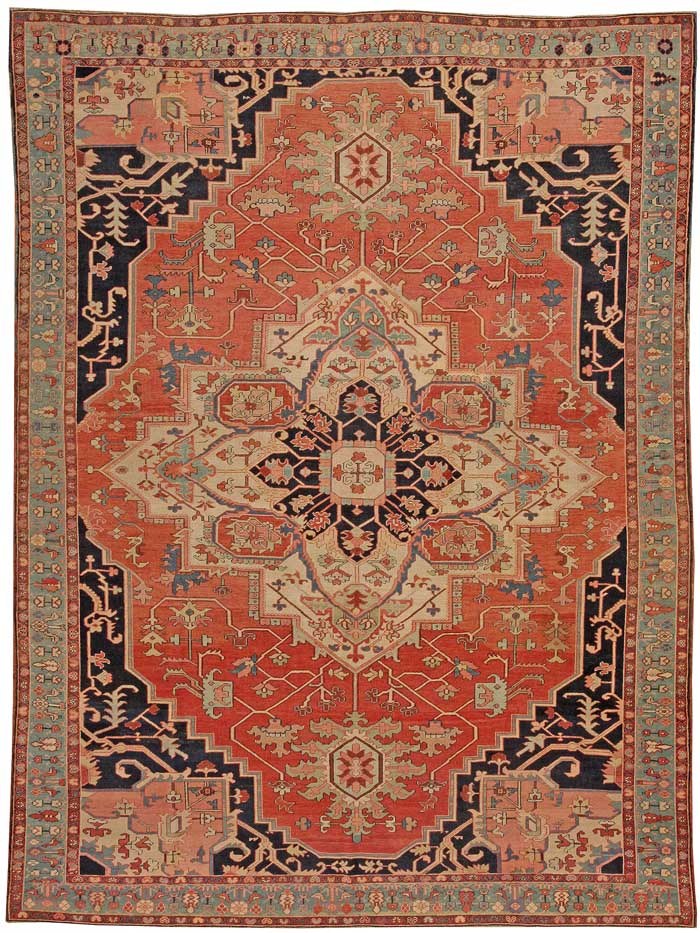
accessed 2026-09-30 · Nazmiyal · CC BY-SA 3.0 (Wikimedia Commons; JPG re-encoded) · Photo source ↗
- Type
- Beginner guide
- Reading
- 9 min
- Chapters
- 9
- Photos
- 6
From fleece to finished pile: the sequence of preparation, dyeing, knotting and finishing that produces a hand-knotted carpet.
Preparation
Fleece is sorted by staple length before anything else happens, because pile character is largely decided at this point. Sorted wool is scoured, carded and spun, then plied for strength.
Dyeing follows in small batches. Hand-dyed lots vary, and that variation — abrash — is visible in the finished carpet as soft horizontal banding.
Weaving
The loom is warped to the planned density. Each knot is tied around a warp pair, the row is wefted and beaten down with a heavy comb, and the pile is trimmed as work advances up the carpet.
City workshops follow a squared cartoon so several weavers can work consistently on one piece. Village and pastoral weavers work from convention and memory.
Finishing
The carpet is cut from the loom, the ends are secured, and the pile is sheared to a final even height. Washing settles the wool and brings out the dye; stretching squares the piece.
- Typical workshop time
- Months to years, depending on size and knot density
- Core tools
- Loom, knife or hook-knife (tigh), beater comb (daftin), shears
- Foundation
- Usually cotton warps and wefts; wool in many village and tribal rugs
The stages in detail
Carpet making is a chain of specialised work. Before weaving begins, fleece is sorted, washed, spun and dyed. In town production a designer draws a full-size cartoon (naqsheh) on squared paper, each square standing for one knot; village and nomadic weavers more often work from memory or a sample piece (vagireh).
After weaving, the carpet is cut from the loom, washed, stretched and clipped. Finishing strongly affects the look of a new carpet and is often done by separate specialists.
- 1. Fleece sorting and washing
- 2. Spinning and plying
- 3. Dyeing
- 4. Design / cartoon
- 5. Warping the loom
- 6. Knotting and wefting
- 7. Cutting down
- 8. Washing, stretching, clipping
Looms: horizontal and vertical
Nomadic groups such as the Qashqai and Bakhtiari traditionally use horizontal ground looms that can be dismantled and carried between camps; this limits width and often produces slight irregularities in shape. Town and village workshops use fixed vertical looms, including roller-beam looms that let very long carpets be woven without moving the weaver's seat.
The loom type is rarely visible in a finished rug, but irregular sides and shifts in width can hint at ground-loom work.
Knotting, wefting and beating
Each row of knots is tied around pairs of warps, cut with a knife, and followed by one or more weft passes. The weaver then beats the row down with a heavy comb. The number of wefts between rows, and whether one warp of each pair sits deeper than the other ('depressed' warps), shapes the rug's handle and is a useful structural clue for regional attribution.
Skilled weavers tie roughly 8,000–12,000 knots a day, but speed falls sharply on fine silk work and complex curvilinear designs.
Finishing
Washing removes dust and loom oils and settles the dyes; stretching on a frame corrects distortions; shearing brings the pile to an even height. Ends are secured with a kilim band or knotted fringe and the sides are overcast or wrapped. Harsh chemical washes, once used to soften colours for export markets, can weaken wool and should be disclosed by sellers.
Technique and evidence
Follow one warp pair through knotting, weft insertion, beating and clipping. A town carpet may use a plotted cartoon, while weaving from memory is documented for Fars traditions; neither approach is a quality certificate. Finishing can significantly alter the appearance after the rug comes off the loom.
Collecting and next steps
Ask a workshop what work was completed by whom, what fibres are in pile and foundation, and how the object was finished. Progress photographs help document a new commission but do not identify a historic rug.
The steps here are educational; identification, conservation and valuation of an individual object require appropriate independent expertise.
Related photographs and screened examples
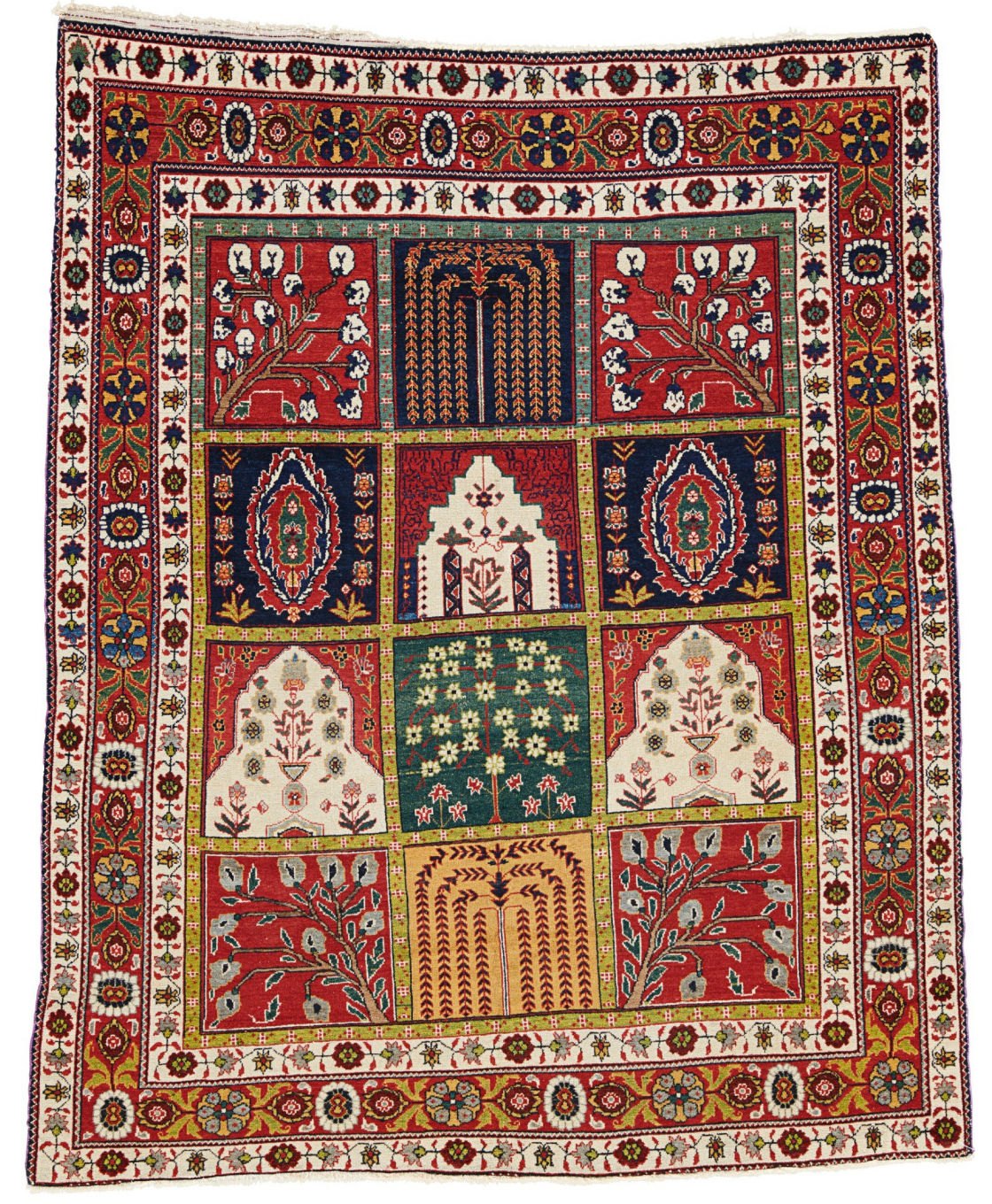

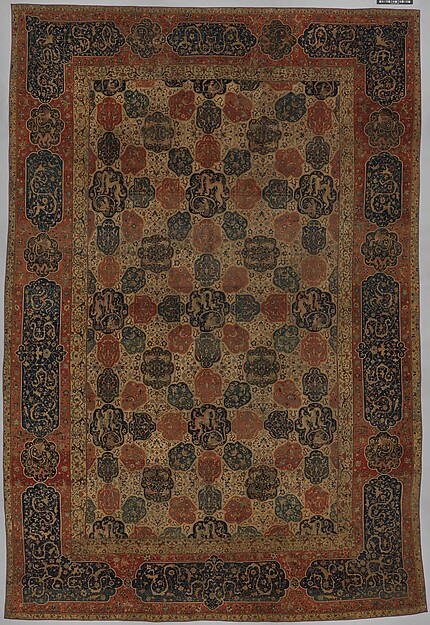
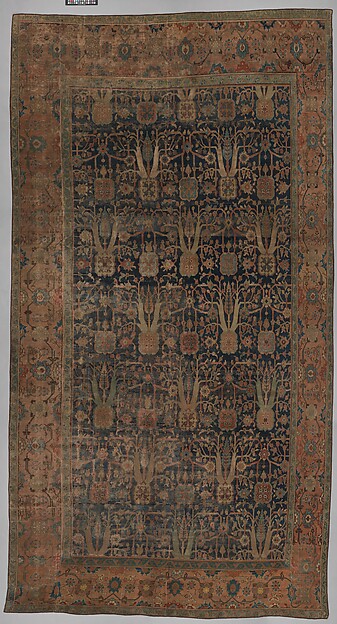
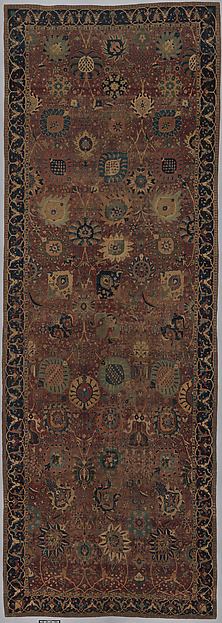
Representative photographs only. Marketplace examples rely on seller descriptions; CraftPersia has not independently authenticated their maker, origin, or rights status. Follow each source link for the listing context.
Indicative ranges compiled from general trade and reference literature; individual pieces vary widely. Not a valuation or grading tool.
| Knot | Also called | Where common |
|---|---|---|
| Asymmetric | Persian, senneh | Much of central and southern Iran |
| Symmetric | Turkish, ghiordes | Tabriz, Azerbaijan, Kurdish areas |
| Jufti | Four-warp 'false' knot | Some commercial production |
| Subject | What differs | What to do |
|---|---|---|
| Pile | Knot rows | Inspect front, reverse and clipped height |
| Foundation | Warp and weft | Check ends, edges and tension |
| Finishing | Washing and shearing | Record changes and later treatments |
Timeline
- Preparation
Spin and dye yarn; design and warp the loom.
- Weaving
Tie pile and secure each row with weft.
- Finishing
Secure ends, wash, stretch and clip as needed.
Key terms
- Cartoon نقشه
- Squared design drawing guiding the weaver
- Vagireh واگیره
- Sample piece used as a pattern reference
- Daftin دفتین
- Comb used to beat down knots and wefts
References and further reading
- [1] Eiland, M. L. & Eiland, M. Oriental Rugs: A Complete Guide (Laurence King, 1998)
- [2] Encyclopaedia Iranica — Carpets ↗
- [3] UNESCO, Traditional skills of carpet weaving in Fars (2010). ↗
These sources provide context, not authentication or provenance for an individual object. Editorial interpretations remain under review.