Photos and details come from a third-party Etsy listing, shown here as an illustrative example. CraftPersia has not inspected the object or verified the seller's claims, and the listing may have changed or ended since it was viewed.
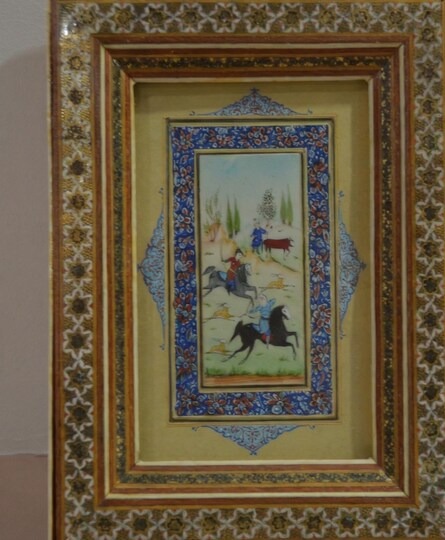
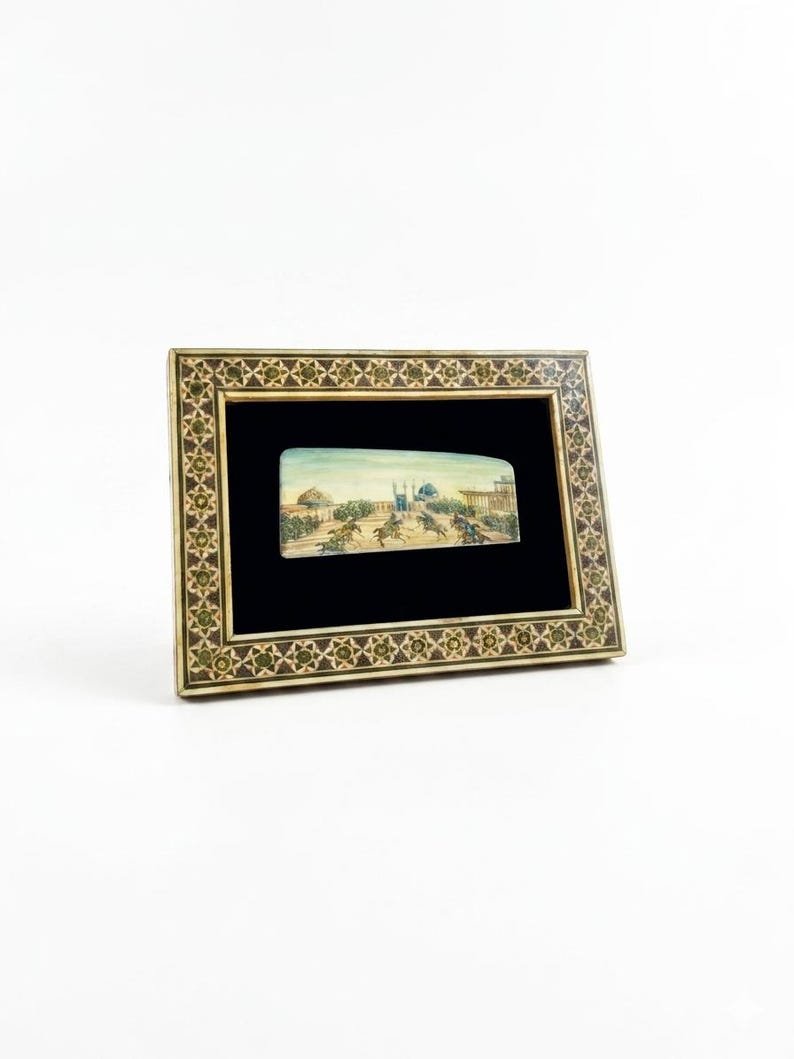
Persian Miniature Painting on Bone - Polo Scene - Handmade Khatam Kari Inlay Frame - Iranian Folk Art - Isfahan Vintage Wall Decor - Middle
This exquisite miniature painting depicts a traditional polo scene in Iran. Handcrafted using fine bone and set in a handmade Khatam Kari inlay frame, it showcases the beauty of Iranian folk art from Isfahan.
- Craft
- Persian miniature
- Region
- Isfahan
- Technique
- —
- Materials
- Bone, Khatam Kari
- Dimensions
- Not specified
- Weight
- Not stated
- Date
- Listing viewed 29 Sep 2026
Condition
As described by the seller; not inspected by CraftPersia.
Provenance
Seller states: “Handmade Khatam Kari Inlay Frame - Iranian Folk Art”. Origin and maker not verified by CraftPersia.
Documentation
None reviewed.
This is illustrative sample documentation, not evidence for the pictured object. No seller or object claim has been independently verified. The archive does not certify authenticity.
Care
Follow the preservation guidance in the Persian miniature entry: light, humidity and physical support matter more than cleaning.
About Persian miniature
Definition
Persian painting of this kind was an art of the book, produced in ateliers where calligrapher, painter, illuminator, gilder and binder each contributed. Space is organised by overlapping planes and raised ground lines; figures are scaled by role rather than distance.
History
Distinct schools are conventionally identified at Tabriz, Shiraz, Herat and later Isfahan, each with recognisable conventions of palette, figure type and landscape. Attribution to a named painter is possible for a small number of artists and remains contested for many well-known works.
Materials
Sized and burnished paper, mineral and organic pigments bound in gum, gold leaf and shell gold, and brushes made from a few hairs. Lapis-based blue and verdigris green behave very differently over time, which affects how a page reads today.
General background on the craft, not a statement about any individual object; dates and attributions summarise common positions in the literature and remain under review. Read the full Persian miniature entry.
Checklist before buying Persian miniature
Inspect
- Under magnification, hand-painted work shows brushstrokes; prints show dot patterns.
- Gold on genuine illumination is applied by hand and catches the light unevenly.
- Check the paper: handmade paper has an irregular texture and edges.
Red flags
- 'Giclée', 'art print' or 'reproduction' in the listing.
- Paintings on photo paper.
- Old-looking pages with modern printed text.
Ask the seller
- Is this an original or a print?
- Who is the artist, and is it signed?
- What pigments and paper were used?