
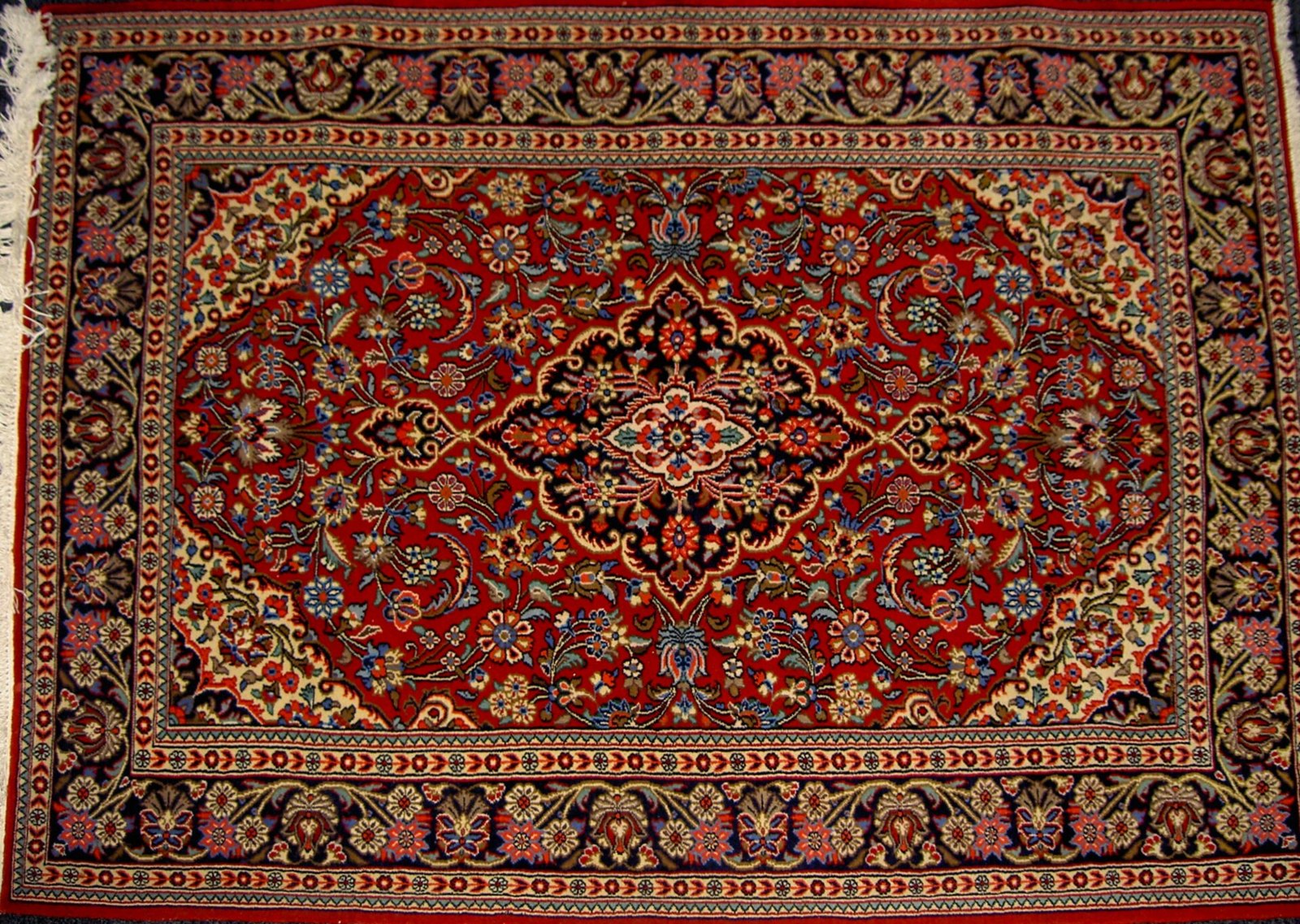
Subject comparison from the cited registry. Date, attribution and rights qualifications remain below; not authentication or maker certification.
Date unverified · Author unconfirmed; Commons attributes Fabienkhan · CC BY-SA 3.0 · Photo source ↗
Spelling and pronunciation
- Persian: قالی
- Transliteration: qāli
- English usage: Pile carpet
Spellings vary between dealers, museums and regions. Usage notes are under review.
How the term is used
Names a pile carpet; format usage varies, so record actual dimensions instead of applying a universal size threshold.
Common confusions
Different from qalicheh (a smaller rug) and from gelim (a flatweave).
Format and structure are separate
Qali or ghali normally identifies a pile carpet. Market size boundaries vary; record actual width and length without fringe instead of applying a universal threshold. Pair format vocabulary with structure and materials.
Machine-made carpets can copy handwoven face designs. Reverse, foundation and ends help describe construction, but no single clue is conclusive. Handwoven carpets may receive replacement fringe; a sewn end is a reason for investigation, not an automatic verdict.
Compare the evidence
| Object or term | What to examine | Limit of the evidence |
|---|---|---|
| Pile carpet | Foundation and knot-based pile | Name is not manufacture evidence. |
| Small rug | Measured format | Size convention varies. |
| Flatweave | No knotted pile | Different structure. |
Practical questions
- Does ghali guarantee Iranian handwork?
- No. Obtain explicit maker and production information. A Persian pattern on imported goods is not Iranian provenance.
Sources and further reading
- Encyclopaedia Iranica · Carpets
Weaving vocabulary and historical context; not object authentication or valuation.
Editorial draft awaiting specialist review. References provide context, not verification of every statement, object attribution or current workshop access.
Used in these crafts
A hand-knotted pile textile woven across Iran in city workshops, village looms and pastoral camps, distinguished by regional structure, palette and design vocabulary.
The workshop carpet tradition of Tabriz in East Azerbaijan, characterised by drawn cartoons, a distinctive hook-knife weaving method and a wide range of fineness grades.