
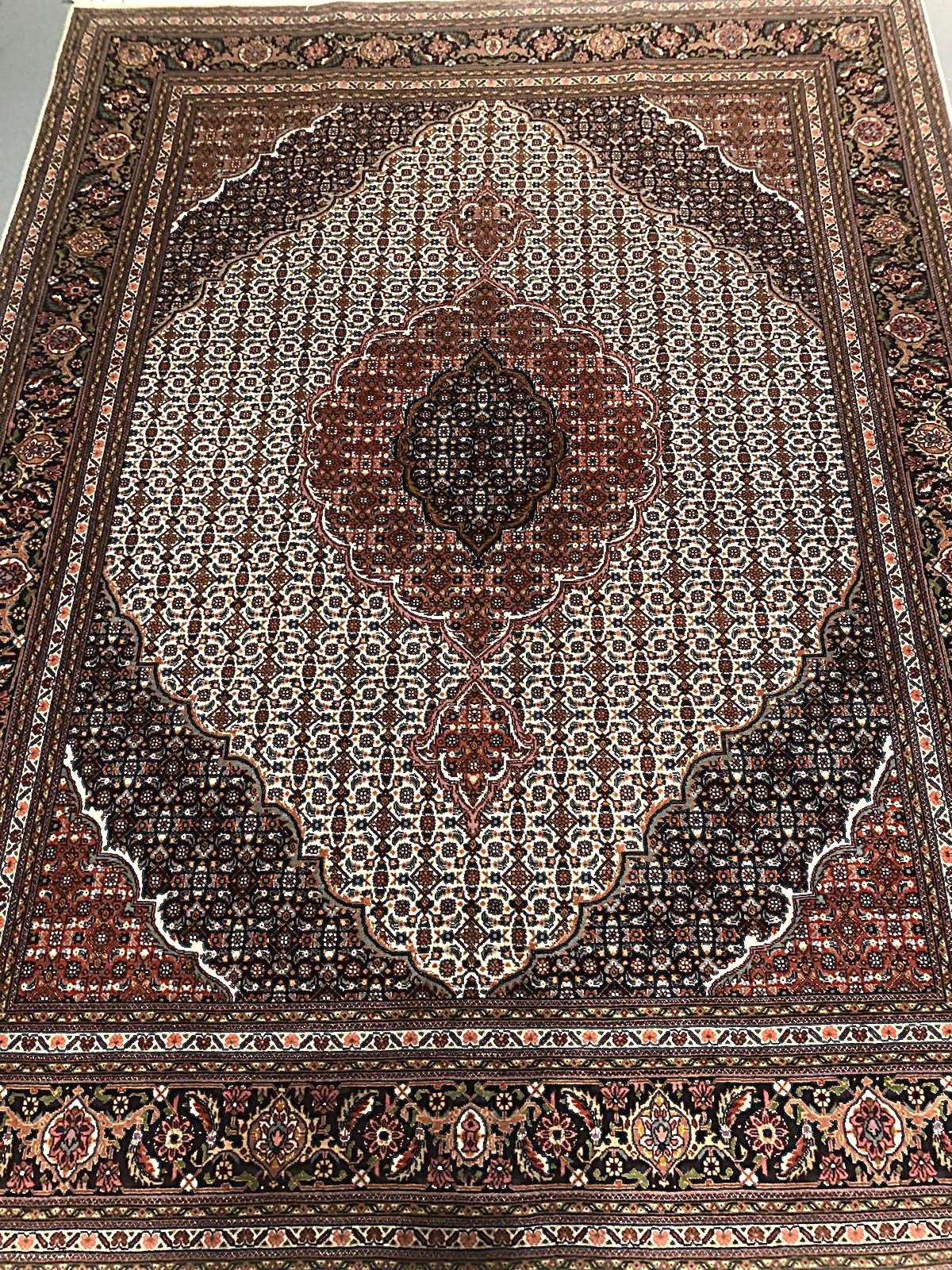
Carpet comparison only. This photograph does not resolve knot type or a density measurement; source qualifications remain below.
Listing image, 2025 · Arabesque Rugs (photographer not stated) · Permission status not reviewed · Photo source ↗
Spelling and pronunciation
- Persian: گره
- Transliteration: gereh
- English usage: Knot
Spellings vary between dealers, museums and regions. Usage notes are under review.
How the term is used
Means a carpet knot. It is used when describing knot types (symmetric or asymmetric) and knot density.
Common confusions
Knot type does not prove origin, because both knot types are used in Iran.
A structural unit, not an origin test
A carpet knot forms pile around foundation yarns. Symmetric and asymmetric knots occur in Iran, and neither assigns one town. Density statements need an area or length and a measurement method.
The reverse may show rows, wefts and repair changes, but a small photograph may not resolve knot construction. Do not pull pile or expose foundation as a test. Finer counts support drawing detail, not a complete judgement of quality.
Compare the evidence
| Object or term | What to examine | Limit of the evidence |
|---|---|---|
| Knot type | Actual construction | Does not prove locality. |
| Linear count | Knots over stated length | Not an area density. |
| Quality | Materials and finishing | Not density alone. |
Practical questions
- Do more knots always mean better work?
- No. Materials, tension, finishing, design and condition also matter.
Sources and further reading
- Encyclopaedia Iranica · Carpets
Weaving vocabulary and historical context; not object authentication or valuation.
Editorial draft awaiting specialist review. References provide context, not verification of every statement, object attribution or current workshop access.
Used in these crafts
A hand-knotted pile textile woven across Iran in city workshops, village looms and pastoral camps, distinguished by regional structure, palette and design vocabulary.
The workshop carpet tradition of Tabriz in East Azerbaijan, characterised by drawn cartoons, a distinctive hook-knife weaving method and a wide range of fineness grades.