
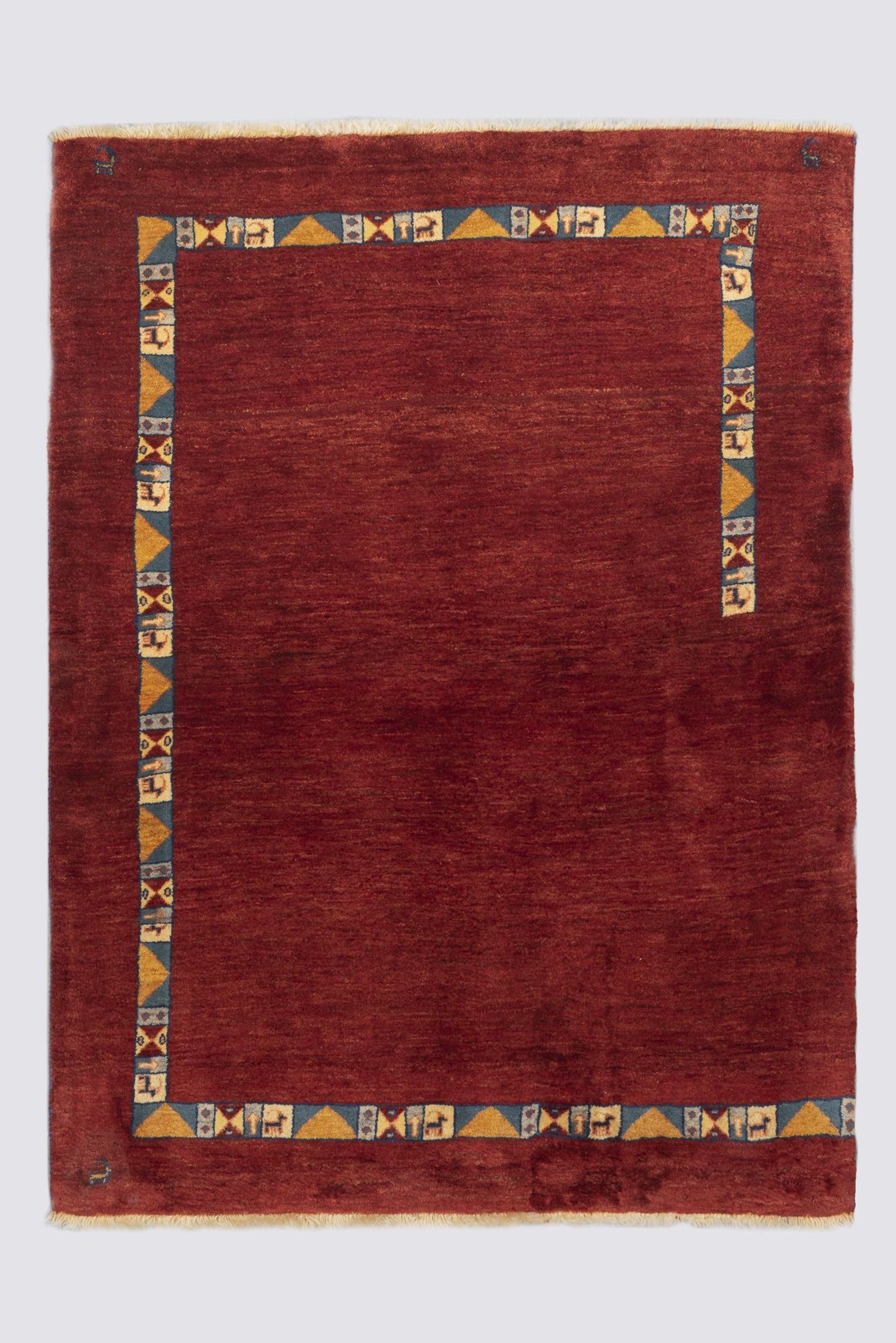
Subject comparison from the cited registry. Date, attribution and rights qualifications remain below; not authentication or maker certification.
Listing image, date unverified · Dyad Artisans (photographer not stated) · Permission status not reviewed · Photo source ↗
Spelling and pronunciation
- Persian: گبه
- Transliteration: gabbeh
- English usage: Gabbeh
Spellings vary between dealers, museums and regions. Usage notes are under review.
How the term is used
Means a thick, long-pile rug with simple designs, typically woven by weavers in Fars.
Common confusions
‘Gabbeh-style’ rugs are woven in other countries. Ask for the country of origin.
Long pile and a broad market category
Gabbeh is associated with thick pile and open designs in southern Iranian weaving. Contemporary workshop rugs need not be nomadic household objects to be genuine Iranian handwork. Those are different claims.
Abrash and freely drawn motifs cannot prove origin. Dye batches, fading and repairs change colour, while patterns are copied internationally. Examine foundation and maker documentation rather than using irregularity or a muted palette as certification.
Compare the evidence
| Object or term | What to examine | Limit of the evidence |
|---|---|---|
| Household textile | Documented maker and use | Design does not prove use. |
| Workshop rug | Production statement | May be contemporary genuine work. |
| Style-only import | Actual manufacture country | Design does not satisfy origin rule. |
Practical questions
- Is every gabbeh naturally dyed and handspun?
- No. Those are separate process claims requiring their own evidence.
Sources and further reading
- Encyclopaedia Iranica · Carpets
Weaving vocabulary and historical context; not object authentication or valuation.
Editorial draft awaiting specialist review. References provide context, not verification of every statement, object attribution or current workshop access.
Used in these crafts
A thick, coarsely knotted pile rug woven mainly by pastoral and village weavers of the Zagros, with open fields, few motifs and a directly personal design language.