
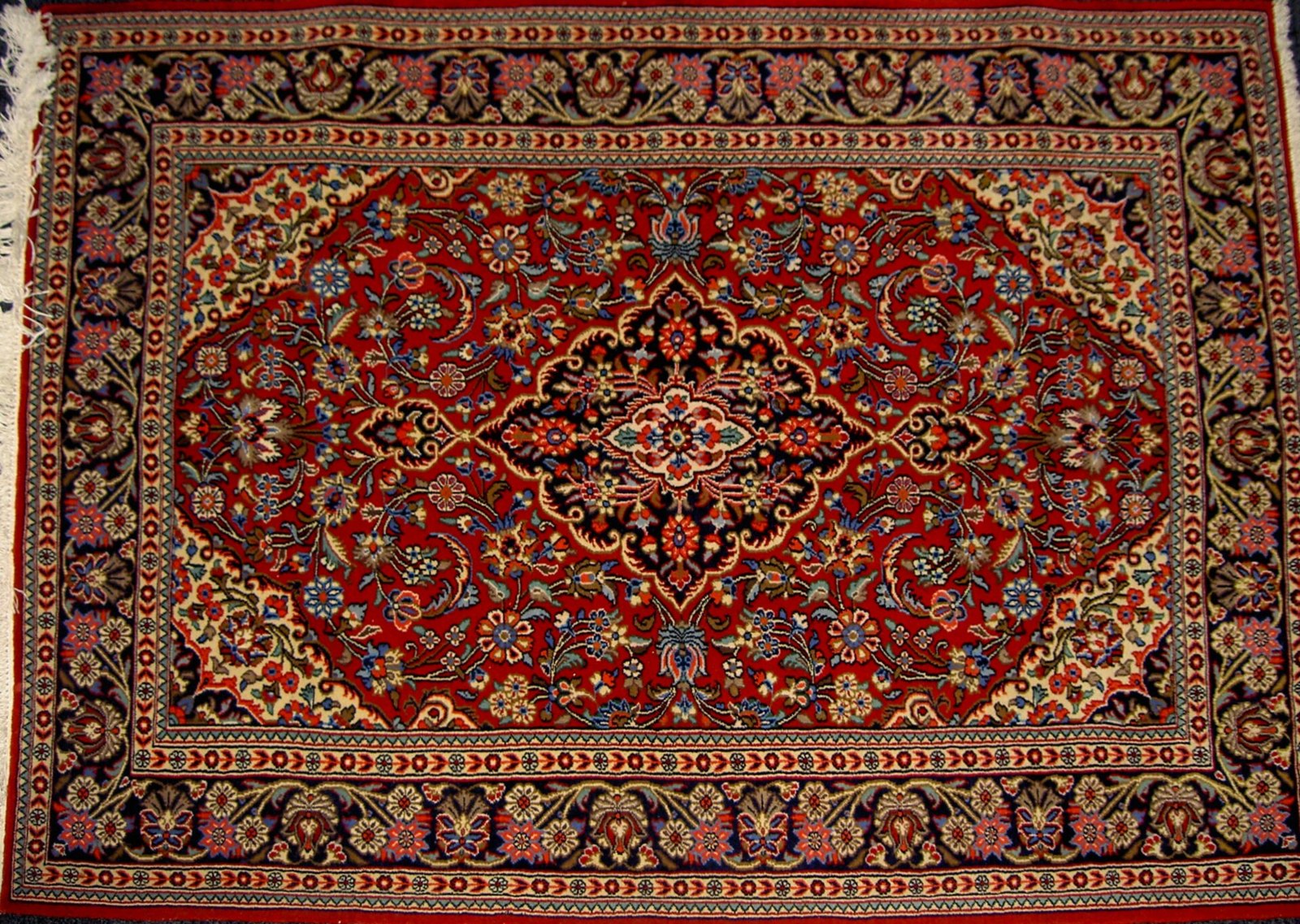
Subject comparison from the cited registry. Date, attribution and rights qualifications remain below; not authentication or maker certification.
Date unverified · Author unconfirmed; Commons attributes Fabienkhan · CC BY-SA 3.0 · Photo source ↗
Spelling and pronunciation
- Persian: قالیچه
- Transliteration: qālicheh
- English usage: Rug
Spellings vary between dealers, museums and regions. Usage notes are under review.
How the term is used
The diminutive of qali, commonly used for a smaller knotted rug; not a universal fixed size category.
Common confusions
Sizes vary by region; dealers also use terms such as zaronim and dozar.
A diminutive, not a grade
Qalicheh commonly means a smaller rug. Named dealer sizes are not universal fixed dimensions. A collecting record should state measurements and how they were taken rather than rely on a word alone.
A prayer-format piece, bag front and shortened carpet may have similar dimensions but different histories. Check ends, seams and border continuity before calling the current format original. Small size does not establish function, age or region.
Compare the evidence
| Object or term | What to examine | Limit of the evidence |
|---|---|---|
| Complete rug | Ends and format | Function is not size alone. |
| Shortened rug | Changed border sequence | Current size may be altered. |
| Bag front | Seams and assembly | Not necessarily a floor rug. |
Practical questions
- Can size prove original use?
- No. Consider construction, layout, alteration and provenance together.
Sources and further reading
- Encyclopaedia Iranica · Carpets
Weaving vocabulary and historical context; not object authentication or valuation.
Editorial draft awaiting specialist review. References provide context, not verification of every statement, object attribution or current workshop access.
Used in these crafts
A hand-knotted pile textile woven across Iran in city workshops, village looms and pastoral camps, distinguished by regional structure, palette and design vocabulary.