
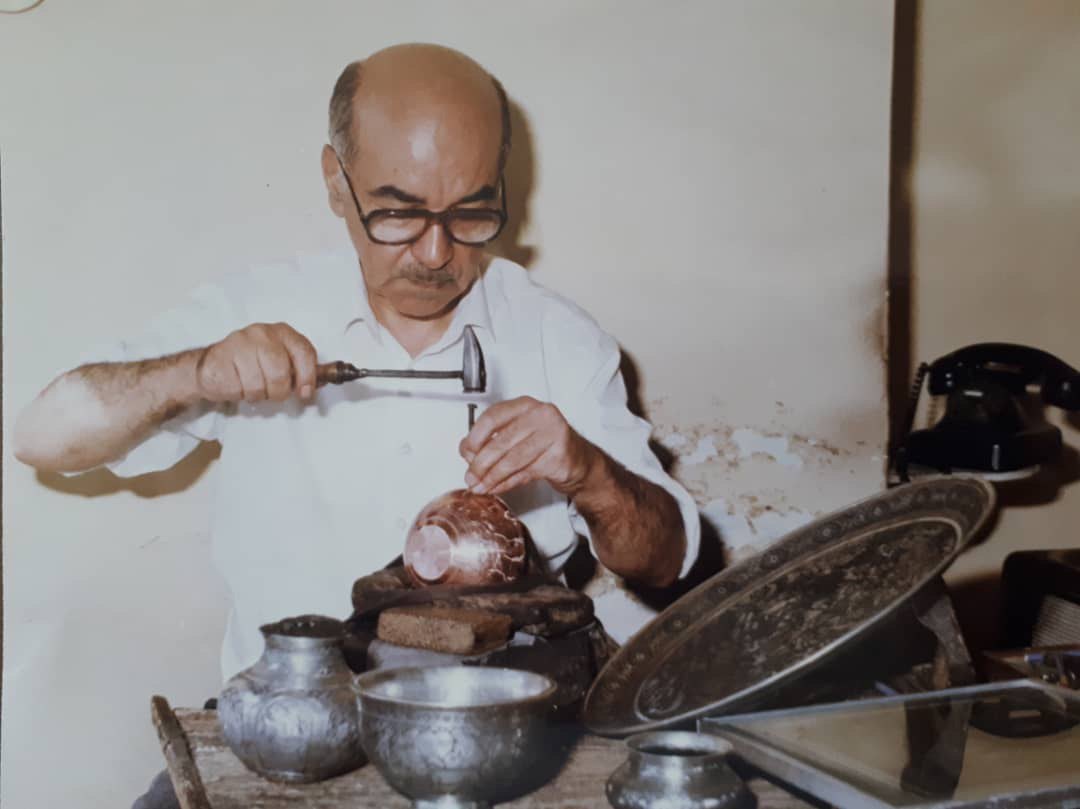
Subject comparison from the cited registry. Date, attribution and rights qualifications remain below; not authentication or maker certification.
2015-01-01 · Mbmasoudi · CC BY-SA 4.0 · Photo source ↗
Spelling and pronunciation
- Persian: قلمزنی
- Transliteration: qalam-zani
- English usage: Qalam-zani (metal engraving)
Spellings vary between dealers, museums and regions. Usage notes are under review.
How the term is used
Means hand engraving on metal with small chisels and a hammer, especially in Isfahan.
Common confusions
Etched or pressed metal is not qalamzani.
Forming and surface work
Qalam-zani describes tool-based chasing or engraving. The underlying body may be raised, cast or spun by another worker. Hand decoration does not prove every manufacturing stage was manual.
Observe lines, punched ground and relief without touching fragile surfaces. Cast, pressed and etched ornament can resemble tool work. Wear, repairs and coatings affect visible marks; depth alone is not a handwork grade.
Compare the evidence
| Object or term | What to examine | Limit of the evidence |
|---|---|---|
| Chasing | Displaced metal | Relief can also be cast. |
| Engraving | Cut lines | Motif alone is insufficient. |
| Pressed ornament | Die-imparted pattern | May imitate handwork. |
Practical questions
- Does depth prove engraving?
- No. Consider documented tools, construction and maker statements together.
Sources and further reading
- Canadian Conservation Institute · Caring for cultural heritage
Preventive care context; not a glossary etymology source or individual treatment assessment.
Editorial draft awaiting specialist review. References provide context, not verification of every statement, object attribution or current workshop access.
Used in these crafts
The Iranian tradition of decorating copper, brass and silver vessels with small chisels struck by hammer, working the metal into line, ground and relief.