
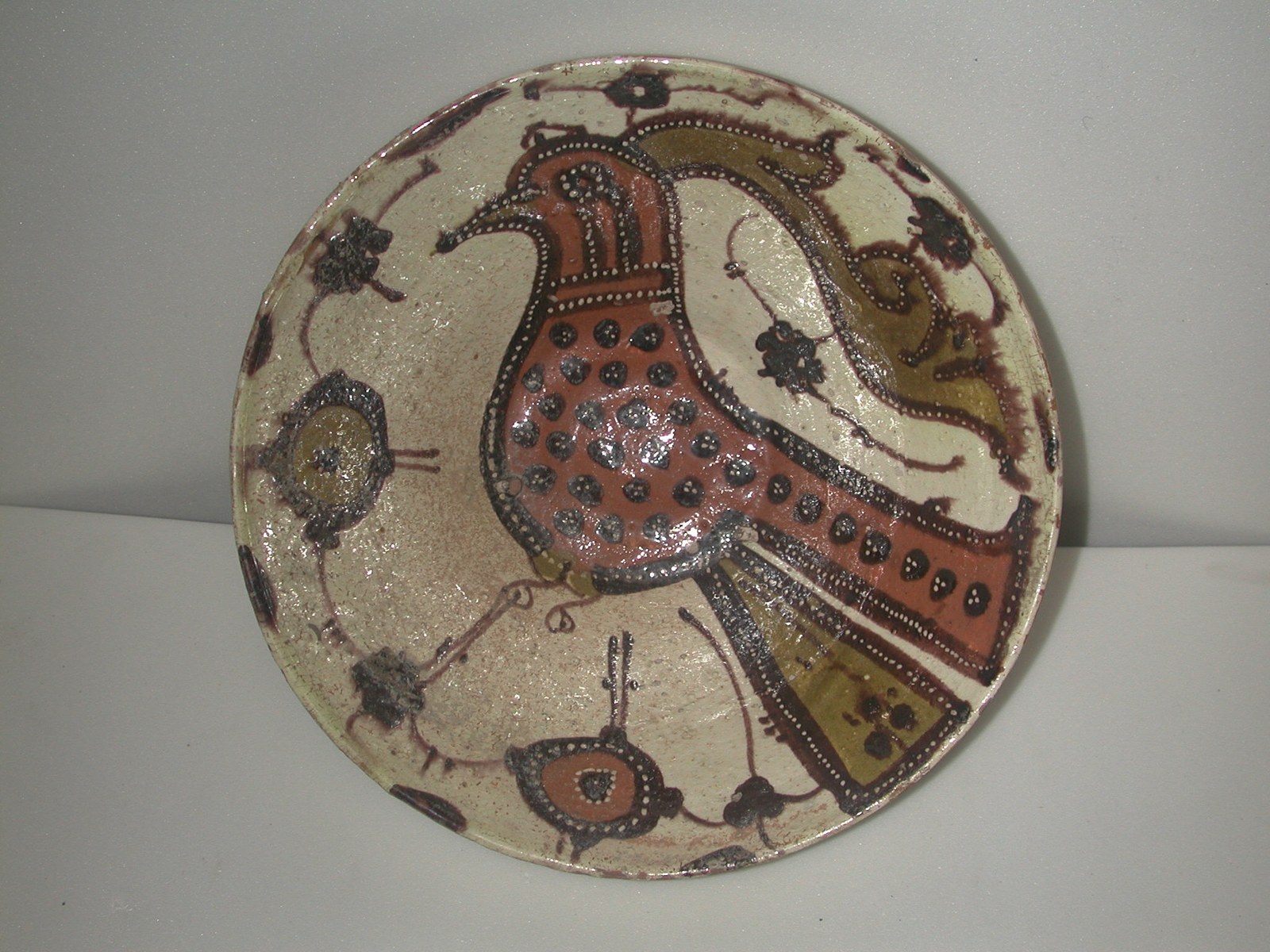
Bowl with Bird and Flowers, 58.91; Iran, 10th century
10th century · CP-LIB-MET-451477 · The Metropolitan Museum of Art · CC0 (museum open access; resized JPEG) · Photo source ↗
Meaning
A ceramic classification and a geographical attribution are separate catalogue fields. A ware name should not silently replace the source’s stated locality.
Spelling and pronunciation
- Persian: نام گروه سفال و محل انتساب
- Transliteration: nam-e goruh-e sofal
- English usage: Ware name and locality
Spellings vary between dealers, museums and regions. Usage notes are under review.
Classification is not the same as manufacture location
Ceramic ware names organise objects by shared technical, visual or historical characteristics. A name may be associated with a place without locating every individual example there. The Met’s bird-and-flowers bowl is described as Sari ware in its medium field, while the city field says Amul. Keeping those fields separate preserves rather than simplifies the evidence.
Do not silently replace a catalogue locality with the more familiar ware label. Country, city, findspot, production attribution and current collection are different relationships. If a source qualifies one of them with “possibly” or “attributed to,” that qualification must remain visible. A geographical-sounding name is not a certificate of origin.
Compare materials before merging categories
For this bowl, the source describes white slip, polychrome slip decoration and transparent glaze. Those technical layers provide a more useful comparison than grouping every bird bowl under one regional label. Another library object has an opaque-white-glaze description and a qualified Gurgan attribution; the shared subject does not make its surface system or locality identical.
Record the body, ground, decoration and coating exactly as the institution states them. A photograph can support discussion of layout and surviving surface, but it cannot determine every ingredient or firing stage. When classification changes in later scholarship, cite the new account rather than rewriting an earlier source as though it had always used the same terminology.
Reading dealer and auction labels
A sale label such as “Sari type” may indicate comparison rather than documented production. Ask what supports it and whether the description distinguishes attributed origin from recorded provenance. Similar palette, bird imagery or bowl shape is insufficient to establish that a market object is Iranian, handmade or tenth-century.
Contemporary Iranian ceramics need their own maker and production records. Historical wares additionally need lawful ownership and export documentation and object-specific condition information. A museum illustration is not a photograph of the item offered for sale. Keeping the label’s scope explicit makes both research and buying decisions more responsible.
Compare the evidence
| Object or term | What to examine | Limit of the evidence |
|---|---|---|
| Ware name | Classification and supporting scholarship | Not always a production locality. |
| City field | Exact source wording and qualifiers | Do not replace it with a ware label. |
| Dealer “type” | Basis for comparison | Not documented provenance. |
Practical questions
- Was the illustrated Sari-ware bowl catalogued as from Sari?
- The Met API consulted on 14 October 2026 gives Amul in its city field and Sari ware in its medium field. Preserve both rather than conflating them.
- Does a ware label prove Iranian handmade origin?
- No. A contemporary listing requires actual maker and production evidence; historical objects require their own attribution and lawful provenance.
Sources and further reading
- The Metropolitan Museum of Art: Bowl with Bird and Flowers (58.91)
Object-specific catalogue; consulted 14 October 2026. Comparative terminology, not authentication of another object.
Editorial draft awaiting specialist review. References provide context, not verification of every statement, object attribution or current workshop access.
Used in these crafts
Earthenware decorated with coloured slips under a clear or tinted glaze, including early Islamic Nishapur-type wares and later village production such as Lalejin.