
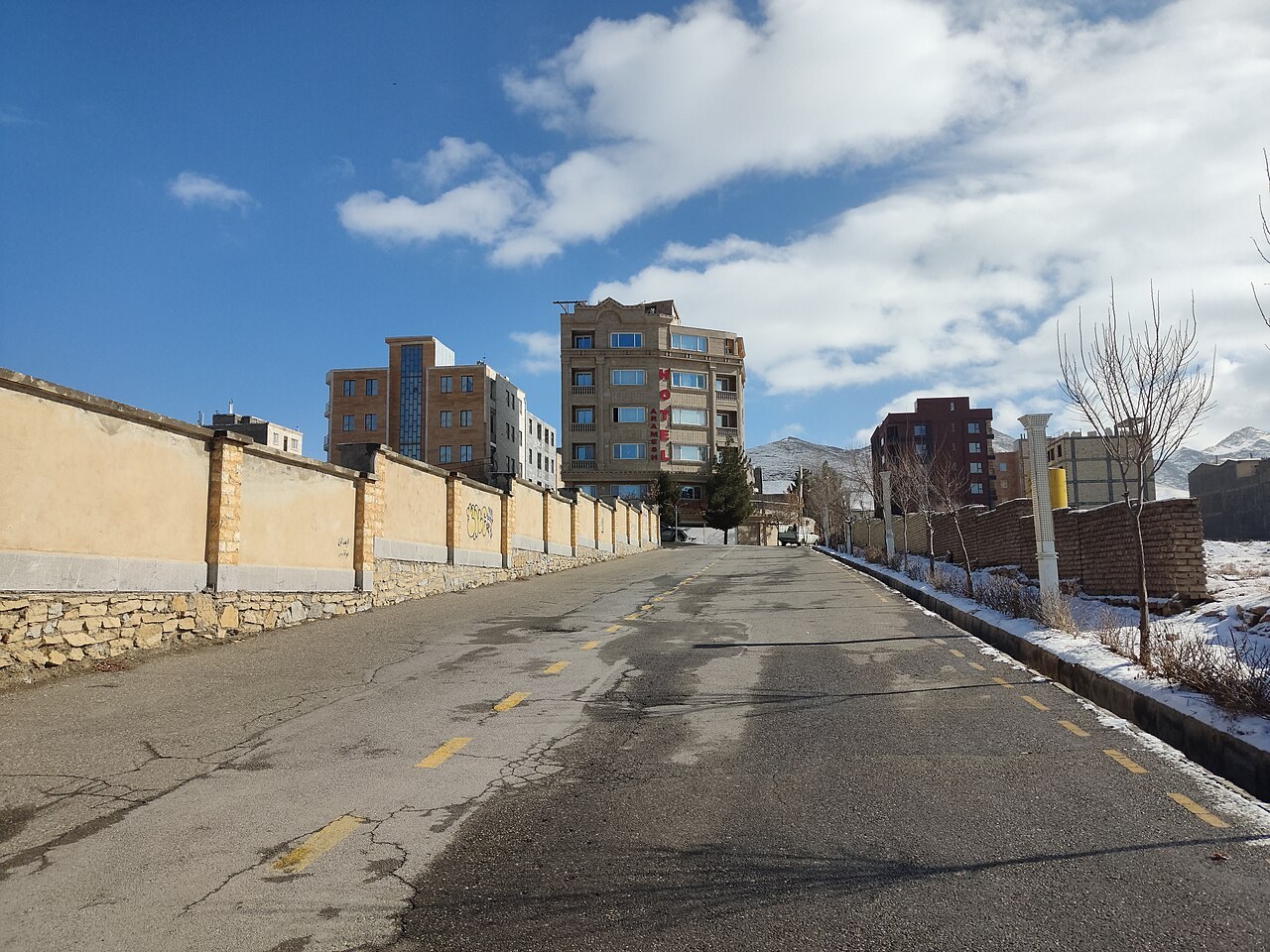
Malayer, 2023 · Town setting only, not evidence of local manufacture or current visitor access.
Parsa 2au · CC BY-SA 4.0 (Wikimedia Commons; resized/re-encoded JPEG)
2023-02-03 10:42:59 · Source metadata and photograph visually checked 24 October 2026; no visible watermark.
Photograph source · Wikimedia CommonsA field observation record
- 01
Observe
Record material, structure, joins and wear before interpreting a pattern or city label.
- 02
Document
With permission, photograph the whole object, reverse, edges and any maker mark; retain repairs in the frame.
- 03
Separate claims
Keep maker, production location, point of sale and proposed age as separate statements, with their evidence.
Setting
Malayer lies south of Hamadan in farming country, a road junction with a modest covered market.
Why this place matters for craft
Malayer is a collection name in the carpet trade for weaving from a group of villages, and pieces sold under it vary widely in structure. Grape growing and dried fruit dominate the wider economy.
Village and city labels
Malayer is a rug-trade category and a city. A wider village district may sit behind the name. Ask whether the attribution is documented manufacture, collection or stylistic grouping.
Herati and medallions alone cannot settle origin. Compare foundation, knotting, format and ends. Vineyard context should not be turned into an unsupported account of dyes.
Altered formats
Record complete ends and border sequence. Shortened runners and joined pieces may retain attractive fronts. Dimensions and reverse images are important.
Irregularity can mean weaving variation, distortion or repair. It is not a universal handwork test. Inspect replaced sides without pulling threads or folding sharply.
Condition and provenance
Retain exact labels, seller explanations, materials and repair records. Museum comparisons explain a documented structure but cannot certify shop stock.
Pack according to flexibility and condition. Confirm access and legal requirements independently. A Hamadan bazaar view is not evidence of a Malayer workshop.
Objects, evidence and attribution limits
| Object or claim | What to examine | What it cannot prove |
|---|---|---|
| District attribution | Village or collection account | May be a trade category. |
| Runner | Original ends and borders | Format may be shortened. |
| Irregularity | Structure and repair | Not a handmade test. |
Common questions
- Can a repeated herati design establish Malayer?
- No. It is a comparison point shared by wider weaving traditions.
Sources and further reading
- Encyclopaedia Iranica · Carpets
Weaving terminology and regional history; not certification of a seller's attribution.
- Canadian Conservation Institute · Caring for cultural heritage
Material-specific preventive care; not an assessment or treatment prescription for an individual object.
Editorial draft, not independently checked by a named craft specialist. References provide context, not authentication or confirmation of current visitor access.
Quarters, bazaars and workshops
| Area | What is there |
|---|---|
| Town bazaar | Rug dealers serving village weavers. |
What to look for on an object
- Malayer-type rug — Single-weft village structure with a thin, firm handle; designs borrow from both Hamadan and Sarouk idioms.
These notes are for learning to look, not for authentication. No description here certifies an object, its age or its origin.
Practical notes
- Trade rather than tourism; Hamadan is the easier base.
- Workshop addresses, bazaar hours and market days change; confirm locally before travelling.
Season: Spring and autumn.
Used in these crafts
A hand-knotted pile textile woven across Iran in city workshops, village looms and pastoral camps, distinguished by regional structure, palette and design vocabulary.
A flat, pileless woven textile made across Iran by interlocking or slit-weaving coloured weft threads over a warp, used as floor covering, storage bag, saddle cover and tent divider depending on region.
A narrow-strip flatwoven textile, usually made in warp-faced bands on a portable loom and then sewn together into a wider cloth, traditionally used as bedding cover, floor spread or door hanging by village and pastoral households.