
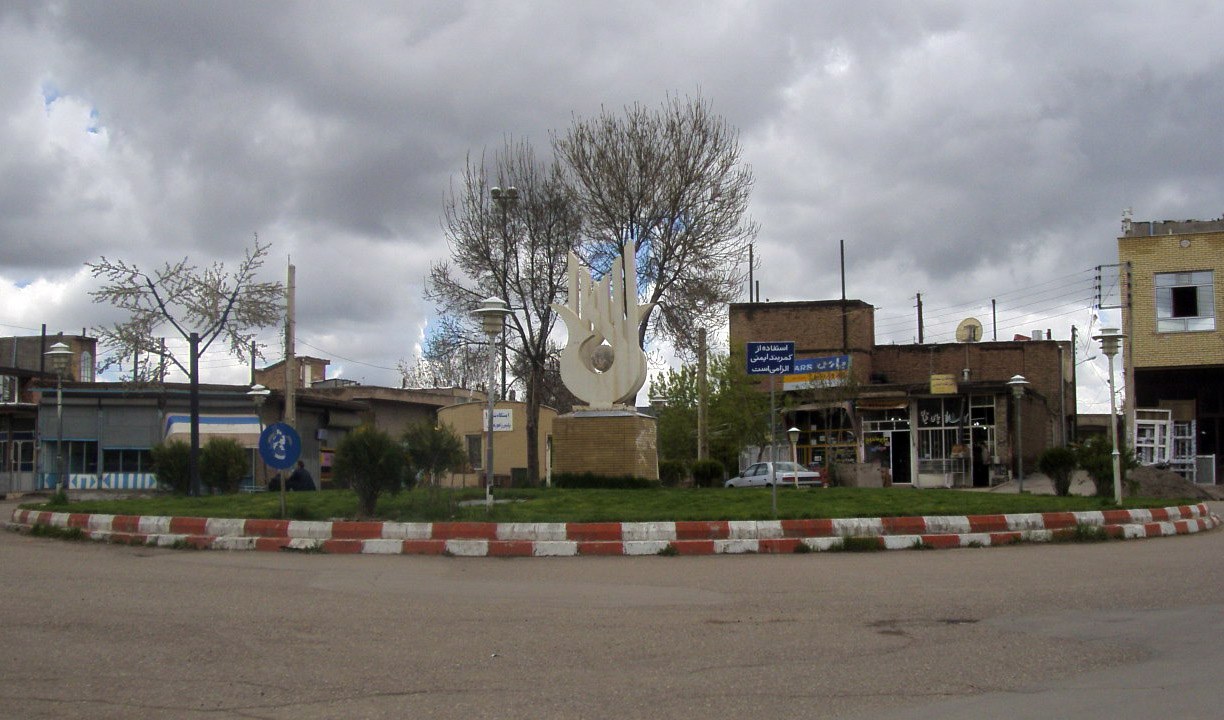
A unknown square in Heris · Town setting only, not evidence of local manufacture or current visitor access.
user:Elmju · CC BY-SA 3.0 (Wikimedia Commons; resized/re-encoded JPEG)
2010-04-11 · Source metadata and photograph visually checked 24 October 2026; no visible watermark.
Photograph source · Wikimedia CommonsA field observation record
- 01
Observe
Record material, structure, joins and wear before interpreting a pattern or city label.
- 02
Document
With permission, photograph the whole object, reverse, edges and any maker mark; retain repairs in the frame.
- 03
Separate claims
Keep maker, production location, point of sale and proposed age as separate statements, with their evidence.
Setting
Heriz lies on the slopes east of Tabriz at high altitude, surrounded by a group of weaving villages that share the trade name.
Why this place matters for craft
Heriz carpets are usually described as village production organised for export from the later nineteenth century, with bold angular medallions and a hard-wearing wool often attributed to local water and pasture. Such material explanations are traditional in the trade and not firmly established.
Angular design and loom decisions
The familiar Heriz medallion is best read as a composition adapted to a knot grid. Stepped outlines, broad borders and large colour areas make a design legible across a room. Compare the corners and the transition between field and border: these reveal how a pattern was fitted to the actual width and length of the loom rather than merely repeated as a graphic.
Small changes do not automatically prove hand manufacture. Machine production can imitate irregularity, and hand weaving can be highly regular. The reverse, foundation and end construction matter alongside the drawing. Ask for uncropped views and a description of how the rug was made before treating a design label as an origin statement.
Heriz, Serapi and the language of the trade
Heriz identifies a place and a broad commercial family of rugs from a wider district. Serapi is frequently used by dealers for certain older, often spaciously drawn examples, but it is not a simple certified grade or an independently proven village of origin. Definitions vary between catalogues and sellers.
Record the seller's exact label, proposed date and reasons for attribution. A large medallion, muted palette or premium price cannot resolve those claims. Historical export trade also means the place where a rug was bought, collected or sold may differ from the place where it was woven. Ownership records and structural comparisons help distinguish these stages.
Wear, repairs and everyday use
Check high-traffic areas and border edges for exposed foundation, low pile and restoration. A heavily repiled medallion may look stronger than surrounding original areas, while repaired side bindings can hide earlier losses. Request an annotated condition description rather than relying on a general assurance that the rug is in good condition.
Hard-wearing is a relative description, not permission to ignore age. Use a suitable underlay, keep the textile dry and avoid direct sunlight and damp storage. Older rugs with brittle foundations need a textile specialist's advice before cleaning or installation. Claims that local water or pasture alone explain exceptional wool strength should be treated as trade lore unless supported by specific evidence.
Objects, evidence and attribution limits
| Object or claim | What to examine | What it cannot prove |
|---|---|---|
| Heriz-design rug | Foundation, reverse and written production location | Design is reproduced beyond the Heriz district. |
| Serapi-labelled rug | Catalogue definition, proposed date and condition | The term is not a universal quality certificate. |
| Restored antique | Repiling, side bindings and exposed warps | Front photographs may conceal substantial intervention. |
Common questions
- Does Serapi always mean a more valuable carpet?
- No. It is a variable trade label. Value and attribution depend on the individual rug's construction, condition and documented history.
- Can a Heriz pattern prove Iranian manufacture?
- No. Ask for evidence of production location and hand-knotting; a pattern name alone establishes neither.
Sources and further reading
- Encyclopaedia Iranica · Carpets
Regional and historical reference framework; individual rug attributions still require examination.
Editorial draft, not independently checked by a named craft specialist. References provide context, not authentication or confirmation of current visitor access.
Quarters, bazaars and workshops
| Area | What is there |
|---|---|
| Village looms | Weaving is domestic and dispersed across the district; there is no central market. |
What to look for on an object
- Heriz-type carpet — Large angular medallion, thick handle, coarse but even knotting; the design is drawn in straight lines rather than curves.
These notes are for learning to look, not for authentication. No description here certifies an object, its age or its origin.
Practical notes
- Visiting looms requires a local contact; the district has little visitor infrastructure.
- Tabriz is the practical market for Heriz weavings.
- Workshop addresses, bazaar hours and market days change; confirm locally before travelling.
Season: Summer and early autumn.
Used in these crafts
A hand-knotted pile textile woven across Iran in city workshops, village looms and pastoral camps, distinguished by regional structure, palette and design vocabulary.
Durable, geometric village carpets from the Heris area of East Azerbaijan, with large angular medallions.