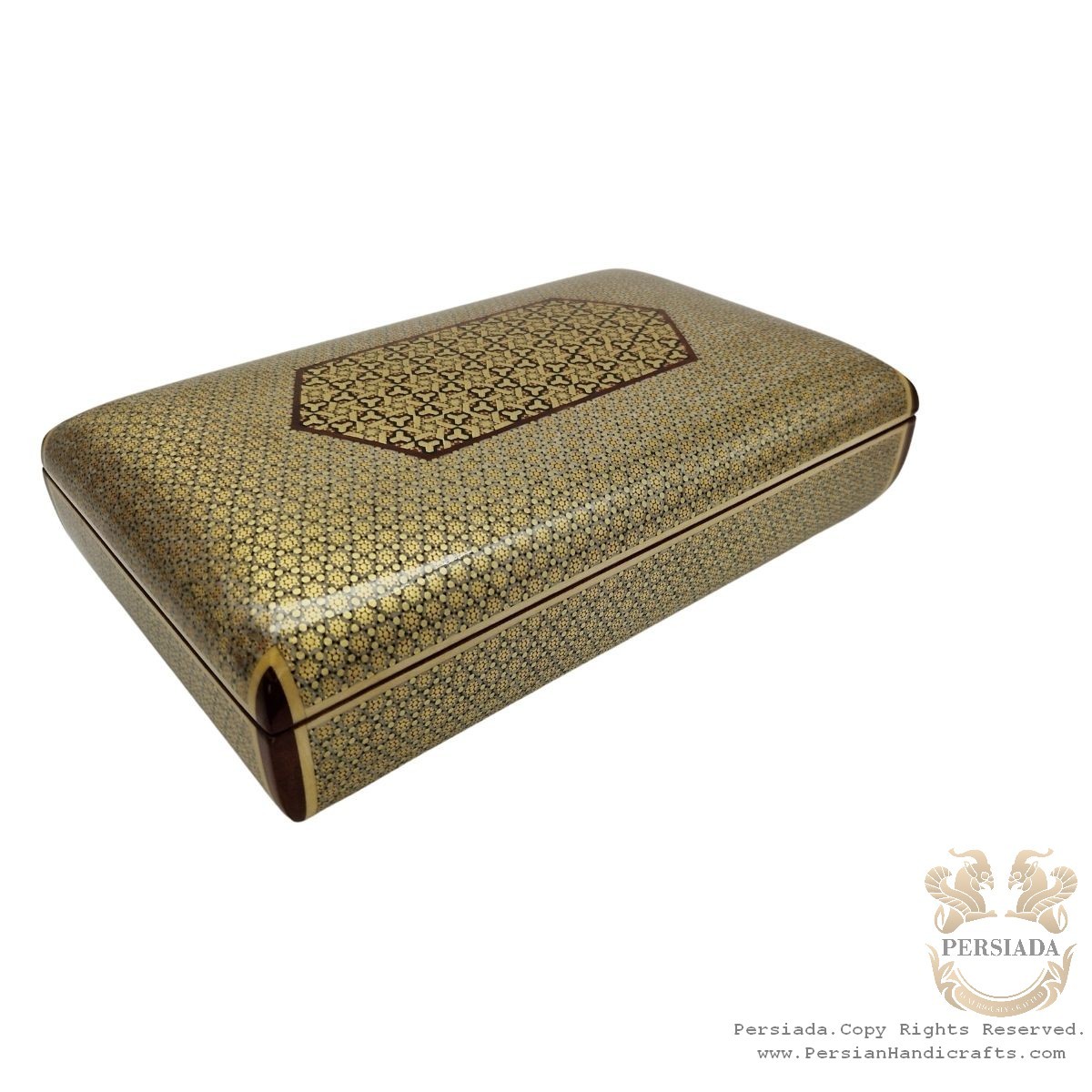
در خطر نابودیخاتمکاریkhātam-kāri
هنری ایرانی برای کارگذاری تزئینی که در آن میلههای ظریف چوب، استخوان و فلز در واحدهای ستارهای دستهبندی میشوند، به ورقههای نازک بریده میشوند و بر سطح چوبی چسبانده میشوند تا موزاییکی هندسی و متراکم شکل بگیرد.
خواندن مدخل ← در معرض خطرترمهtermeh
پارچهای منقوش ایرانی که با پودهای اضافی بافته میشود، بهطور تاریخی از ابریشم و پشم، و بیش از هر جای دیگر با یزد و کرمان پیوند دارد.
خواندن مدخل ← در معرض خطرقلمزنیqalam-zani
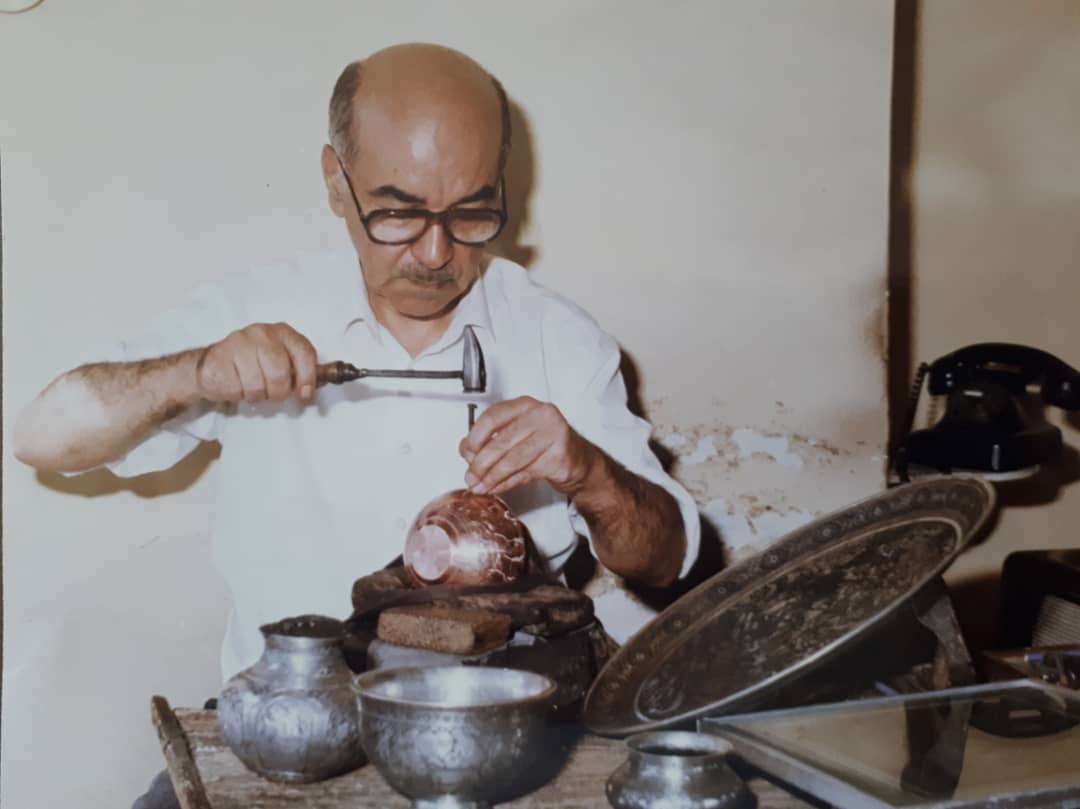
سنت ایرانی تزئین ظروف مسی، برنجی و نقرهای با قلمهای ریز که با چکش کوبیده میشوند و فلز را به خط، زمینه و برجستگی میسازند.
خواندن مدخل ← در معرض خطرJajimjājim
A narrow-strip flatwoven textile, usually made in warp-faced bands on a portable loom and then sewn together into a wider cloth, traditionally used as bedding cover, floor spread or door hanging by village and pastoral households.
خواندن مدخل ← در معرض خطرQalamkar block printingqalam-kār
A resist-dyed and block-printed cotton textile, historically associated with Isfahan, in which carved wooden blocks stamp repeating floral and figural patterns onto cloth in successive colour stages.
خواندن مدخل ← در معرض خطرPateh embroidery (Kerman)pateh
A hand-embroidered wool textile from Kerman in which coloured silk or wool threads are worked in dense chain and satin stitching over a woollen ground, typically in a limited palette against a natural or dyed field.
خواندن مدخل ← در معرض خطرSermeh-duzisermeh-duzi
A metal-thread embroidery technique in which fine gold or silver wire, or wire-wrapped thread, is couched onto velvet or other heavy cloth to create raised, reflective patterns, historically used on ceremonial garments and furnishings.
خواندن مدخل ← در معرض خطرNamad feltnamad
A non-woven wool textile made by matting and pressing raw wool fibres with moisture, heat and friction rather than by weaving, traditionally produced across Iran for floor coverings, cloaks and protective mats.
خواندن مدخل ← در خطر نابودیZilu (Meybod)zilu
A dense, pileless cotton floor covering woven on a horizontal loom, historically centred on the town of Meybod near Yazd, known for its plain-weave structure and geometric pattern created through warp and weft colour arrangement.
خواندن مدخل ← در معرض خطرFiligree (Malileh)malīleh-kāri
A metalworking technique in which fine drawn wires of silver or gold, often twisted or beaded, are soldered into openwork lattices and coiled floral forms to build jewellery, vessels and decorative panels.
خواندن مدخل ← در معرض خطرMina'i waresofāl-e minā'i
A historic overglaze-enamelled stonepaste ware produced mainly in Iran during the twelfth and early thirteenth centuries, decorated with figural and courtly scenes painted in multiple colours applied after glazing and fixed by a low second firing.
خواندن مدخل ← در معرض خطرGereh-chini latticegereh-chini
A joinery technique for building geometric lattice screens and panels from small, precisely cut wooden pieces assembled without glue or nails, using interlocking notched joints to form windows, doors and room dividers with openwork star and polygon patterns.
خواندن مدخل ← در معرض خطرWood carving (Monabbat)monabbat-kāri
A relief wood-carving technique in which solid panels, furniture and architectural elements are carved directly with chisels to produce raised or recessed floral, arabesque and geometric ornament, distinct from inlay techniques that build a surface from separate pieces.
خواندن مدخل ← در معرض خطرPersian lacquer paintinglāki-kāri
A decorative technique in which papier-mâché or wooden objects, such as boxes, mirror cases and pen boxes, are painted with fine miniature-style scenes or floral ornament and then sealed under multiple coats of clear lacquer varnish.
خواندن مدخل ← در معرض خطرTurquoise inlay (Firuzeh-kubi)firuzeh-kubi
A decorative technique, associated particularly with Mashhad, in which small chips of turquoise are set edge to edge with adhesive onto a metal object's surface to create a dense mosaic-like covering, most often seen on vessels, jewellery and decorative plates.
خواندن مدخل ← 
 خواندن مدخل کامل ←