
Definition
Qalamkar denotes cotton cloth decorated with dense repeating pattern applied by carved wooden printing blocks, historically combined with mordant dyeing and, in the finest work, some hand-finishing with a pen (the word qalam refers to this pen or reed tool). The term is used both for the technique and for the finished tablecloths, curtains and hangings it produces.
Unlike embroidery-based textiles, qalamkar pattern is built up through successive printing and dyeing stages, with different blocks applying outline and then colour fills, so registration between blocks is a central technical concern that directly affects the crispness of the finished design.
History
Block-printed and resist-dyed cotton is documented in Isfahan from at least the Safavid period, when the city's textile workshops served both domestic use and trade along routes connecting Iran to South Asia and Europe, regions with related but distinct block-printing traditions of their own. The exact lines of technical exchange between these traditions are not fully settled in the published literature.
Production continued through the Qajar and Pahlavi periods, adapting palette and subject matter for changing markets, including tourist and export demand in the twentieth century which favoured recognisable motifs such as the paisley-like boteh and garden scenes over more specialised religious or narrative imagery.
Materials
Plain-weave cotton cloth is the standard ground. Mordants, traditionally derived from materials such as alum, fix natural dyes to the fibre, while carved pear or other close-grained wood blocks carry the design.
- Cotton cloth as the printing ground
- Carved wooden printing blocks, one per colour or outline stage
- Mordants to fix dye to the fibre
- Natural dyes historically, with synthetic dyes common in later production
Technique
The printer stamps an outline block across the cloth first, aligning each impression against the previous one to keep the repeat consistent, then applies colour blocks in sequence, sometimes interspersed with dye baths or resist steps depending on the palette required. Multiple colours require the cloth to pass through several printing and fixing stages before the design is complete.
Finer qalamkar work has historically involved hand-painted or hand-finished details added with a pen after block printing, distinguishing higher-grade pieces from cloth produced by printing alone, though this hand-finishing has become less common as production has contracted.
Motifs
Qalamkar patterns favour dense garden and floral compositions, bird-and-blossom (gol-o-morgh) scenes, arabesque borders and the boteh figure, often organised into repeating registers suited to yardage and tablecloths. Figural and narrative scenes, including scenes with religious or courtly subject matter, appear in some historical pieces intended for devotional or decorative hangings.
Collecting and identification
Under magnification, block-printed pattern shows the slightly uneven edges and occasional registration mismatch typical of hand-stamped repeats, distinct from the perfectly even repeat of roller or screen printing used in modern factory imitations. Colour bleeding or a stiff, resinous hand can indicate synthetic pigment printing rather than traditional mordant dyeing.
Because qalamkar has been widely imitated by machine printing marketed under the same name, buyers should ask specifically whether a piece is hand block-printed and treat unverifiable claims of age or origin with caution.
Preservation
Cotton qalamkar textiles should be kept away from prolonged direct light, which fades printed colour unevenly, and stored flat or loosely rolled rather than tightly folded to prevent creasing along dye lines. Washing, if needed, should follow guidance appropriate to the specific dyes used, since some traditional dyes are more water-fast than others, and a conservator's advice is preferable for older or valued pieces.
گالری
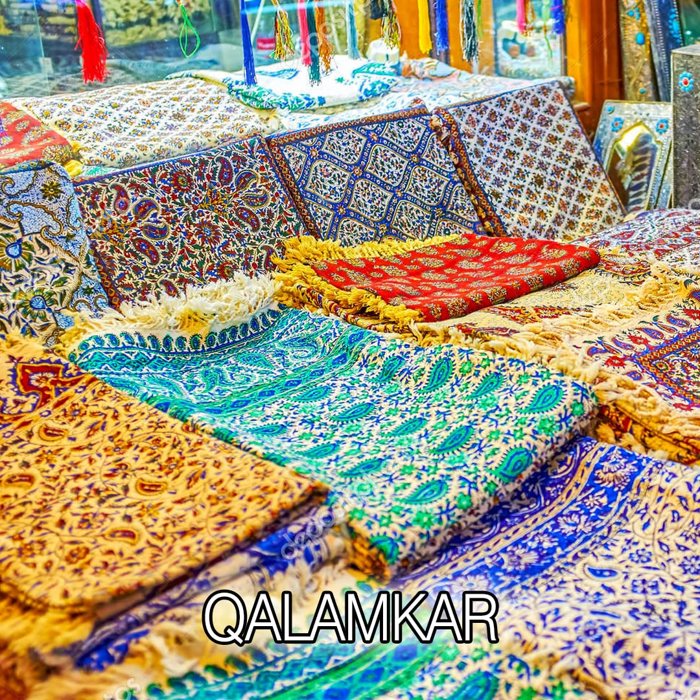
تصاویر نمونههایی معرف هستند، نه سندی برای رکوردهای نمونهٔ بازارچه. منبع و وضعیت مجوز آنها در بخش اعتبارهای عکاسی آمده است.
بازارچه
در حال حاضر هیچ شیئی از این صنعت فهرست نشده است.
- Construction
- Printing in layers
- Object reading
- Structure, materials and condition before attribution
- Evidence status
- Educational summary under editorial review
Printing in layers
Wooden blocks are aligned and impressed on cotton cloth. Workshops use different colour systems: some require mordants and washes, while other present-day printing uses prepared pigments. A printed design is not underglaze decoration, which belongs to ceramics.
Check registration
Inspect whether outlines and coloured fills align; note repeat spacing, fabric construction and later repairs. Slight variation may be consistent with a block process but cannot prove a workshop or date.
- Printed outlines and colour fills
- Visible repeats and registration points
- Cotton cloth and edge finishes
Context, preservation and evidence
Workshops, households, museums and contemporary makers can use the same craft name in different ways. Record who made, sold and documented a piece before assigning a date or location. Condition and technique are observable; origin, attribution and value require further evidence.
These reading notes are educational, not an authenticity certificate or valuation. The associated source list is a starting point; many claims and translations still require specialist review.
Qalamkar block printing در تصاویر
این تصاویر جنبهٔ نمایشی دارند و مربوط به شیء خاصی در فهرست نیستند. منابع در صفحهٔ منابع تصاویر آمده است.
| Type | How to distinguish it |
|---|---|
| Qalamkar | Motifs transferred to cloth with blocks |
| Pateh | Motifs built with needlework |
| Haft-rang tile | Painted ceramic surface, then fired |
اصطلاحات کلیدی
- Qalamkar قلمکار
- Block-printed textile; distinguish from hand-painted cloth.
منابع و مآخذ
- Book: Wulff, H. E. The Traditional Crafts of Persia. MIT Press, 1966.
- Museum catalogue: Victoria and Albert Museum, Middle East collection records, printed and painted textiles.
در جایی که خاستگاه، تاریخ یا نمادشناسی محل مناقشه است، این مدخل روایتهای رقیب را بیان میکند نه اینکه میان آنها یکی را برگزیند. تحلیل سردبیری بهعنوان واقعیتِ مستند ارائه نمیشود.