
Definition
Malileh is built not by cutting or engraving a solid sheet but by shaping wire itself into the design. Silver or gold wire is drawn to a fine gauge, sometimes twisted into a rope-like thread or flattened into a beaded strip, then bent into scrolling and geometric units that are soldered edge to edge, leaving open interstices rather than a filled ground.
The resulting surface is characteristically light for its apparent size and translucent where the openwork is not backed by a plate. Larger objects, such as bowls or boxes, combine filigree panels with a soldered metal frame that carries the structural load, while jewellery pieces may be filigree throughout.
History
Filigree metalwork has a long history across the wider region, and Iranian production is documented from at least the Qajar period, when Zabol and other towns in the southeast became associated with fine silver filigree jewellery and small vessels. The craft's deeper regional lineage is harder to pin down precisely, since wire-based decoration overlaps with related traditions in neighbouring areas and firm attribution of early pieces is often disputed.
Through the twentieth century, filigree work continued as a specialty craft associated particularly with Sistan and Baluchestan province and with Isfahan workshops producing decorative boxes and tableware. Demand shifted over the century between jewellery for domestic wear and small decorative objects made for a wider market, and the number of workshops able to produce the finest, most delicate wire density has narrowed.
Materials
Silver is the most common base metal for fine filigree jewellery, valued for its ductility when drawn into thin wire; gold filigree is made for higher-value pieces. Larger decorative objects, boxes and trays are more often worked in silver-plated copper or brass, which is cheaper to draw and solder in volume.
- Fine-gauge silver or gold wire, plain, twisted or beaded
- Brass or copper wire for larger and lower-cost pieces
- Solder appropriate to the base metal
- A soldered outer frame or edge wire to hold the openwork panel
Technique
Wire is drawn through progressively narrower dies to reach the required gauge, then formed by hand around a template or directly by eye into the scrolls, spirals and geometric cells of the design. Each unit is placed and soldered individually, working outward from a frame or a central motif so that the whole panel stays true and does not warp under the heat of successive solder joints.
Fineness is judged by how small and regular the openwork cells are and by how cleanly the joints are finished, since a visible blob of solder or an uneven cell breaks the appearance of a continuous woven metal lace. Finished pieces may be left bright, oxidised selectively to darken recesses and set off the raised wire, or partly gilded.
Motifs
Scrolling floral and arabesque forms dominate, built as continuous coiled wire rather than as a repeated stamped unit, which gives filigree design a freer, more calligraphic character than inlay or engraving. Geometric cellwork, including rosettes and star forms, appears particularly in tray and box borders.
Collecting and identification
Handmade filigree shows slight irregularity from cell to cell and visible, if neat, solder joints under magnification; cast or stamped imitations that mimic filigree's appearance are heavier for their size and show mould seams or a uniform repeat that hand-formed wire does not produce.
Weight and metal content should be verified rather than assumed from a seller's description, since visually similar pieces can be silver, silver-plated base metal, or plated white metal. Hallmarks, where present, and a reputable seller's documentation are more reliable than appearance alone.
Preservation
Filigree's open structure makes it vulnerable to bending and to catching on fabric; store pieces separately, ideally in a fitted box or wrapped individually rather than loose with other jewellery. Clean gently with a soft brush and avoid mechanical polishing tools, which can flatten or snap fine wire elements.
Repairs to broken filigree require re-soldering that matches the original wire gauge and joint style; a repair done with a heavier wire or a different alloy is usually visible on close inspection and can reduce both the integrity and the value of the piece.
گالری
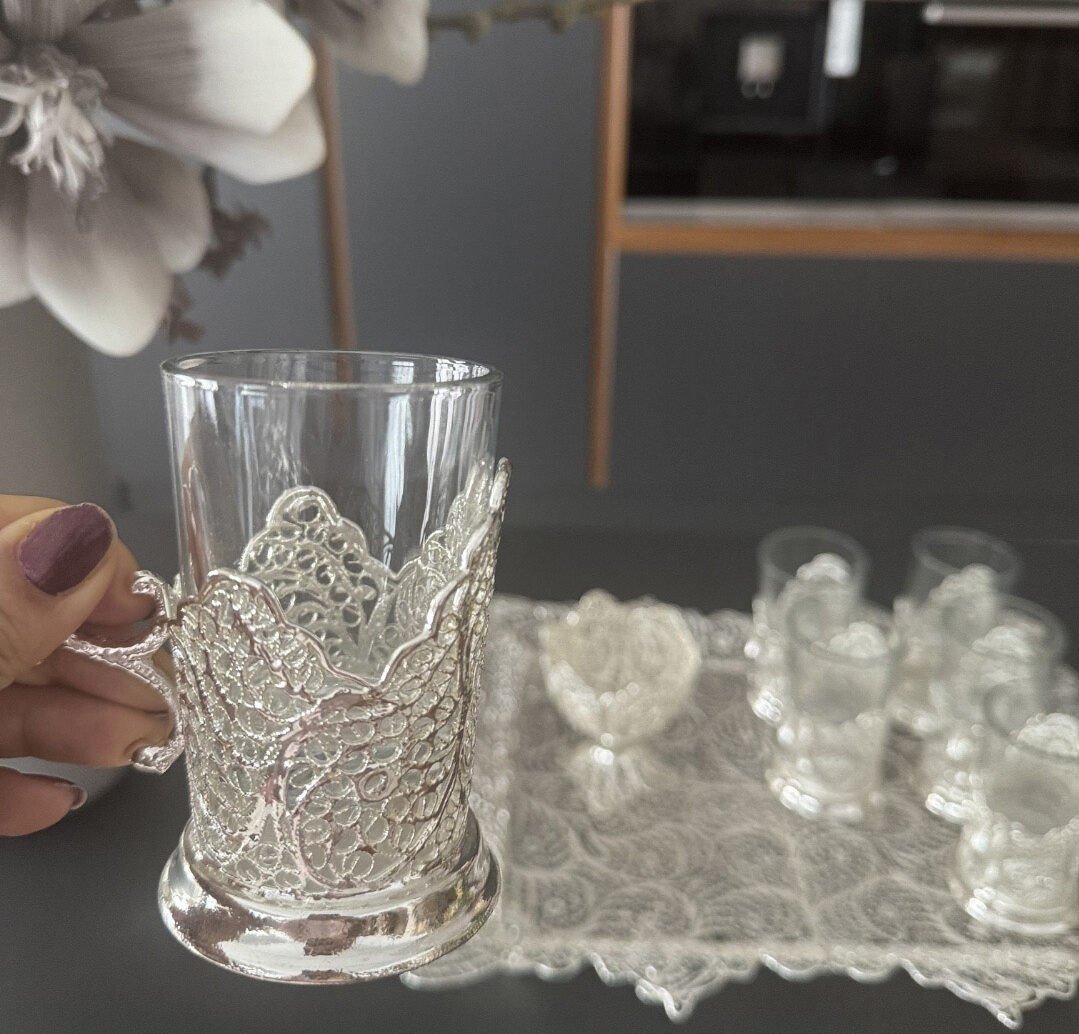
تصاویر نمونههایی معرف هستند، نه سندی برای رکوردهای نمونهٔ بازارچه. منبع و وضعیت مجوز آنها در بخش اعتبارهای عکاسی آمده است.
بازارچه
در حال حاضر هیچ شیئی از این صنعت فهرست نشده است.
- Construction
- Wire formed into openwork
- Object reading
- Structure, materials and condition before attribution
- Evidence status
- Educational summary under editorial review
Wire formed into openwork
Malileh uses fine metal wire bent into scrolls and cells and joined into a larger structure or onto a support. Silver and other metals appear; colour is not reliable evidence of composition.
Read the joins
Look for the continuity of wires, solder connections, missing elements and the presence or absence of a supporting frame. Fragile openwork should be lifted under its base.
- Thin drawn or twisted wire
- Repeated openwork cells
- Small soldered connections
Context, preservation and evidence
Workshops, households, museums and contemporary makers can use the same craft name in different ways. Record who made, sold and documented a piece before assigning a date or location. Condition and technique are observable; origin, attribution and value require further evidence.
These reading notes are educational, not an authenticity certificate or valuation. The associated source list is a starting point; many claims and translations still require specialist review.
Filigree (Malileh) در تصاویر
این تصاویر جنبهٔ نمایشی دارند و مربوط به شیء خاصی در فهرست نیستند. منابع در صفحهٔ منابع تصاویر آمده است.
| Type | How to distinguish it |
|---|---|
| Malileh | Wire filigree in metal |
| Qalam-zani | Engraved marks cut into sheet metal |
| Firuzeh-kubi | Stone fragments set into metal |
اصطلاحات کلیدی
- Malileh ملیله
- Wire-based metal filigree.
منابع و مآخذ
- Book: Wulff, H. E. The Traditional Crafts of Persia. MIT Press, 1966.
- Museum catalogue: Victoria and Albert Museum, Middle East collection records, filigree metalwork.
- Institution: UNESCO, intangible cultural heritage documentation on Iranian craft practice.
در جایی که خاستگاه، تاریخ یا نمادشناسی محل مناقشه است، این مدخل روایتهای رقیب را بیان میکند نه اینکه میان آنها یکی را برگزیند. تحلیل سردبیری بهعنوان واقعیتِ مستند ارائه نمیشود.