
The two crafts in photographs
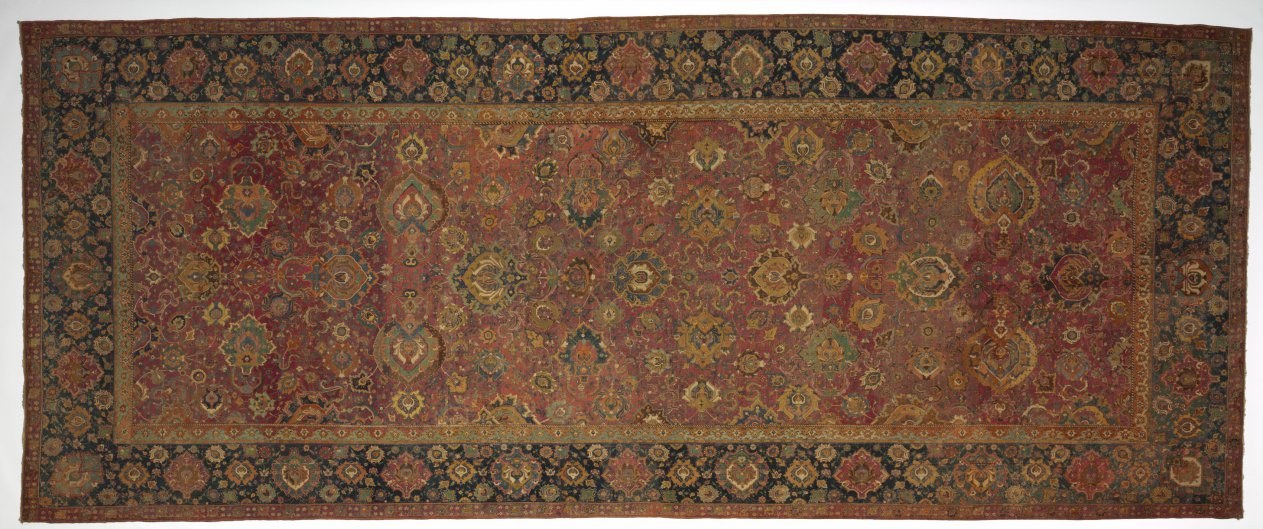
Persian carpet
Gabbeh
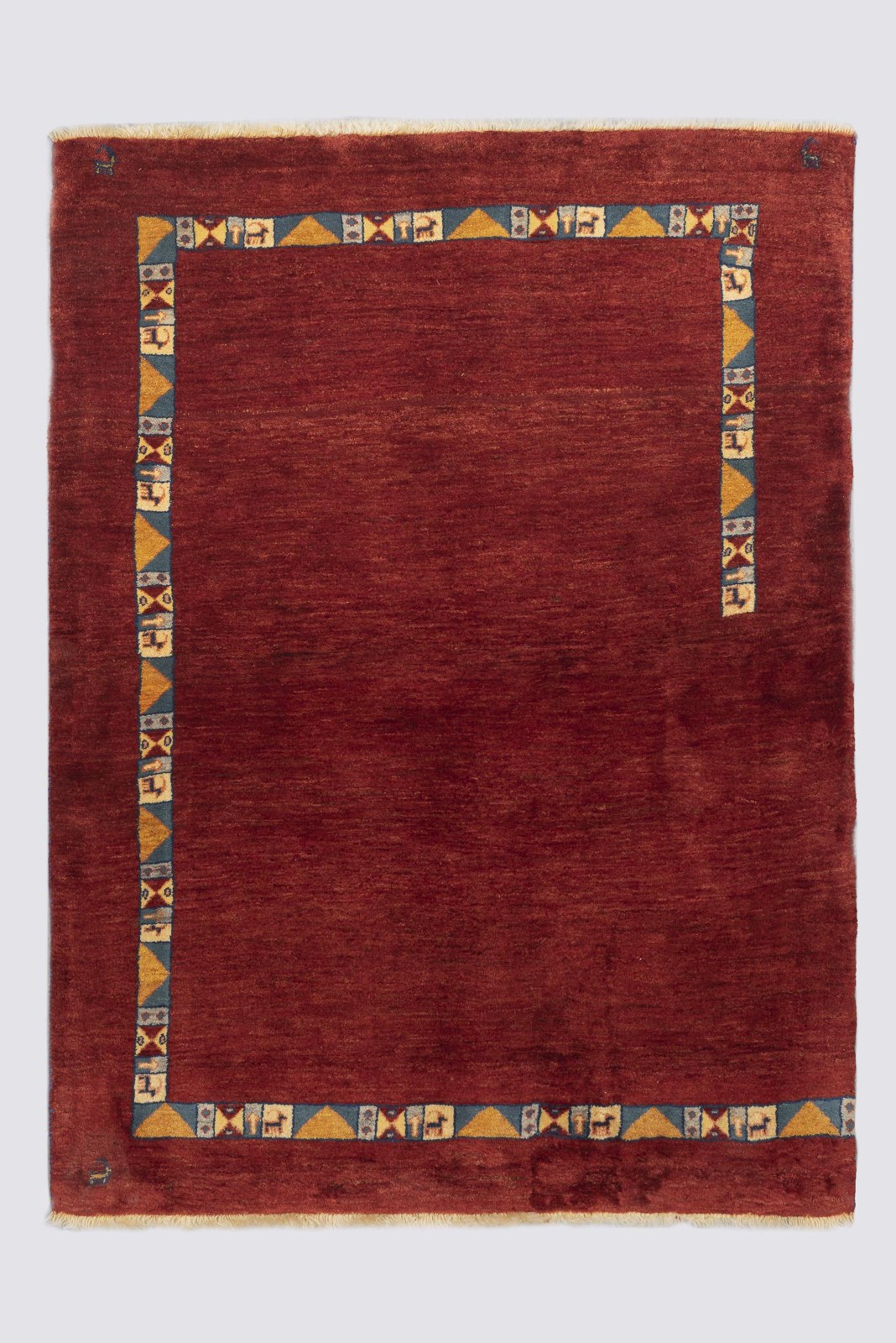
Photographs show documented examples of each craft for visual comparison; they do not prove what any other object is.
Side by side
| Persian carpet | Gabbeh | |
|---|---|---|
| Persian name | فرش ایرانی | گبه |
| Category | Textiles · Knotted pile | Textiles · Pastoral pile |
| Materials | Wool, Silk, Cotton, Natural dyes | Wool, Natural dyes |
| Techniques | Knotted pile weaving | Knotted pile weaving |
| Regions | Tabriz, Isfahan, Kashan, Kerman, Qom, Shiraz, Sistan & Baluchestan | Shiraz |
| Periods | Safavid, Qajar, Pahlavi, Contemporary | Qajar, Pahlavi, Contemporary |
| Motifs | Shah Abbasi palmette, Herati, Boteh, Eslimi arabesque | Boteh, Gereh (geometric knot) |
| Current vitality | Living tradition | Living tradition |
What they share
- Materials: Wool, Natural dyes
- Techniques: Knotted pile weaving
- Regions: Shiraz
- Motifs: Boteh
- Periods: Qajar, Pahlavi, Contemporary
How to tell them apart
- The Persian carpet record lists Silk, Cotton, which the Gabbeh record does not.
- A material listed for only one craft is a question to ask, not an identification test.
- The stated place of making is a useful clue, but never proof on its own.
Background on each craft
About Persian carpet
Definition
A Persian carpet is built by tying pile yarn around warp threads on a loom, row by row, with wefts inserted between rows to lock the structure. What varies — and what defines the regional traditions — is knot type, density, foundation material, palette and how the design was arrived at.
Three production contexts are usually distinguished: city workshops weaving from a drawn cartoon, village looms working from memory and local convention, and pastoral weaving where the design is held entirely by the weaver.
History
Pile weaving in the region is very old; the Pazyryk carpet, preserved in permanent ice and dated to roughly the fifth to fourth century BCE, shows that the technique was already highly developed, though its place of manufacture is debated.
Organised workshop production is best documented from the Safavid period, when royal ateliers in Isfahan, Kashan and Tabriz produced large designed carpets on commission. Nineteenth-century export demand reshaped the industry again, introducing commercial workshops, standard sizes and, in some places, synthetic dyes.
General background on the craft, not a statement about any individual object; dates and attributions summarise common positions in the literature and remain under review. Read the full Persian carpet entry.
About Gabbeh
Definition
Gabbeh has a long pile, low knot count and heavy handle. Designs are composed at the loom rather than from a cartoon, so figures — animals, trees, human forms, bands of colour — are placed by judgement and are rarely symmetrical.
History
Gabbeh was long made for domestic use in pastoral households and attracted little commercial attention until the later twentieth century, when it was marketed internationally. That demand supported weavers but also introduced designed, workshop-made versions.
General background on the craft, not a statement about any individual object; dates and attributions summarise common positions in the literature and remain under review. Read the full Gabbeh entry.
Read more
Disclaimer
This comparison is educational and built from entries still under review. It cannot confirm what a particular object is.