
The two crafts in photographs
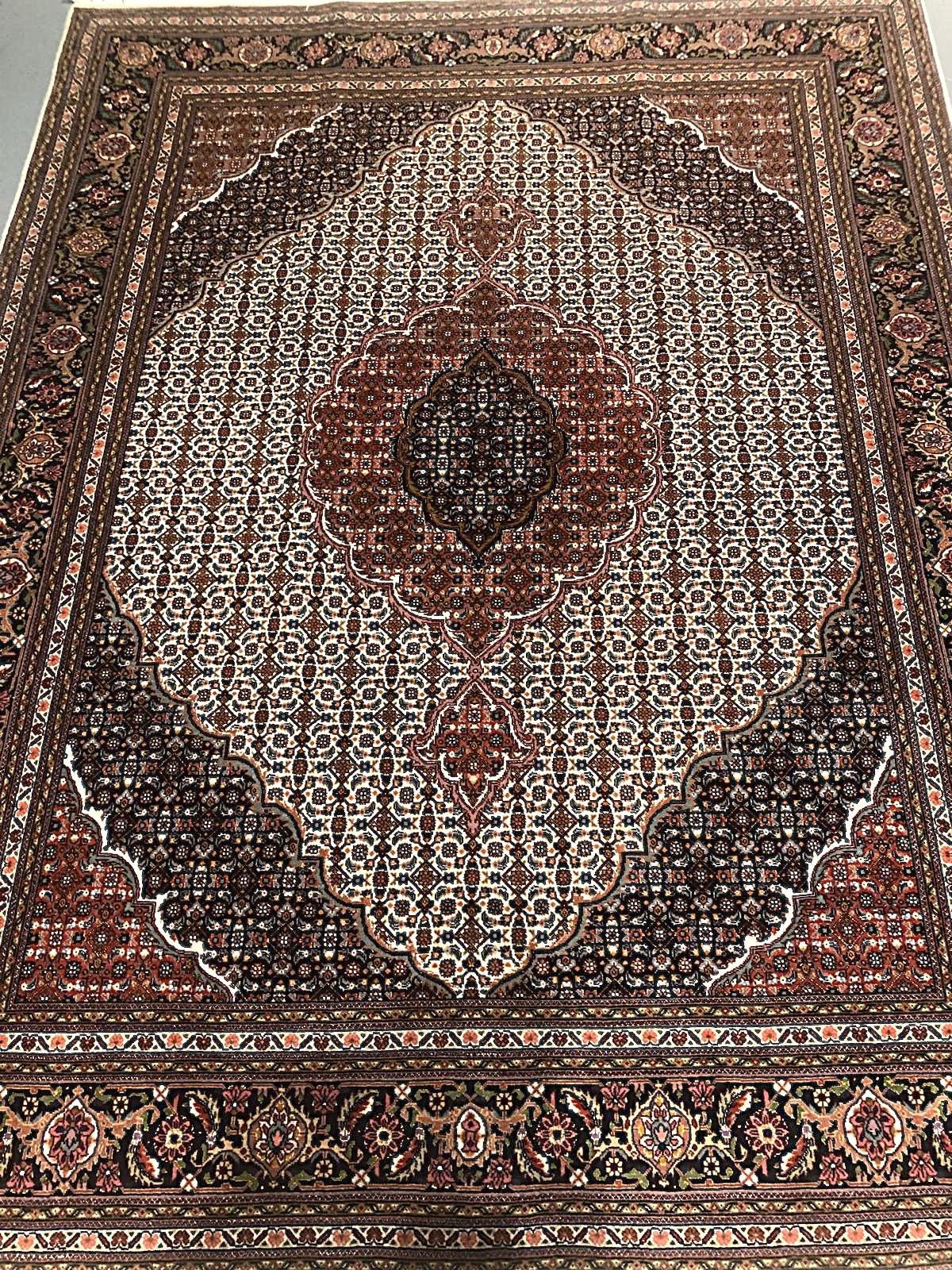
Tabriz carpet
Gabbeh
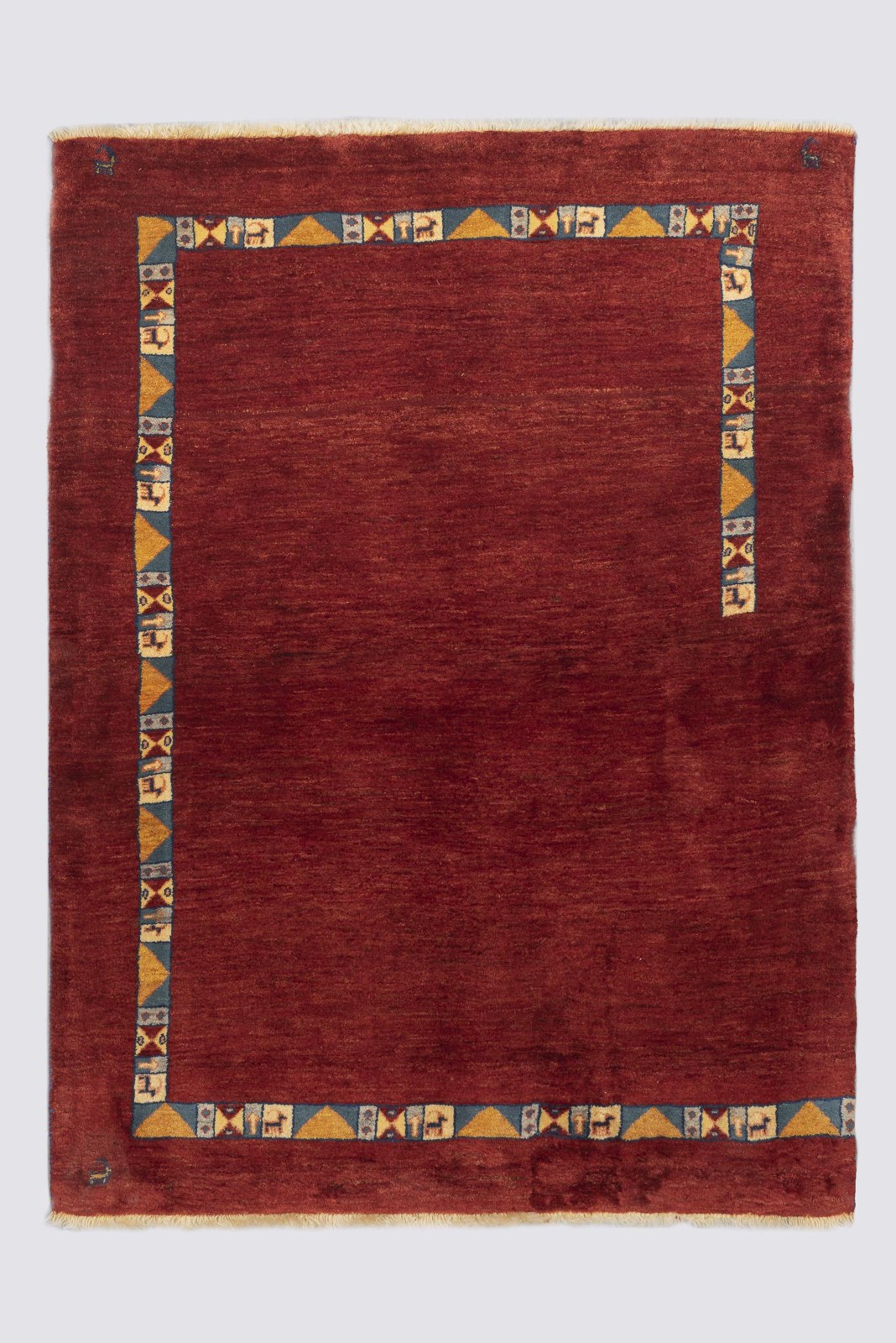
Photographs show documented examples of each craft for visual comparison; they do not prove what any other object is.
Side by side
| Tabriz carpet | Gabbeh | |
|---|---|---|
| Persian name | قالی تبریز | گبه |
| Category | Textiles · City carpet | Textiles · Pastoral pile |
| Materials | Wool, Silk, Cotton, Natural dyes | Wool, Natural dyes |
| Techniques | Knotted pile weaving | Knotted pile weaving |
| Regions | Tabriz | Shiraz |
| Periods | Ilkhanid, Safavid, Qajar, Contemporary | Qajar, Pahlavi, Contemporary |
| Motifs | Shah Abbasi palmette, Herati, Eslimi arabesque | Boteh, Gereh (geometric knot) |
| Current vitality | Living tradition | Living tradition |
What they share
- Materials: Wool, Natural dyes
- Techniques: Knotted pile weaving
- Periods: Qajar, Contemporary
How to tell them apart
- The Tabriz carpet record lists Silk, Cotton, which the Gabbeh record does not.
- A material listed for only one craft is a question to ask, not an identification test.
- The stated place of making is a useful clue, but never proof on its own.
Background on each craft
About Tabriz carpet
Definition
Tabriz carpets are woven from a squared cartoon prepared by a designer, which allows complex curvilinear and pictorial compositions to be executed consistently by several weavers on one loom.
Weavers in Tabriz typically use a hooked knife that cuts the pile as each knot is tied, a working method not general elsewhere in Iran.
History
Tabriz was an Ilkhanid capital and a repeated centre of design innovation. Its nineteenth-century workshops organised the export trade on a commercial footing, and the city has since remained the main source of designed, workshop-woven Iranian carpets.
General background on the craft, not a statement about any individual object; dates and attributions summarise common positions in the literature and remain under review. Read the full Tabriz carpet entry.
About Gabbeh
Definition
Gabbeh has a long pile, low knot count and heavy handle. Designs are composed at the loom rather than from a cartoon, so figures — animals, trees, human forms, bands of colour — are placed by judgement and are rarely symmetrical.
History
Gabbeh was long made for domestic use in pastoral households and attracted little commercial attention until the later twentieth century, when it was marketed internationally. That demand supported weavers but also introduced designed, workshop-made versions.
General background on the craft, not a statement about any individual object; dates and attributions summarise common positions in the literature and remain under review. Read the full Gabbeh entry.
Read more
Disclaimer
This comparison is educational and built from entries still under review. It cannot confirm what a particular object is.