
The two crafts in photographs
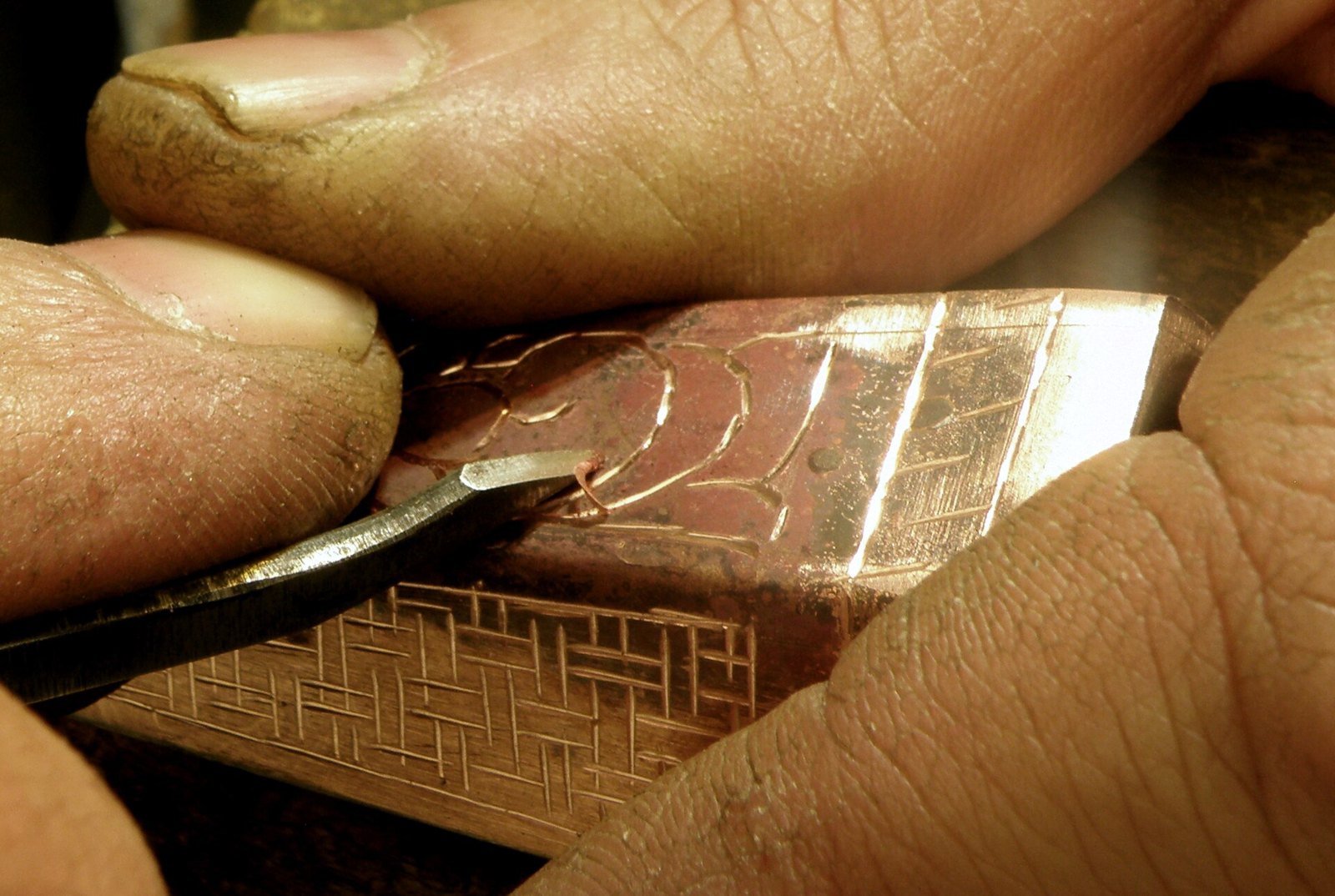
Qalam-zani
Filigree (Malileh)
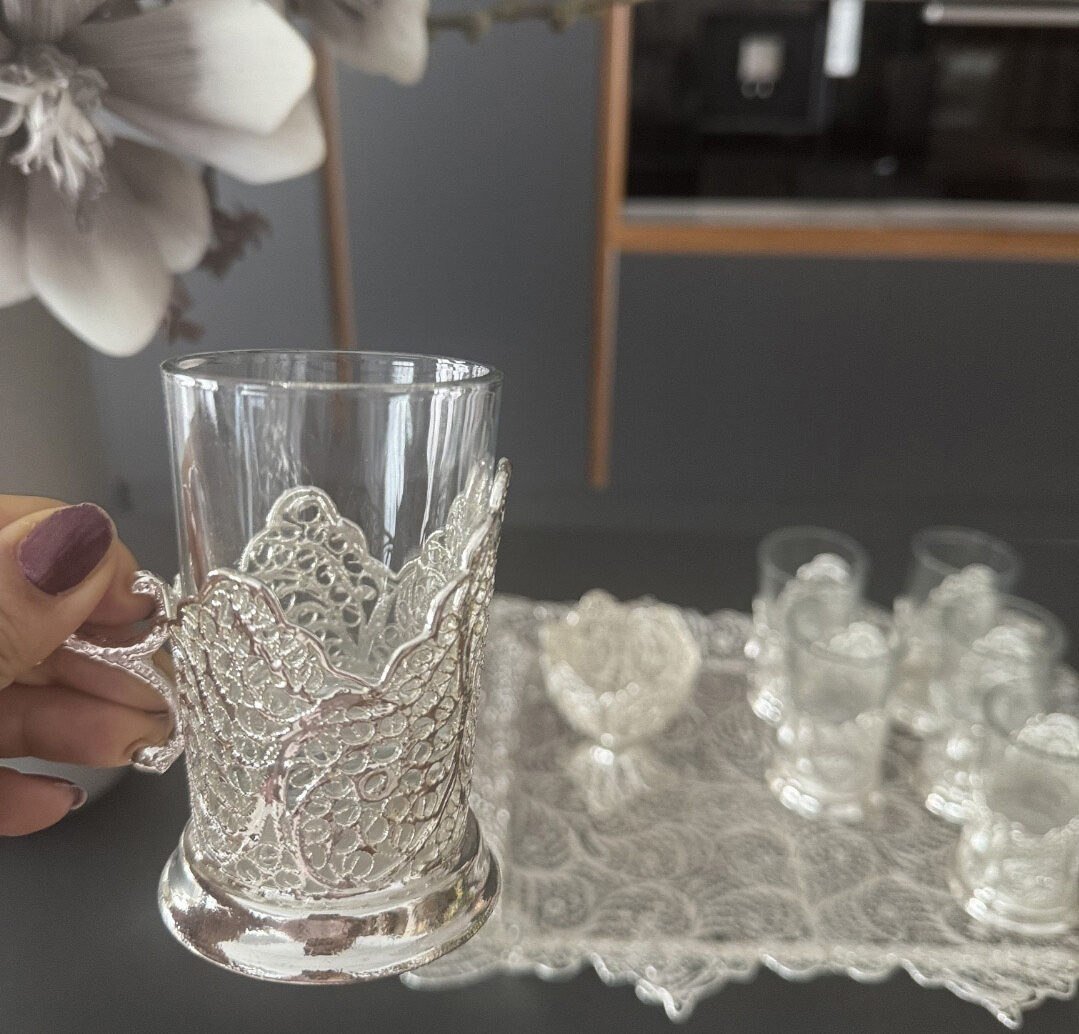
Photographs show documented examples of each craft for visual comparison; they do not prove what any other object is.
Side by side
| Qalam-zani | Filigree (Malileh) | |
|---|---|---|
| Persian name | قلمزنی | ملیلهکاری |
| Category | Metalwork · Engraving | Metalwork · Wirework |
| Materials | Brass, Copper, Silver | Silver, Copper |
| Techniques | Chisel engraving (qalam-zani) | Wire filigree |
| Regions | Isfahan, Tabriz | Isfahan, Sistan & Baluchestan |
| Periods | Seljuk, Safavid, Qajar, Contemporary | Qajar, Pahlavi, Contemporary |
| Motifs | Eslimi arabesque, Gol-o-morgh | Eslimi arabesque |
| Current vitality | At risk | At risk |
What they share
- Materials: Copper, Silver
- Regions: Isfahan
- Motifs: Eslimi arabesque
- Periods: Qajar, Contemporary
How to tell them apart
- The Qalam-zani record lists Brass, which the Filigree (Malileh) record does not.
- Qalam-zani typically involves Chisel engraving (qalam-zani).
- Filigree (Malileh) typically involves Wire filigree.
- A material listed for only one craft is a question to ask, not an identification test.
- The stated place of making is a useful clue, but never proof on its own.
Background on each craft
About Qalam-zani
Definition
Qalam-zani covers a family of related operations: tracing an outline, sinking grounds, raising relief from the front, and texturing with named punches. The metal is displaced rather than largely cut away, so the reverse of a hand-worked vessel carries the impression of the design.
History
Persian inlaid and engraved metalwork of the Seljuk period is widely represented in museum collections and set standards later workshops referred back to. Safavid and Qajar Isfahan produced trays, bowls, ewers and boxes in quantity, and the Isfahan bazaar remains the main centre today.
General background on the craft, not a statement about any individual object; dates and attributions summarise common positions in the literature and remain under review. Read the full Qalam-zani entry.
About Filigree (Malileh)
Definition
Malileh is built not by cutting or engraving a solid sheet but by shaping wire itself into the design. Silver or gold wire is drawn to a fine gauge, sometimes twisted into a rope-like thread or flattened into a beaded strip, then bent into scrolling and geometric units that are soldered edge to edge, leaving open interstices rather than a filled ground.
The resulting surface is characteristically light for its apparent size and translucent where the openwork is not backed by a plate. Larger objects, such as bowls or boxes, combine filigree panels with a soldered metal frame that carries the structural load, while jewellery pieces may be filigree throughout.
History
Filigree metalwork has a long history across the wider region, and Iranian production is documented from at least the Qajar period, when Zabol and other towns in the southeast became associated with fine silver filigree jewellery and small vessels. The craft's deeper regional lineage is harder to pin down precisely, since wire-based decoration overlaps with related traditions in neighbouring areas and firm attribution of early pieces is often disputed.
Through the twentieth century, filigree work continued as a specialty craft associated particularly with Sistan and Baluchestan province and with Isfahan workshops producing decorative boxes and tableware. Demand shifted over the century between jewellery for domestic wear and small decorative objects made for a wider market, and the number of workshops able to produce the finest, most delicate wire density has narrowed.
General background on the craft, not a statement about any individual object; dates and attributions summarise common positions in the literature and remain under review. Read the full Filigree (Malileh) entry.
Read more
Disclaimer
This comparison is educational and built from entries still under review. It cannot confirm what a particular object is.