
The two crafts in photographs
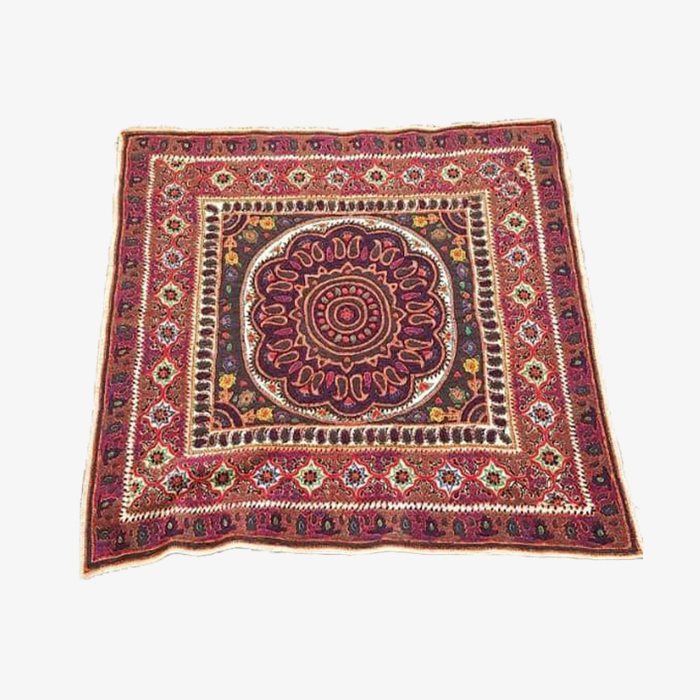
Pateh embroidery (Kerman)
Needlework embroidery (Suzan-duzi)
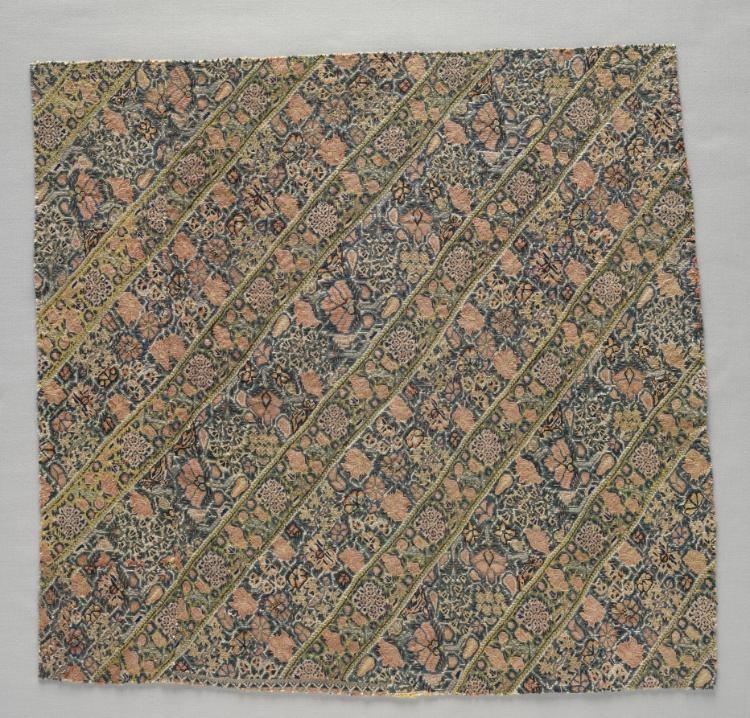
Photographs show documented examples of each craft for visual comparison; they do not prove what any other object is.
Side by side
| Pateh embroidery (Kerman) | Needlework embroidery (Suzan-duzi) | |
|---|---|---|
| Persian name | پته | سوزندوزی |
| Category | Textiles · Embroidery | Textiles · Surface embroidery |
| Materials | Wool, Cotton | Cotton, Silk |
| Techniques | Surface embroidery | Surface embroidery |
| Regions | Kerman | Sistan & Baluchestan, Isfahan, Kerman |
| Periods | Qajar, Pahlavi, Contemporary | Safavid, Qajar, Contemporary |
| Motifs | Boteh, Gol-o-morgh, Eslimi arabesque | Boteh, Gol-o-morgh |
| Current vitality | At risk | At risk |
What they share
- Materials: Cotton
- Techniques: Surface embroidery
- Regions: Kerman
- Motifs: Boteh, Gol-o-morgh
- Periods: Qajar, Contemporary
How to tell them apart
- The Pateh embroidery (Kerman) record lists Wool, which the Needlework embroidery (Suzan-duzi) record does not.
- The Needlework embroidery (Suzan-duzi) record lists Silk, which the Pateh embroidery (Kerman) record does not.
- A material listed for only one craft is a question to ask, not an identification test.
- The stated place of making is a useful clue, but never proof on its own.
Background on each craft
About Pateh embroidery (Kerman)
Definition
Pateh is a needle-embroidered textile particular to Kerman, worked with fine wool or silk thread over a plain woollen ground cloth, usually left in its natural cream or dyed to a solid colour. The embroidery covers the surface densely enough that little of the ground shows through in the finished field, producing a textured, almost pile-like surface distinct from open or sparse embroidery styles.
The craft is closely associated with Kerman's broader wool textile economy, drawing on the region's long-established supply of fine wool and dyeing expertise, and pateh pieces range from small purses and cushion covers to large tablecloths and wall hangings.
History
Kerman has been a centre of wool textile production for a long period, and pateh embroidery is documented as a distinct craft within that broader tradition by the Qajar period, produced largely by women working at home or in small workshops. Precise origin dates for the specific chain-stitch pateh technique as practised today are not firmly established in the published literature.
Twentieth-century demand, both domestic and through craft and tourist markets, sustained pateh production through the Pahlavi period, but heritage documentation in more recent decades has noted a shrinking number of embroiderers working at the finest, most time-intensive grades, as the labour required is not matched by commensurate prices in much of the market.
General background on the craft, not a statement about any individual object; dates and attributions summarise common positions in the literature and remain under review. Read the full Pateh embroidery (Kerman) entry.
About Needlework embroidery (Suzan-duzi)
History
Embroidered covers and garment panels survive from the Safavid period onward. Balochi needlework and Kerman pateh are often discussed as distinct but related regional traditions.
Technique
Embroiderers count threads of the ground or follow a drawn design, working densely packed stitches that may cover the ground entirely; regional schools differ in stitch vocabulary and colour.
General background on the craft, not a statement about any individual object; dates and attributions summarise common positions in the literature and remain under review. Read the full Needlework embroidery (Suzan-duzi) entry.
Read more
- Pateh embroidery (Kerman) entry · buying guide
- Needlework embroidery (Suzan-duzi) entry · buying guide
- Pateh embroidery (Kerman) vs Rasht embroidery (Rasht-duzi)
- Kilim (Gelim) vs Pateh embroidery (Kerman)
- Qalamkar block printing vs Pateh embroidery (Kerman)
- Sermeh-duzi vs Needlework embroidery (Suzan-duzi)
- Qalamkar block printing vs Needlework embroidery (Suzan-duzi)
- Rasht embroidery (Rasht-duzi) vs Needlework embroidery (Suzan-duzi)
Disclaimer
This comparison is educational and built from entries still under review. It cannot confirm what a particular object is.