
The two crafts in photographs
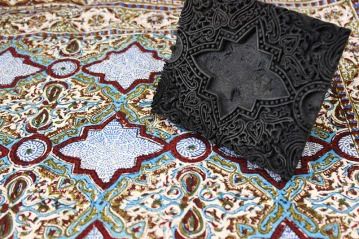
Qalamkar block printing
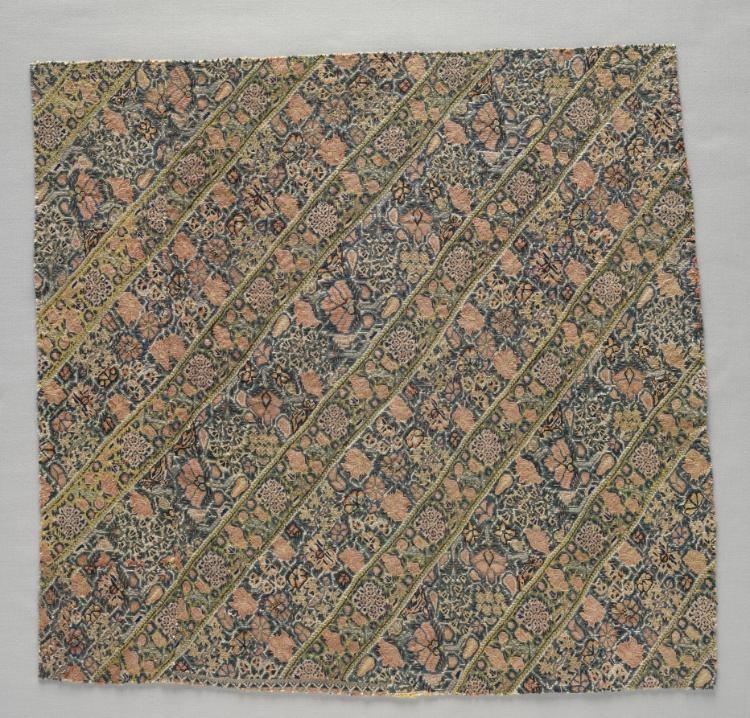
Needlework embroidery (Suzan-duzi)
Photographs show documented examples of each craft for visual comparison; they do not prove what any other object is.
Side by side
| Qalamkar block printing | Needlework embroidery (Suzan-duzi) | |
|---|---|---|
| Persian name | قلمکار | سوزندوزی |
| Category | Textiles · Printed and painted cloth | Textiles · Surface embroidery |
| Materials | Cotton | Cotton, Silk |
| Techniques | Textile block printing | Surface embroidery |
| Regions | Isfahan | Sistan & Baluchestan, Isfahan, Kerman |
| Periods | Safavid, Qajar, Pahlavi, Contemporary | Safavid, Qajar, Contemporary |
| Motifs | Gol-o-morgh, Eslimi arabesque, Boteh | Boteh, Gol-o-morgh |
| Current vitality | At risk | At risk |
What they share
- Materials: Cotton
- Regions: Isfahan
- Motifs: Gol-o-morgh, Boteh
- Periods: Safavid, Qajar, Contemporary
How to tell them apart
- The Needlework embroidery (Suzan-duzi) record lists Silk, which the Qalamkar block printing record does not.
- Qalamkar block printing typically involves Textile block printing.
- Needlework embroidery (Suzan-duzi) typically involves Surface embroidery.
- A material listed for only one craft is a question to ask, not an identification test.
- The stated place of making is a useful clue, but never proof on its own.
Background on each craft
About Qalamkar block printing
Definition
Qalamkar denotes cotton cloth decorated with dense repeating pattern applied by carved wooden printing blocks, historically combined with mordant dyeing and, in the finest work, some hand-finishing with a pen (the word qalam refers to this pen or reed tool). The term is used both for the technique and for the finished tablecloths, curtains and hangings it produces.
Unlike embroidery-based textiles, qalamkar pattern is built up through successive printing and dyeing stages, with different blocks applying outline and then colour fills, so registration between blocks is a central technical concern that directly affects the crispness of the finished design.
History
Block-printed and resist-dyed cotton is documented in Isfahan from at least the Safavid period, when the city's textile workshops served both domestic use and trade along routes connecting Iran to South Asia and Europe, regions with related but distinct block-printing traditions of their own. The exact lines of technical exchange between these traditions are not fully settled in the published literature.
Production continued through the Qajar and Pahlavi periods, adapting palette and subject matter for changing markets, including tourist and export demand in the twentieth century which favoured recognisable motifs such as the paisley-like boteh and garden scenes over more specialised religious or narrative imagery.
General background on the craft, not a statement about any individual object; dates and attributions summarise common positions in the literature and remain under review. Read the full Qalamkar block printing entry.
About Needlework embroidery (Suzan-duzi)
History
Embroidered covers and garment panels survive from the Safavid period onward. Balochi needlework and Kerman pateh are often discussed as distinct but related regional traditions.
Technique
Embroiderers count threads of the ground or follow a drawn design, working densely packed stitches that may cover the ground entirely; regional schools differ in stitch vocabulary and colour.
General background on the craft, not a statement about any individual object; dates and attributions summarise common positions in the literature and remain under review. Read the full Needlework embroidery (Suzan-duzi) entry.
Read more
- Qalamkar block printing entry · buying guide
- Needlework embroidery (Suzan-duzi) entry · buying guide
- Qalamkar block printing vs Pateh embroidery (Kerman)
- Qalamkar block printing vs Giveh footwear
- Qalamkar block printing vs Zilu (Meybod)
- Pateh embroidery (Kerman) vs Needlework embroidery (Suzan-duzi)
- Sermeh-duzi vs Needlework embroidery (Suzan-duzi)
- Rasht embroidery (Rasht-duzi) vs Needlework embroidery (Suzan-duzi)
Disclaimer
This comparison is educational and built from entries still under review. It cannot confirm what a particular object is.