
The two crafts in photographs
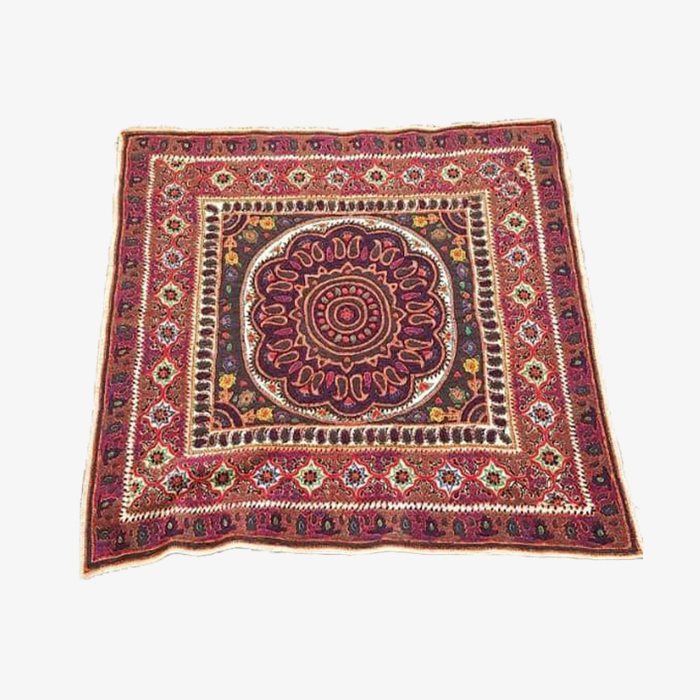
Pateh embroidery (Kerman)
Rasht embroidery (Rasht-duzi)
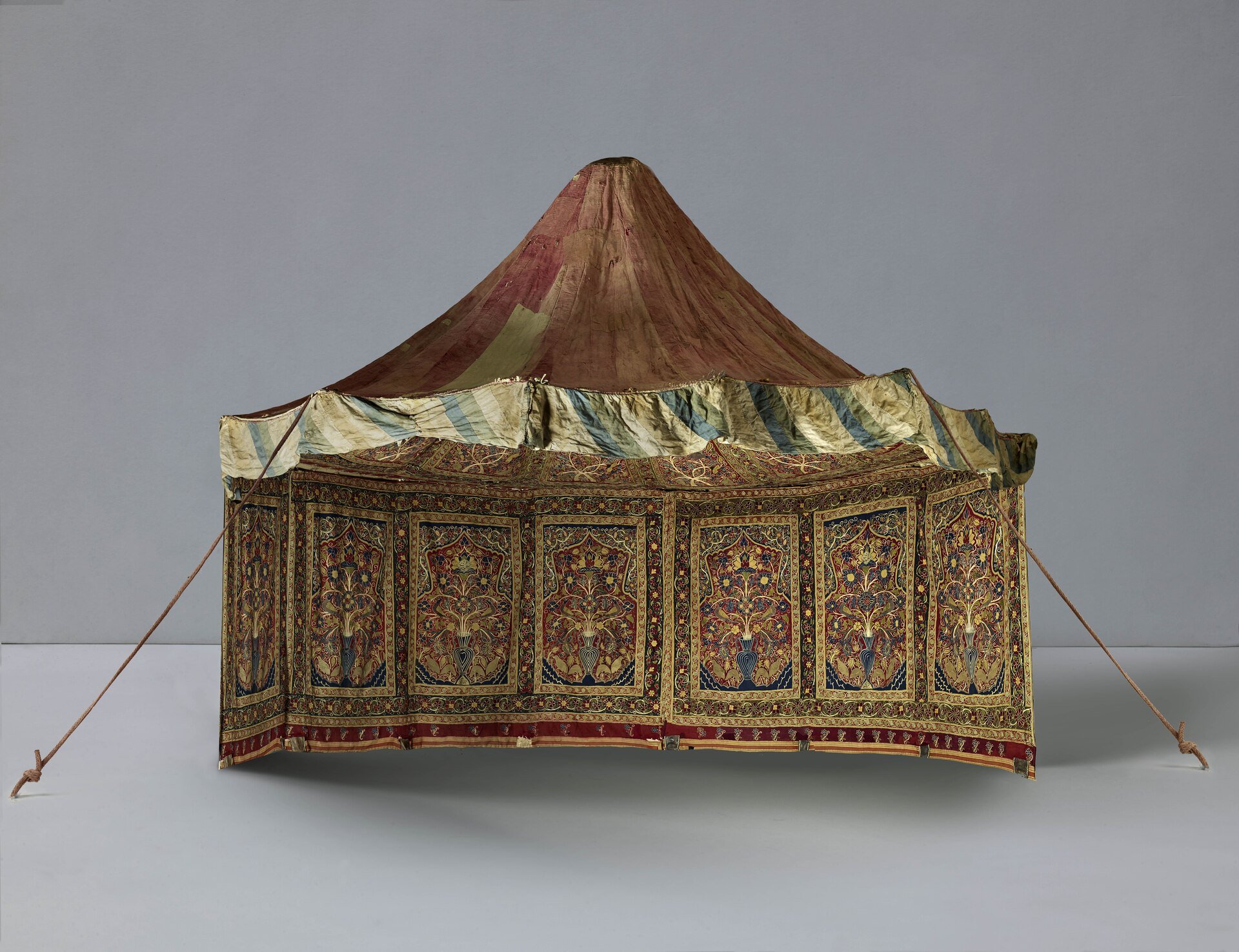
Photographs show documented examples of each craft for visual comparison; they do not prove what any other object is.
Side by side
| Pateh embroidery (Kerman) | Rasht embroidery (Rasht-duzi) | |
|---|---|---|
| Persian name | پته | رشتیدوزی |
| Category | Textiles · Embroidery | Textiles · Appliqué and chain-stitch embroidery |
| Materials | Wool, Cotton | Wool, Silk |
| Techniques | Surface embroidery | Chain stitch, Felt appliqué and inlay |
| Regions | Kerman | — |
| Periods | Qajar, Pahlavi, Contemporary | Qajar, Pahlavi, Contemporary |
| Motifs | Boteh, Gol-o-morgh, Eslimi arabesque | Boteh, Eslimi arabesque |
| Current vitality | At risk | At risk |
What they share
- Materials: Wool
- Motifs: Boteh, Eslimi arabesque
- Periods: Qajar, Pahlavi, Contemporary
How to tell them apart
- The Pateh embroidery (Kerman) record lists Cotton, which the Rasht embroidery (Rasht-duzi) record does not.
- The Rasht embroidery (Rasht-duzi) record lists Silk, which the Pateh embroidery (Kerman) record does not.
- Pateh embroidery (Kerman) typically involves Surface embroidery.
- Rasht embroidery (Rasht-duzi) typically involves Chain stitch, Felt appliqué and inlay.
- A material listed for only one craft is a question to ask, not an identification test.
- The stated place of making is a useful clue, but never proof on its own.
Background on each craft
About Pateh embroidery (Kerman)
Definition
Pateh is a needle-embroidered textile particular to Kerman, worked with fine wool or silk thread over a plain woollen ground cloth, usually left in its natural cream or dyed to a solid colour. The embroidery covers the surface densely enough that little of the ground shows through in the finished field, producing a textured, almost pile-like surface distinct from open or sparse embroidery styles.
The craft is closely associated with Kerman's broader wool textile economy, drawing on the region's long-established supply of fine wool and dyeing expertise, and pateh pieces range from small purses and cushion covers to large tablecloths and wall hangings.
History
Kerman has been a centre of wool textile production for a long period, and pateh embroidery is documented as a distinct craft within that broader tradition by the Qajar period, produced largely by women working at home or in small workshops. Precise origin dates for the specific chain-stitch pateh technique as practised today are not firmly established in the published literature.
Twentieth-century demand, both domestic and through craft and tourist markets, sustained pateh production through the Pahlavi period, but heritage documentation in more recent decades has noted a shrinking number of embroiderers working at the finest, most time-intensive grades, as the labour required is not matched by commensurate prices in much of the market.
General background on the craft, not a statement about any individual object; dates and attributions summarise common positions in the literature and remain under review. Read the full Pateh embroidery (Kerman) entry.
About Rasht embroidery (Rasht-duzi)
History
Rasht work is widely associated with 19th-century Qajar production and is represented in several museum collections; labels in older collections sometimes group it loosely with other patchwork or appliqué work.
Technique
Coloured cloth pieces are cut, laid and stitched onto a ground; outlines and fills are then worked in chain stitch, sometimes with a hook (tambour) and sometimes with a needle, often in silk thread.
General background on the craft, not a statement about any individual object; dates and attributions summarise common positions in the literature and remain under review. Read the full Rasht embroidery (Rasht-duzi) entry.
Read more
- Pateh embroidery (Kerman) entry · buying guide
- Rasht embroidery (Rasht-duzi) entry · buying guide
- Pateh embroidery (Kerman) vs Needlework embroidery (Suzan-duzi)
- Kilim (Gelim) vs Pateh embroidery (Kerman)
- Qalamkar block printing vs Pateh embroidery (Kerman)
- Termeh vs Rasht embroidery (Rasht-duzi)
- Rasht embroidery (Rasht-duzi) vs Needlework embroidery (Suzan-duzi)
- Rasht embroidery (Rasht-duzi) vs Kashan carpet
Disclaimer
This comparison is educational and built from entries still under review. It cannot confirm what a particular object is.