
The two crafts in photographs
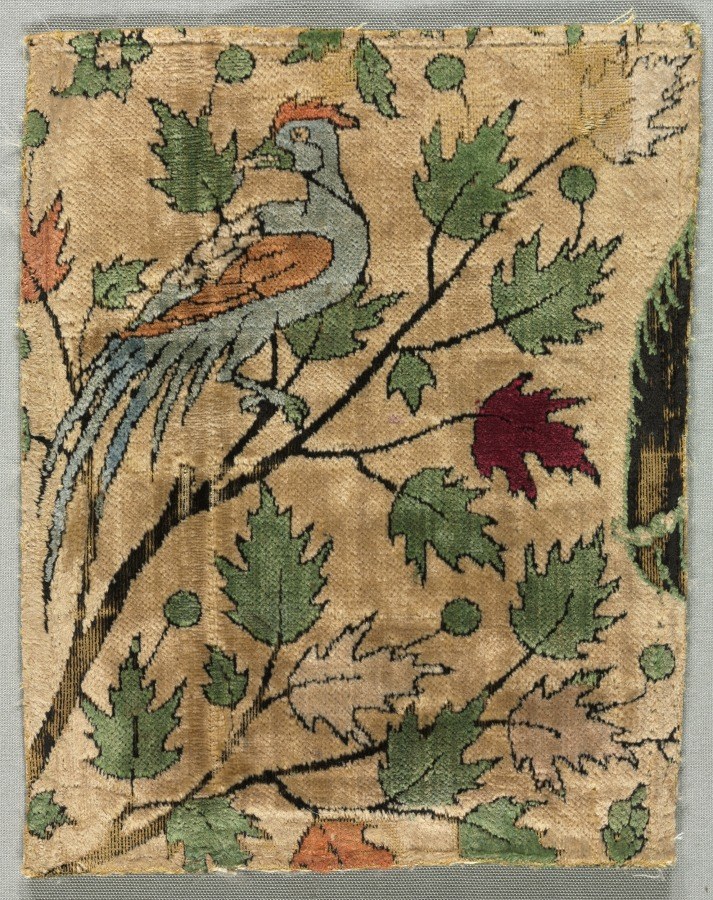
Velvet weaving (Makhmal-bafi)
Brocade weaving (Zari-bafi)
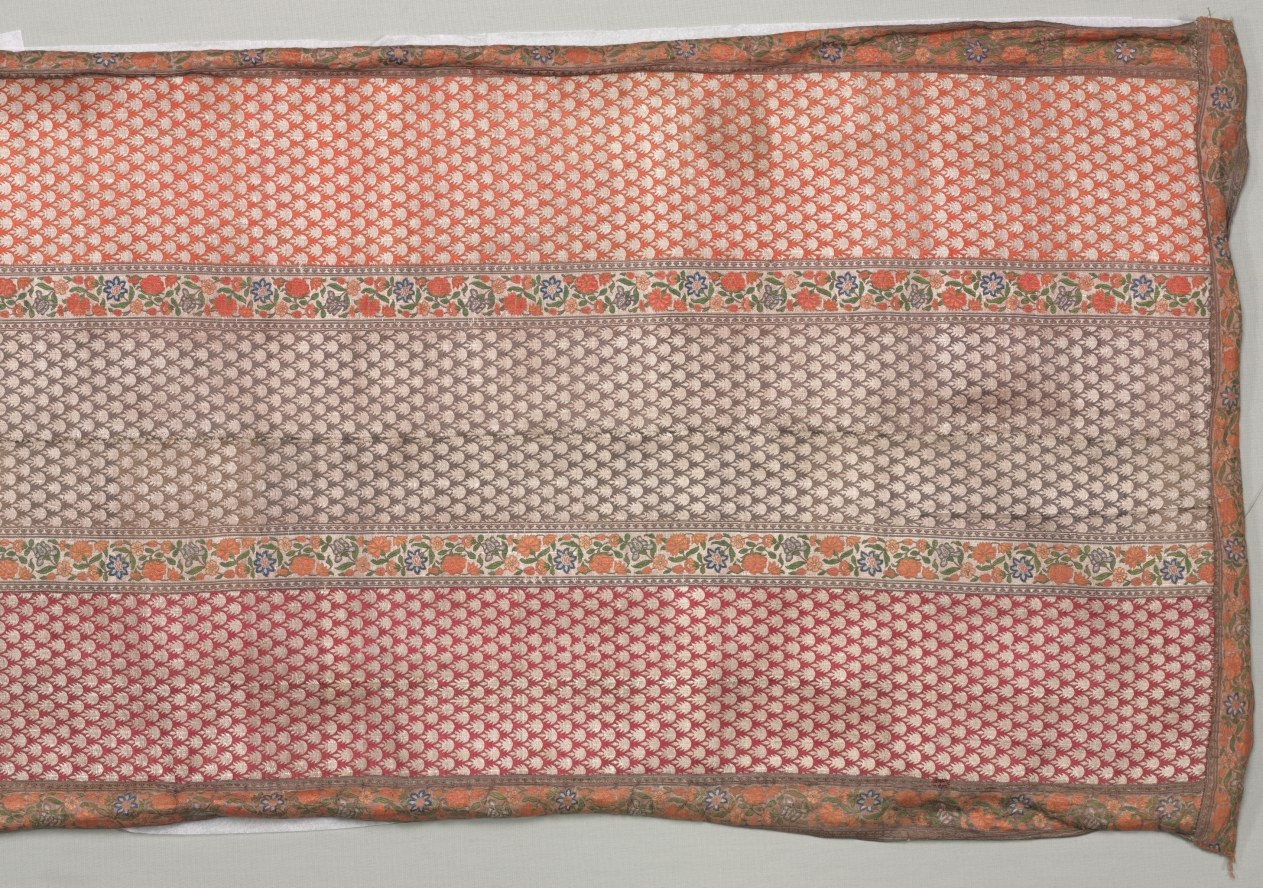
Photographs show documented examples of each craft for visual comparison; they do not prove what any other object is.
Side by side
| Velvet weaving (Makhmal-bafi) | Brocade weaving (Zari-bafi) | |
|---|---|---|
| Persian name | مخملبافی | زریبافی |
| Category | Textiles · Pile silk weaving | Textiles · Metal-thread brocade |
| Materials | Silk, Metal thread | Silk, Metal thread |
| Techniques | — | Supplementary weft brocade |
| Regions | Kashan, Isfahan | Kashan, Isfahan |
| Periods | Safavid, Qajar | Safavid, Qajar, Contemporary |
| Motifs | Gol-o-morgh | Gol-o-morgh, Shah Abbasi palmette |
| Current vitality | Endangered | Endangered |
What they share
- Materials: Silk, Metal thread
- Regions: Kashan, Isfahan
- Motifs: Gol-o-morgh
- Periods: Safavid, Qajar
How to tell them apart
- Brocade weaving (Zari-bafi) typically involves Supplementary weft brocade.
Background on each craft
About Velvet weaving (Makhmal-bafi)
History
Figured silk velvets are associated in the literature with Safavid court production, with Kashan often cited as a centre. Surviving fragments are dispersed across museum collections, and attributions to particular workshops or dates are frequently tentative.
Technique
Velvet weaving requires a drawloom or similar figure-harness loom plus rods inserted beneath extra pile warps; cutting the loops over the rods produces the pile, while areas left uncut or woven flat create voided patterns and grounds sometimes wrapped with metal thread.
General background on the craft, not a statement about any individual object; dates and attributions summarise common positions in the literature and remain under review. Read the full Velvet weaving (Makhmal-bafi) entry.
About Brocade weaving (Zari-bafi)
History
Brocaded silks with figures, flowering plants and inscriptions are among the celebrated textiles attributed to Safavid Iran. Small revival workshops operate today, and the craft is widely described as rare.
Technique
Designs are programmed into a figure harness so that selected supplementary wefts rise to the face in each pass; metal thread is typically a thin strip of gilded or silvered metal wound around a silk core.
General background on the craft, not a statement about any individual object; dates and attributions summarise common positions in the literature and remain under review. Read the full Brocade weaving (Zari-bafi) entry.
Read more
Disclaimer
This comparison is educational and built from entries still under review. It cannot confirm what a particular object is.