
What documented Velvet weaving (Makhmal-bafi) looks like
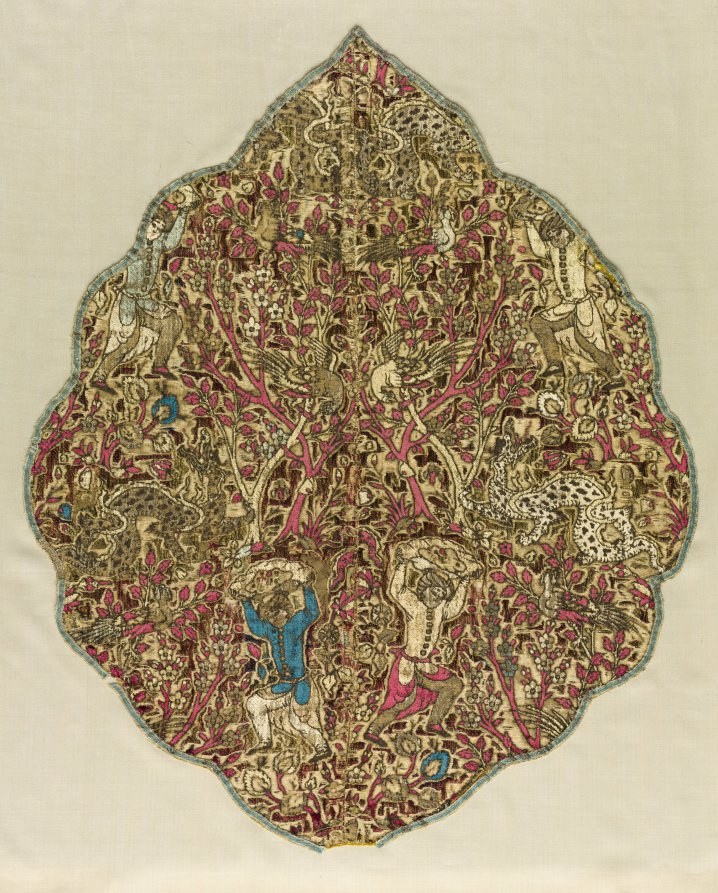
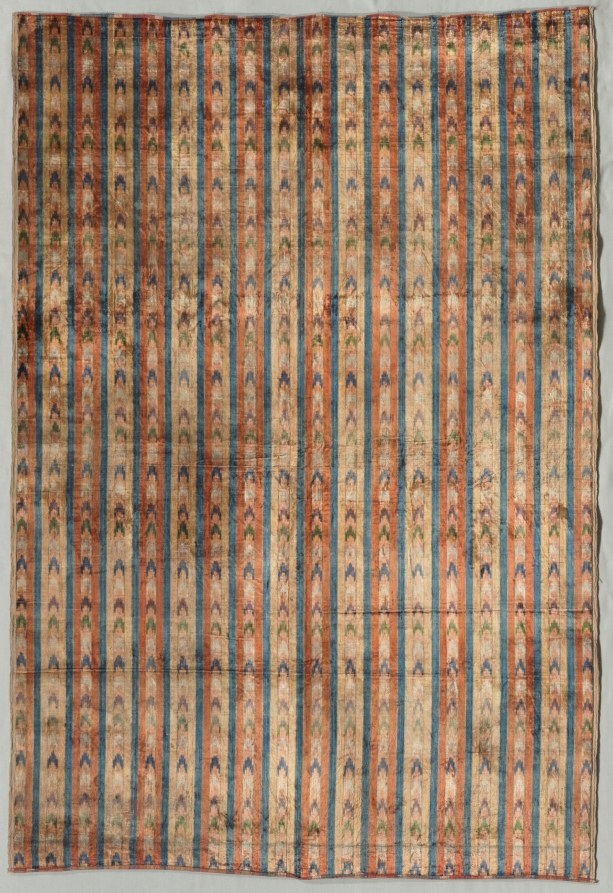
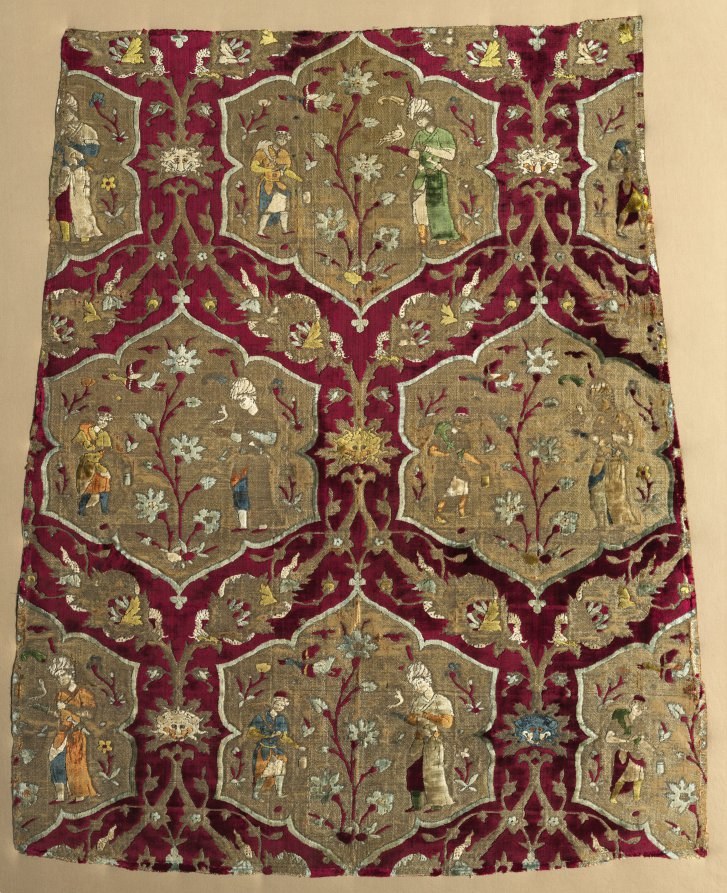
Reference photographs of documented Velvet weaving (Makhmal-bafi) pieces, credited to their sources. Compare construction, surface and wear with any piece you are offered — a resemblance is not proof of origin.
Velvet weaving (Makhmal-bafi) at a glance
| Persian name | مخملبافی |
| Category | Textiles · Pile silk weaving |
| Main techniques | — |
| Typical materials | silk, metal-thread |
| Places of making | kashan, isfahan |
| Current vitality | Endangered |
Understanding Velvet weaving (Makhmal-bafi)
What Velvet weaving (Makhmal-bafi) is and how it is made
History
Figured silk velvets are associated in the literature with Safavid court production, with Kashan often cited as a centre. Surviving fragments are dispersed across museum collections, and attributions to particular workshops or dates are frequently tentative.
Technique
Velvet weaving requires a drawloom or similar figure-harness loom plus rods inserted beneath extra pile warps; cutting the loops over the rods produces the pile, while areas left uncut or woven flat create voided patterns and grounds sometimes wrapped with metal thread.
Collecting and identification
Pile direction, cut-versus-voided areas, metal-thread grounds and the loom width all help specialists compare pieces; wear commonly removes pile and exposes the foundation weave.
This guidance is educational only and is not an authentication or valuation service.
General background on the craft, not a statement about any individual object; dates and attributions summarise common positions in the literature and remain under review. Read the full Velvet weaving (Makhmal-bafi) entry.
Before you buy: what to inspect
- Hand-woven velvet has a slightly irregular pile height; check the back for the ground weave.
- Look for the cut pile along pattern edges: hand-cut voided velvet shows small irregularities.
- Check for crushed, bald or abraded areas of pile.
Typical materials: silk, metal-thread.
Red flags: copies and 'Persian style' imports
- Machine velvet or flocked fabric sold as hand-woven.
- Polyester velvet sold as silk.
A genuine Velvet weaving (Makhmal-bafi) piece should come with a named place of making in Iran (often kashan, isfahan) and a clear statement that it is handmade.
Questions to ask the seller
- Was it woven on a hand loom?
- What are the pile and ground fibres?
- Where was it woven?
What affects the price
| Hand-loom weaving |
| Silk content |
| Pattern complexity |
| Condition of the pile |
Care and cleaning
- Never iron or press velvet pile flat.
- Brush lightly in the direction of the pile with a soft brush.
- Have historic velvets cleaned only by a textile conservator.
Storage
- Roll with the pile facing inward, never fold.
- Wrap in breathable cotton, not plastic.
- Protect against moths with regular airing and inspection.
Shipping
Rolled textiles travel well; ask for tube or rolled packing and tracked delivery.
Disclaimer
This guide is educational. It cannot confirm that any particular object is genuine, old or valuable. For important purchases, ask an independent specialist. Read the full Velvet weaving (Makhmal-bafi) entry.