
The two crafts in photographs
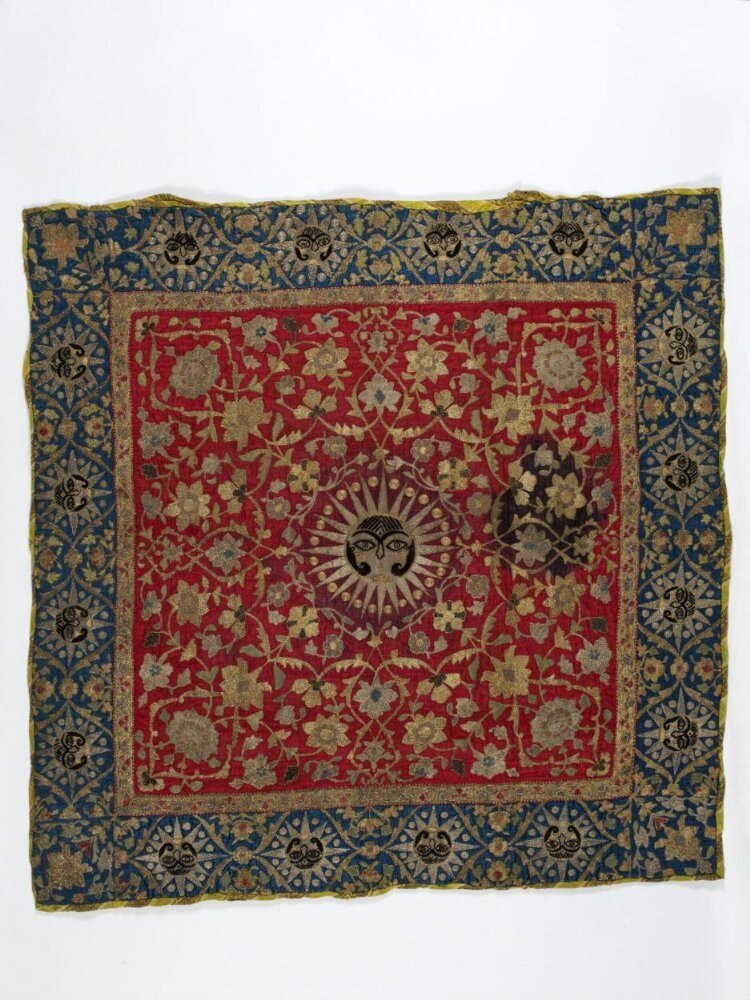
Sermeh-duzi
Brocade weaving (Zari-bafi)
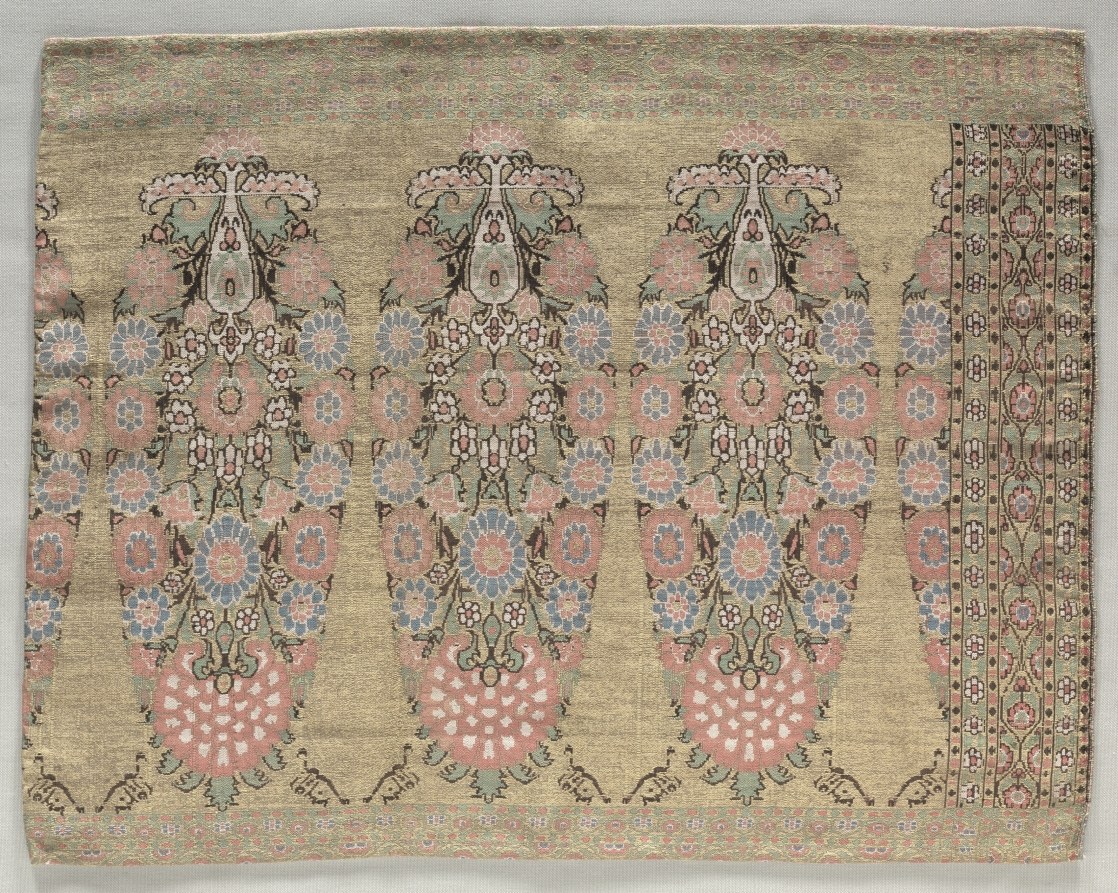
Photographs show documented examples of each craft for visual comparison; they do not prove what any other object is.
Side by side
| Sermeh-duzi | Brocade weaving (Zari-bafi) | |
|---|---|---|
| Persian name | سرمهدوزی | زریبافی |
| Category | Textiles · Metal-thread embroidery | Textiles · Metal-thread brocade |
| Materials | Metal thread, Silk, Cotton | Silk, Metal thread |
| Techniques | Metal-thread couching | Supplementary weft brocade |
| Regions | Isfahan, Kerman | Kashan, Isfahan |
| Periods | Qajar, Pahlavi, Contemporary | Safavid, Qajar, Contemporary |
| Motifs | Eslimi arabesque, Boteh, Shah Abbasi palmette | Gol-o-morgh, Shah Abbasi palmette |
| Current vitality | At risk | Endangered |
What they share
- Materials: Metal thread, Silk
- Regions: Isfahan
- Motifs: Shah Abbasi palmette
- Periods: Qajar, Contemporary
How to tell them apart
- The Sermeh-duzi record lists Cotton, which the Brocade weaving (Zari-bafi) record does not.
- Sermeh-duzi typically involves Metal-thread couching.
- Brocade weaving (Zari-bafi) typically involves Supplementary weft brocade.
- A material listed for only one craft is a question to ask, not an identification test.
- The stated place of making is a useful clue, but never proof on its own.
Background on each craft
About Sermeh-duzi
Definition
Sermeh-duzi is a couched metal-thread embroidery technique, historically worked with fine wire or wire-wound thread laid on the surface of the cloth and stitched down with a separate finer thread rather than passed through the ground fabric itself, since drawn metal wire is too rigid and abrasive to sew directly. The result is a raised, reflective surface pattern suited to heavier fabrics such as velvet.
The technique belongs to a broader family of gold-thread and metal-thread embroidery practised across the historic Persianate and Ottoman world, and Iranian sermeh-duzi shares methods and some motifs with related traditions while developing its own regional conventions in workshops such as those of Isfahan and Rasht.
History
Metal-thread embroidery for court and ceremonial dress is documented in Iran through the Safavid and Qajar periods, used on garments, horse trappings, cushion covers and religious textiles for patrons who could afford the costly gold and silver wire. The craft's prestige was closely tied to the cost of its materials as much as to the skill required.
Demand for elaborate metal-thread embroidered garments declined with changes in dress and court patronage through the twentieth century, and production narrowed toward ceremonial, religious and specialty commissions rather than everyday courtly use, a shift documented in general surveys of Iranian textile crafts.
General background on the craft, not a statement about any individual object; dates and attributions summarise common positions in the literature and remain under review. Read the full Sermeh-duzi entry.
About Brocade weaving (Zari-bafi)
History
Brocaded silks with figures, flowering plants and inscriptions are among the celebrated textiles attributed to Safavid Iran. Small revival workshops operate today, and the craft is widely described as rare.
Technique
Designs are programmed into a figure harness so that selected supplementary wefts rise to the face in each pass; metal thread is typically a thin strip of gilded or silvered metal wound around a silk core.
General background on the craft, not a statement about any individual object; dates and attributions summarise common positions in the literature and remain under review. Read the full Brocade weaving (Zari-bafi) entry.
Read more
Disclaimer
This comparison is educational and built from entries still under review. It cannot confirm what a particular object is.