
The two crafts in photographs
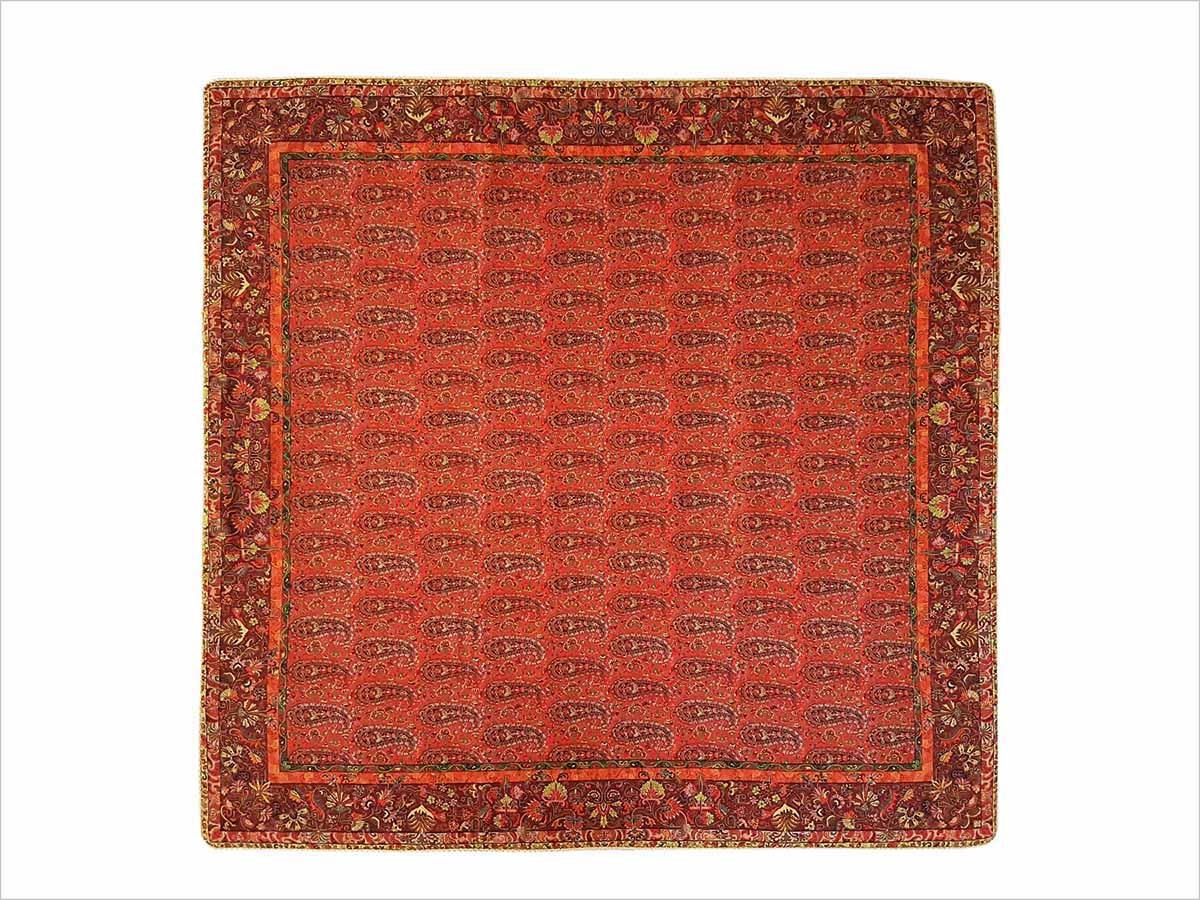
Termeh
Rasht embroidery (Rasht-duzi)
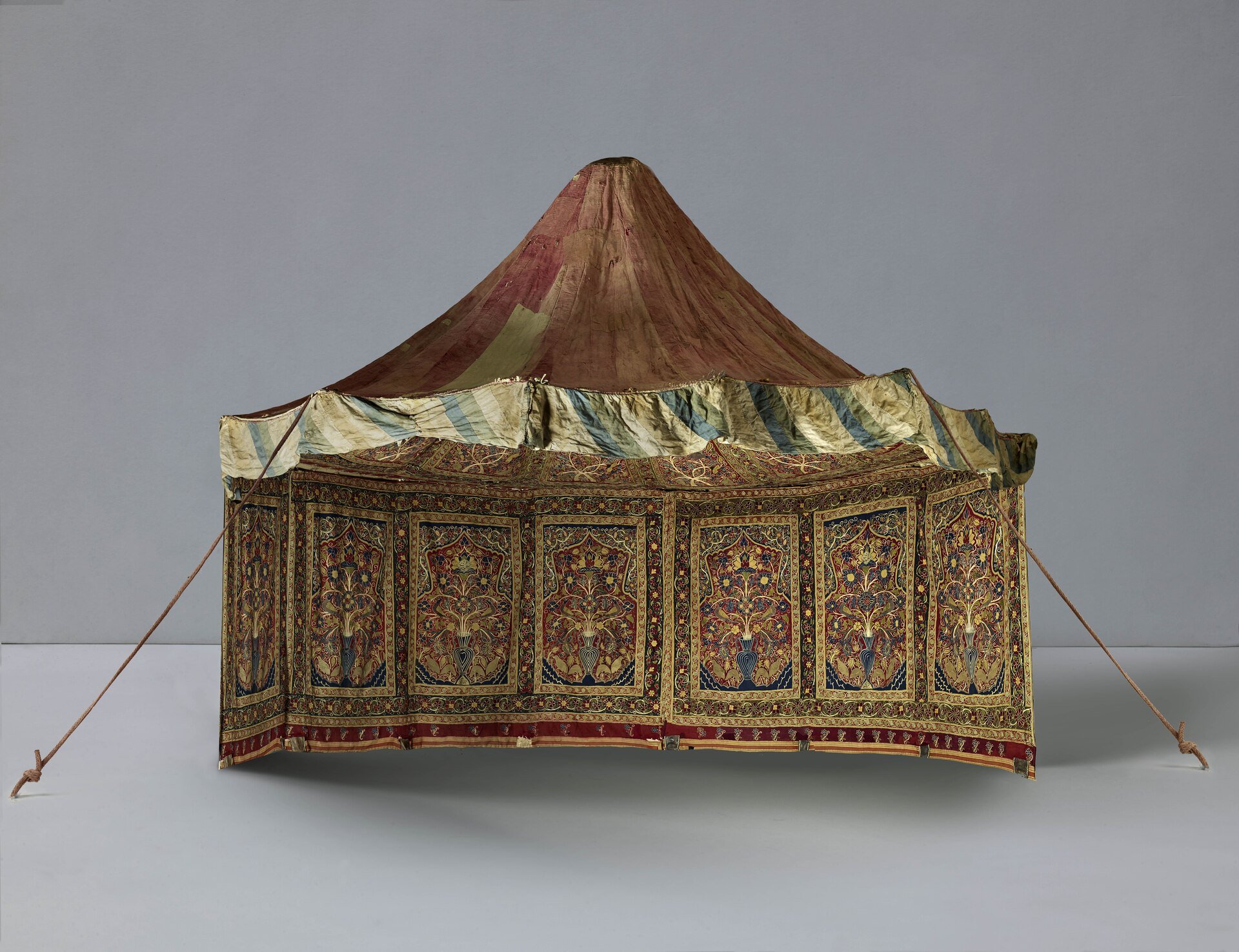
Photographs show documented examples of each craft for visual comparison; they do not prove what any other object is.
Side by side
| Termeh | Rasht embroidery (Rasht-duzi) | |
|---|---|---|
| Persian name | ترمه | رشتیدوزی |
| Category | Textiles · Brocade | Textiles · Appliqué and chain-stitch embroidery |
| Materials | Silk, Wool, Natural dyes | Wool, Silk |
| Techniques | Supplementary weft brocade | Chain stitch, Felt appliqué and inlay |
| Regions | Kerman, Yazd | — |
| Periods | Safavid, Qajar, Contemporary | Qajar, Pahlavi, Contemporary |
| Motifs | Boteh, Eslimi arabesque | Boteh, Eslimi arabesque |
| Current vitality | At risk | At risk |
What they share
- Materials: Silk, Wool
- Motifs: Boteh, Eslimi arabesque
- Periods: Qajar, Contemporary
How to tell them apart
- The Termeh record lists Natural dyes, which the Rasht embroidery (Rasht-duzi) record does not.
- Termeh typically involves Supplementary weft brocade.
- Rasht embroidery (Rasht-duzi) typically involves Chain stitch, Felt appliqué and inlay.
- A material listed for only one craft is a question to ask, not an identification test.
- The stated place of making is a useful clue, but never proof on its own.
Background on each craft
About Termeh
Definition
Termeh is a figured cloth in which extra patterning wefts float across a plain or twill ground to build dense bands of ornament, usually running along the length of the fabric with elaborate end borders.
It is used for sofreh cloths, ceremonial covers, cushion faces, prayer cloths and garments, and appears in Iranian domestic ritual as much as in dress.
History
Brocade weaving is documented in Yazd and Kerman over several centuries, with the drawloom allowing many colours in a single repeat. Hand production contracted sharply with mechanised weaving; power looms now supply most cloth sold as termeh.
General background on the craft, not a statement about any individual object; dates and attributions summarise common positions in the literature and remain under review. Read the full Termeh entry.
About Rasht embroidery (Rasht-duzi)
History
Rasht work is widely associated with 19th-century Qajar production and is represented in several museum collections; labels in older collections sometimes group it loosely with other patchwork or appliqué work.
Technique
Coloured cloth pieces are cut, laid and stitched onto a ground; outlines and fills are then worked in chain stitch, sometimes with a hook (tambour) and sometimes with a needle, often in silk thread.
General background on the craft, not a statement about any individual object; dates and attributions summarise common positions in the literature and remain under review. Read the full Rasht embroidery (Rasht-duzi) entry.
Read more
- Termeh entry · buying guide
- Rasht embroidery (Rasht-duzi) entry · buying guide
- Persian carpet vs Termeh
- Tabriz carpet vs Termeh
- Termeh vs Gabbeh
- Pateh embroidery (Kerman) vs Rasht embroidery (Rasht-duzi)
- Rasht embroidery (Rasht-duzi) vs Needlework embroidery (Suzan-duzi)
- Rasht embroidery (Rasht-duzi) vs Kashan carpet
Disclaimer
This comparison is educational and built from entries still under review. It cannot confirm what a particular object is.