
What documented Termeh looks like
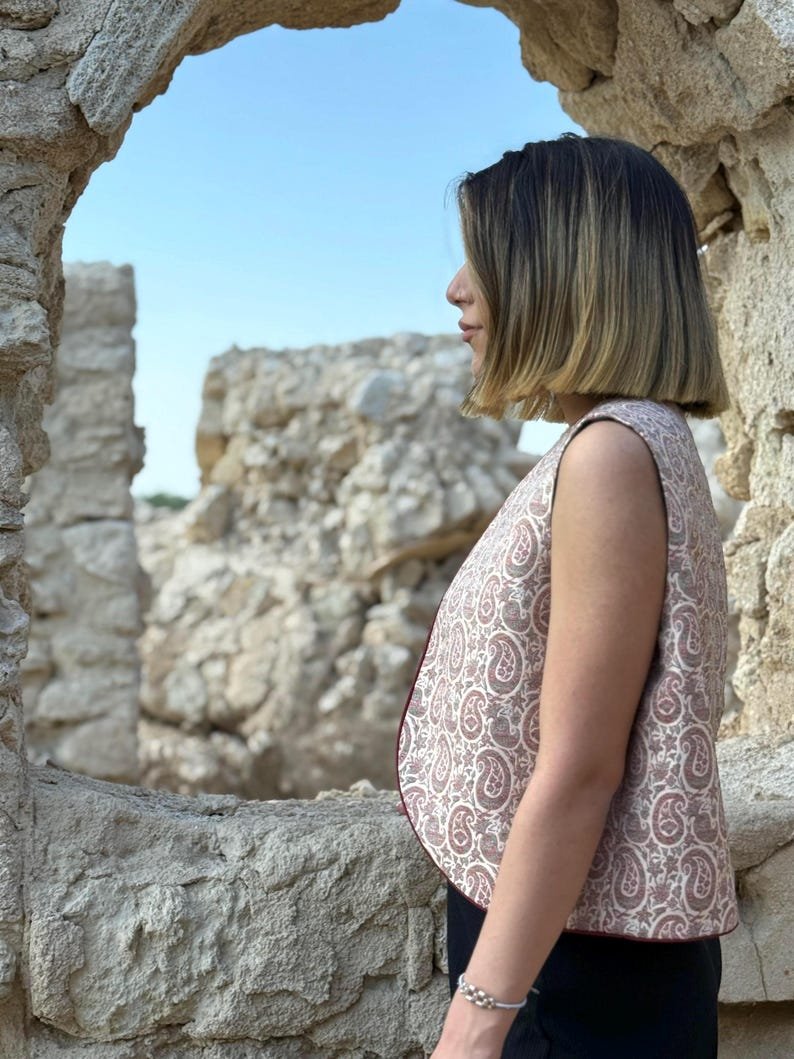
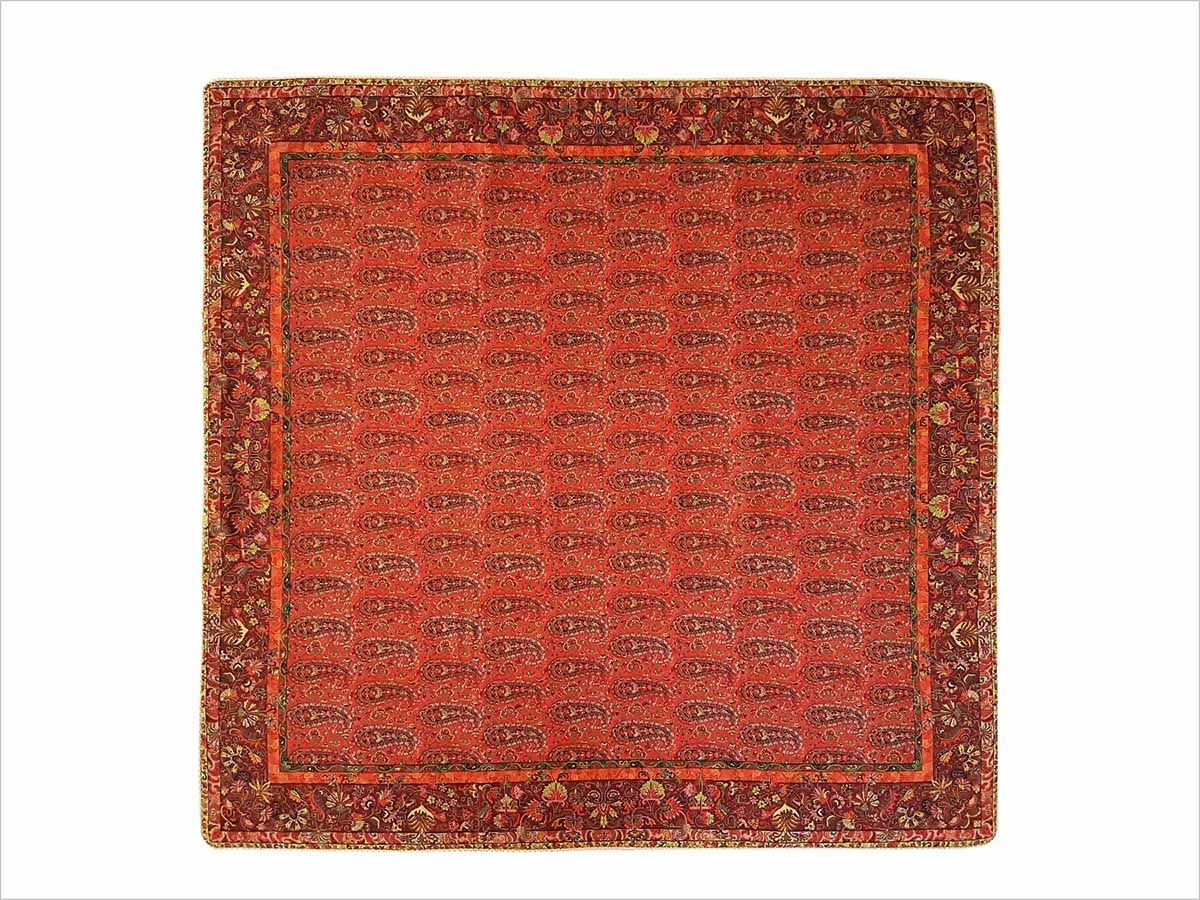
Reference photographs of documented Termeh pieces, credited to their sources. Compare construction, surface and wear with any piece you are offered — a resemblance is not proof of origin.
Termeh at a glance
| Persian name | ترمه |
| Category | Textiles · Brocade |
| Main techniques | supplementary-weft-brocade |
| Typical materials | silk, wool, natural-dyes |
| Places of making | kerman, yazd |
| Current vitality | At risk |
Understanding Termeh
What Termeh is and how it is made
Definition
Termeh is a figured cloth in which extra patterning wefts float across a plain or twill ground to build dense bands of ornament, usually running along the length of the fabric with elaborate end borders.
It is used for sofreh cloths, ceremonial covers, cushion faces, prayer cloths and garments, and appears in Iranian domestic ritual as much as in dress.
History
Brocade weaving is documented in Yazd and Kerman over several centuries, with the drawloom allowing many colours in a single repeat. Hand production contracted sharply with mechanised weaving; power looms now supply most cloth sold as termeh.
Technique
Hand weaving on a drawloom is slow, historically producing only a short length per day, which is why handwoven termeh commands a substantial premium. Reverse floats are trimmed after weaving.
General background on the craft, not a statement about any individual object; dates and attributions summarise common positions in the literature and remain under review. Read the full Termeh entry.
Before you buy: what to inspect
- Hand-loom termeh shows long weft floats on the back and a dense, slightly irregular face; machine jacquard has perfectly identical repeats.
- Check the fibre: traditional termeh uses wool or silk; viscose and polyester feel cooler and slicker.
- Look along the selvedges for hand-loom variation and for frayed or worn edges.
Typical materials: silk, wool, natural-dyes.
Red flags: copies and 'Persian style' imports
- Polyester jacquard sold as hand-woven termeh.
- Printed paisley (boteh) cloth sold as woven.
- No weaving centre named for a piece described as 'Yazd termeh'.
A genuine Termeh piece should come with a named place of making in Iran (often kerman, yazd) and a clear statement that it is handmade.
Questions to ask the seller
- Was it woven on a hand loom or a mechanised jacquard loom?
- What are the fibres?
- Which workshop wove it?
What affects the price
| Hand loom versus machine |
| Fibre (silk, wool, synthetic) |
| Pattern complexity |
| Size |
Care and cleaning
- Do not wash at home; termeh should be dry-cleaned by a specialist, if at all.
- Use as a table or wall textile rather than a floor covering.
- Keep out of direct sunlight, which fades the colours.
Storage
- Roll on a tube with acid-free tissue rather than folding along the same lines.
- Protect against moths with regular airing.
Shipping
Rolled textiles travel well; ask for tube or rolled packing and tracked delivery.
Illustrative examples in the archive
- Handwoven Termeh Cloth · Illustrative example · not for sale here
- Toranj Termeh Vest · Illustrative example · not for sale here
Disclaimer
This guide is educational. It cannot confirm that any particular object is genuine, old or valuable. For important purchases, ask an independent specialist. Read the full Termeh entry.