
The two crafts in photographs
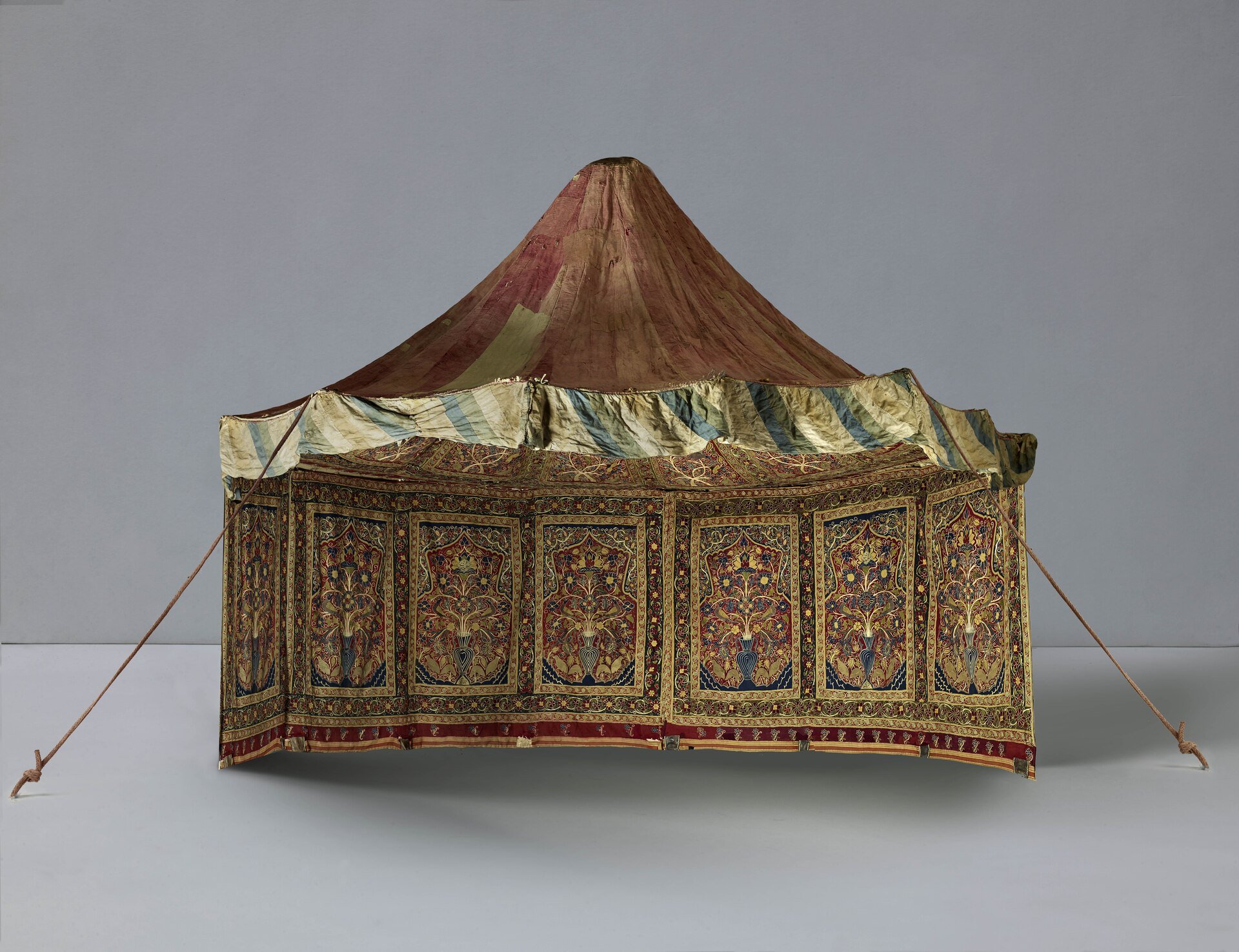
Rasht embroidery (Rasht-duzi)
Kashan carpet
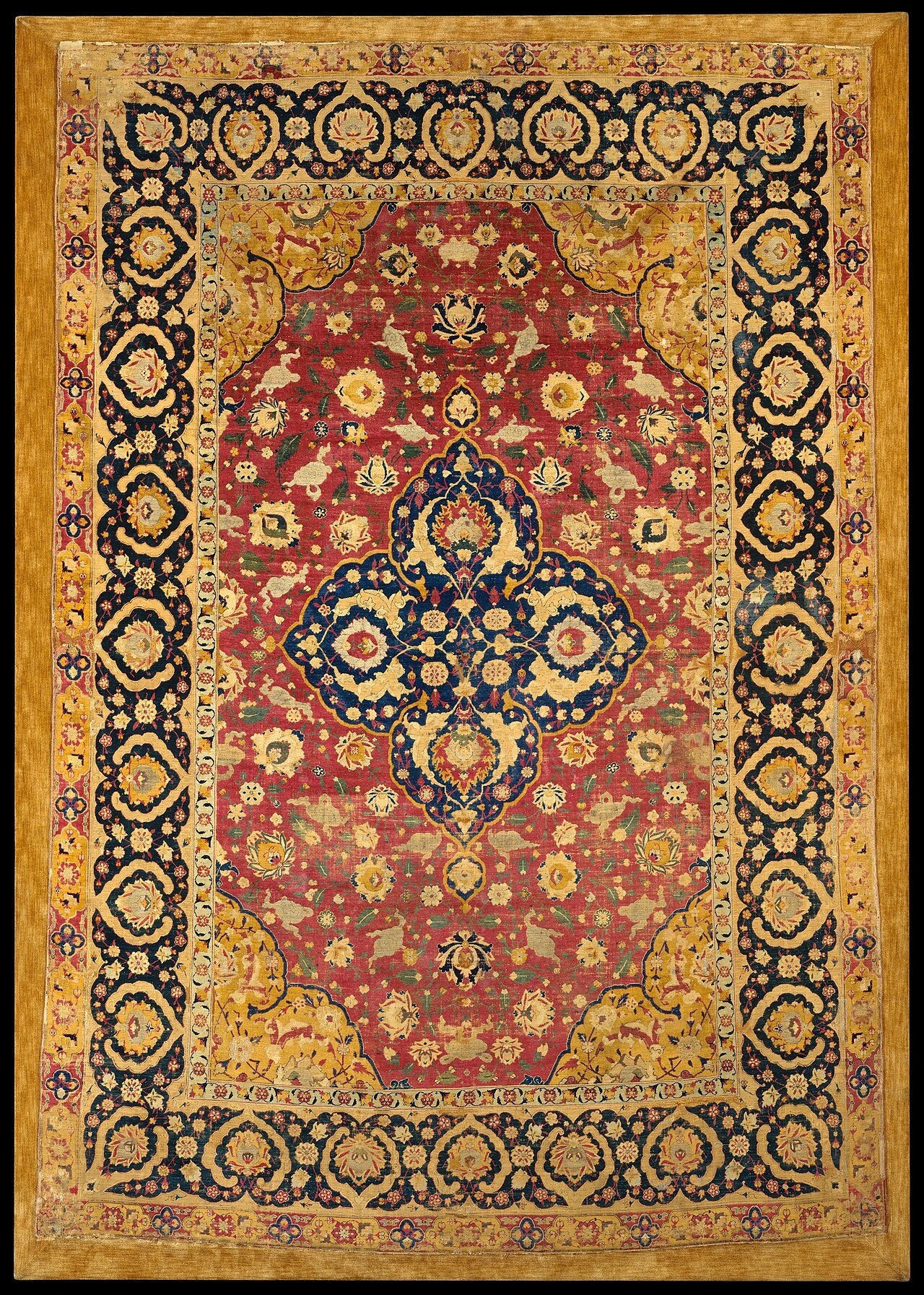
Photographs show documented examples of each craft for visual comparison; they do not prove what any other object is.
Side by side
| Rasht embroidery (Rasht-duzi) | Kashan carpet | |
|---|---|---|
| Persian name | رشتیدوزی | فرش کاشان |
| Category | Textiles · Appliqué and chain-stitch embroidery | Textiles · City carpet |
| Materials | Wool, Silk | Wool, Silk, Cotton |
| Techniques | Chain stitch, Felt appliqué and inlay | Knotted pile weaving, Asymmetric (Persian) knot |
| Regions | — | Kashan |
| Periods | Qajar, Pahlavi, Contemporary | Safavid, Qajar, Contemporary |
| Motifs | Boteh, Eslimi arabesque | Medallion (toranj), Lachak-toranj |
| Current vitality | At risk | Living tradition |
What they share
- Materials: Wool, Silk
- Periods: Qajar, Contemporary
How to tell them apart
- The Kashan carpet record lists Cotton, which the Rasht embroidery (Rasht-duzi) record does not.
- Rasht embroidery (Rasht-duzi) typically involves Chain stitch, Felt appliqué and inlay.
- Kashan carpet typically involves Knotted pile weaving, Asymmetric (Persian) knot.
- A material listed for only one craft is a question to ask, not an identification test.
- The stated place of making is a useful clue, but never proof on its own.
Background on each craft
About Rasht embroidery (Rasht-duzi)
History
Rasht work is widely associated with 19th-century Qajar production and is represented in several museum collections; labels in older collections sometimes group it loosely with other patchwork or appliqué work.
Technique
Coloured cloth pieces are cut, laid and stitched onto a ground; outlines and fills are then worked in chain stitch, sometimes with a hook (tambour) and sometimes with a needle, often in silk thread.
General background on the craft, not a statement about any individual object; dates and attributions summarise common positions in the literature and remain under review. Read the full Rasht embroidery (Rasht-duzi) entry.
About Kashan carpet
History
Kashan is linked to celebrated Safavid silk carpets and to a strong revival from the late 19th century, when fine wool 'Mohtasham' carpets became famous.
Technique
Usually asymmetrical (Persian) knots on a cotton foundation, with fine wool or silk pile and curvilinear designs drawn on cartoons.
General background on the craft, not a statement about any individual object; dates and attributions summarise common positions in the literature and remain under review. Read the full Kashan carpet entry.
Read more
- Rasht embroidery (Rasht-duzi) entry · buying guide
- Kashan carpet entry · buying guide
- Termeh vs Rasht embroidery (Rasht-duzi)
- Pateh embroidery (Kerman) vs Rasht embroidery (Rasht-duzi)
- Rasht embroidery (Rasht-duzi) vs Needlework embroidery (Suzan-duzi)
- Kashan carpet vs Nain carpet
- Kashan carpet vs Heriz carpet
- Kashan carpet vs Bakhtiari carpet
Disclaimer
This comparison is educational and built from entries still under review. It cannot confirm what a particular object is.