
The two crafts in photographs
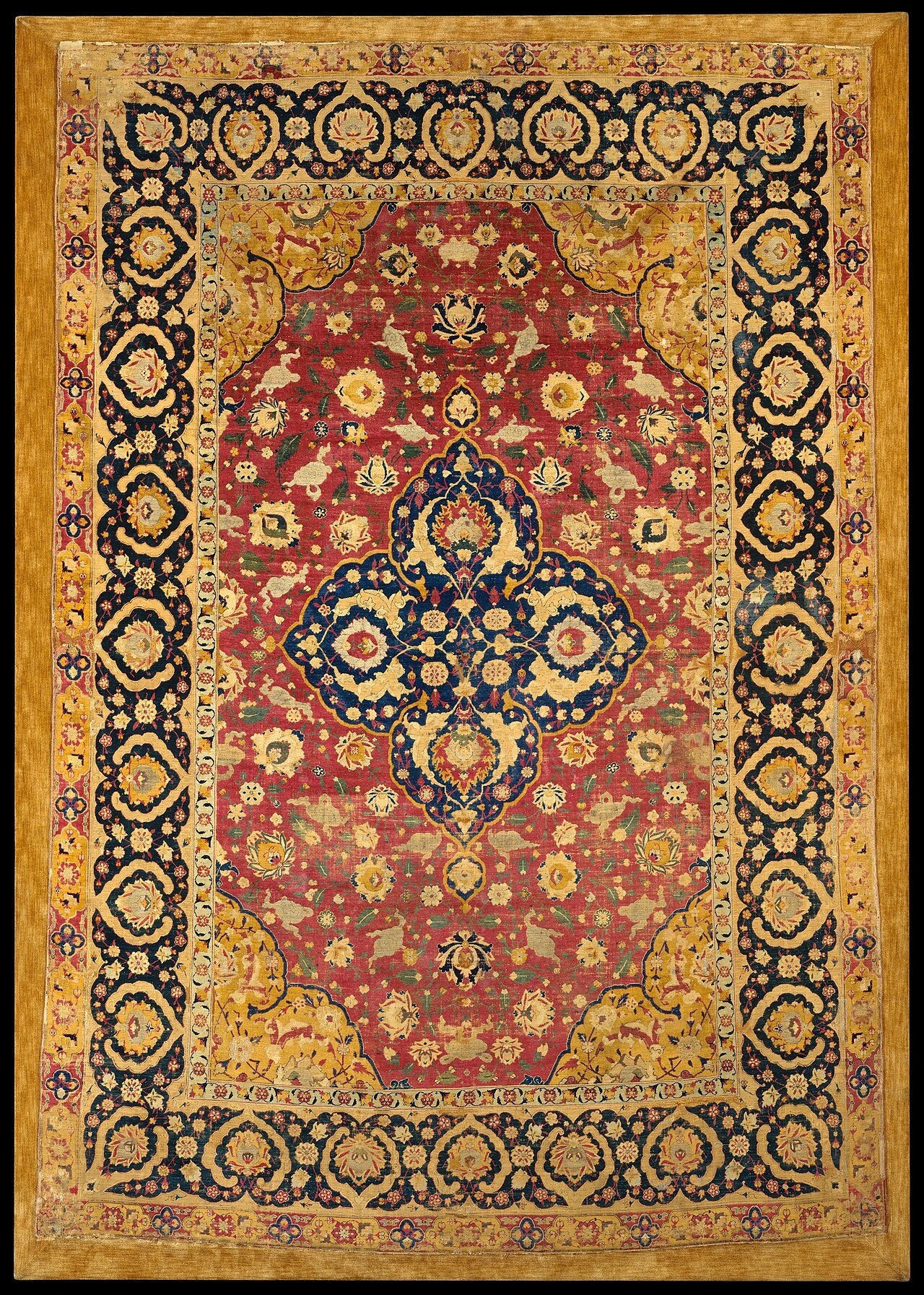
Kashan carpet
Heriz carpet
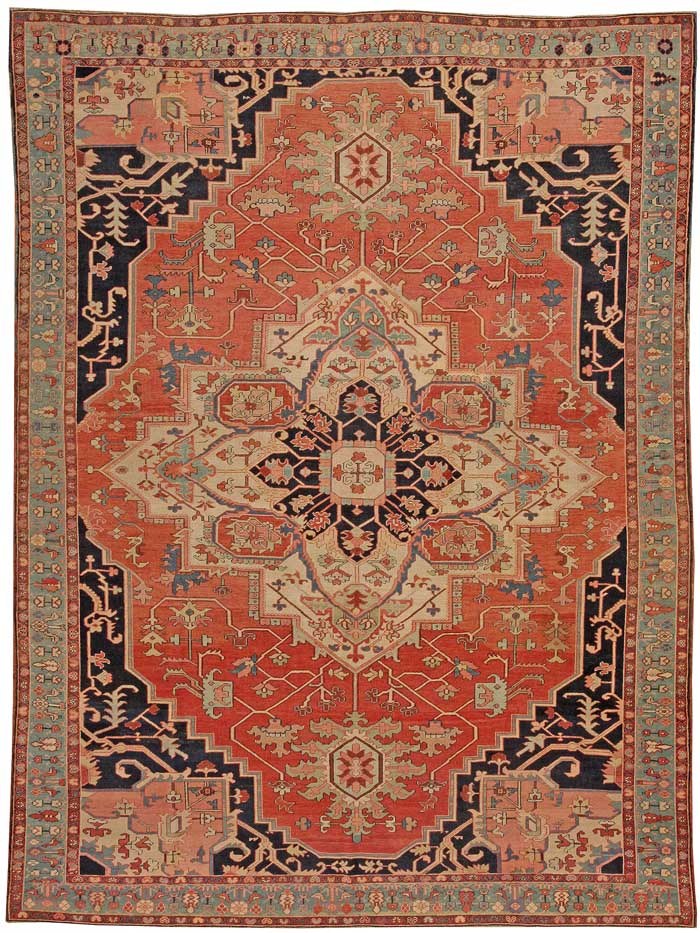
Photographs show documented examples of each craft for visual comparison; they do not prove what any other object is.
Side by side
| Kashan carpet | Heriz carpet | |
|---|---|---|
| Persian name | فرش کاشان | فرش هریس |
| Category | Textiles · City carpet | Textiles · Village carpet |
| Materials | Wool, Silk, Cotton | Wool, Cotton |
| Techniques | Knotted pile weaving, Asymmetric (Persian) knot | Knotted pile weaving, Symmetric (Turkish) knot |
| Regions | Kashan | Tabriz |
| Periods | Safavid, Qajar, Contemporary | Qajar, Contemporary |
| Motifs | Medallion (toranj), Lachak-toranj | Medallion (toranj) |
| Current vitality | Living tradition | Living tradition |
What they share
- Materials: Wool, Cotton
- Techniques: Knotted pile weaving
- Motifs: Medallion (toranj)
- Periods: Qajar, Contemporary
How to tell them apart
- The Kashan carpet record lists Silk, which the Heriz carpet record does not.
- Kashan carpet typically involves Asymmetric (Persian) knot.
- Heriz carpet typically involves Symmetric (Turkish) knot.
- A material listed for only one craft is a question to ask, not an identification test.
- The stated place of making is a useful clue, but never proof on its own.
Background on each craft
About Kashan carpet
History
Kashan is linked to celebrated Safavid silk carpets and to a strong revival from the late 19th century, when fine wool 'Mohtasham' carpets became famous.
Technique
Usually asymmetrical (Persian) knots on a cotton foundation, with fine wool or silk pile and curvilinear designs drawn on cartoons.
General background on the craft, not a statement about any individual object; dates and attributions summarise common positions in the literature and remain under review. Read the full Kashan carpet entry.
About Heriz carpet
History
Heriz rugs became popular in Europe and America from the late 19th century for their hard-wearing wool and bold geometric designs.
Technique
Symmetrical (Turkish) knots, thick pile and designs woven from memory or simple drawings, which gives them their angular look.
General background on the craft, not a statement about any individual object; dates and attributions summarise common positions in the literature and remain under review. Read the full Heriz carpet entry.
Read more
Disclaimer
This comparison is educational and built from entries still under review. It cannot confirm what a particular object is.