
The two crafts in photographs
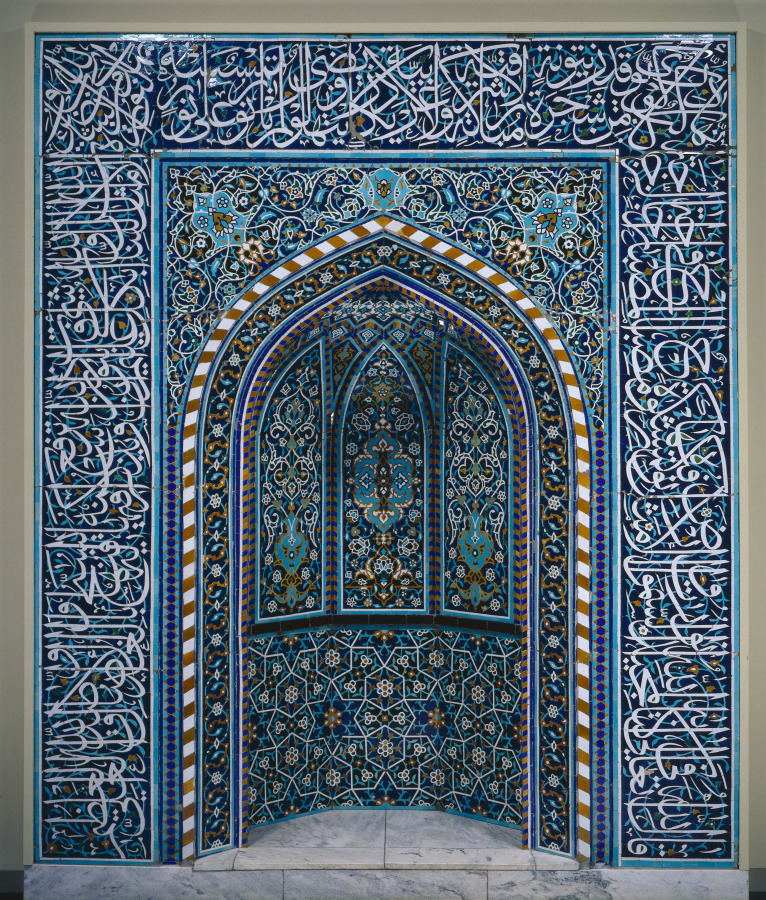
Moarraq tile mosaic
Stucco carving (Gach-bori)
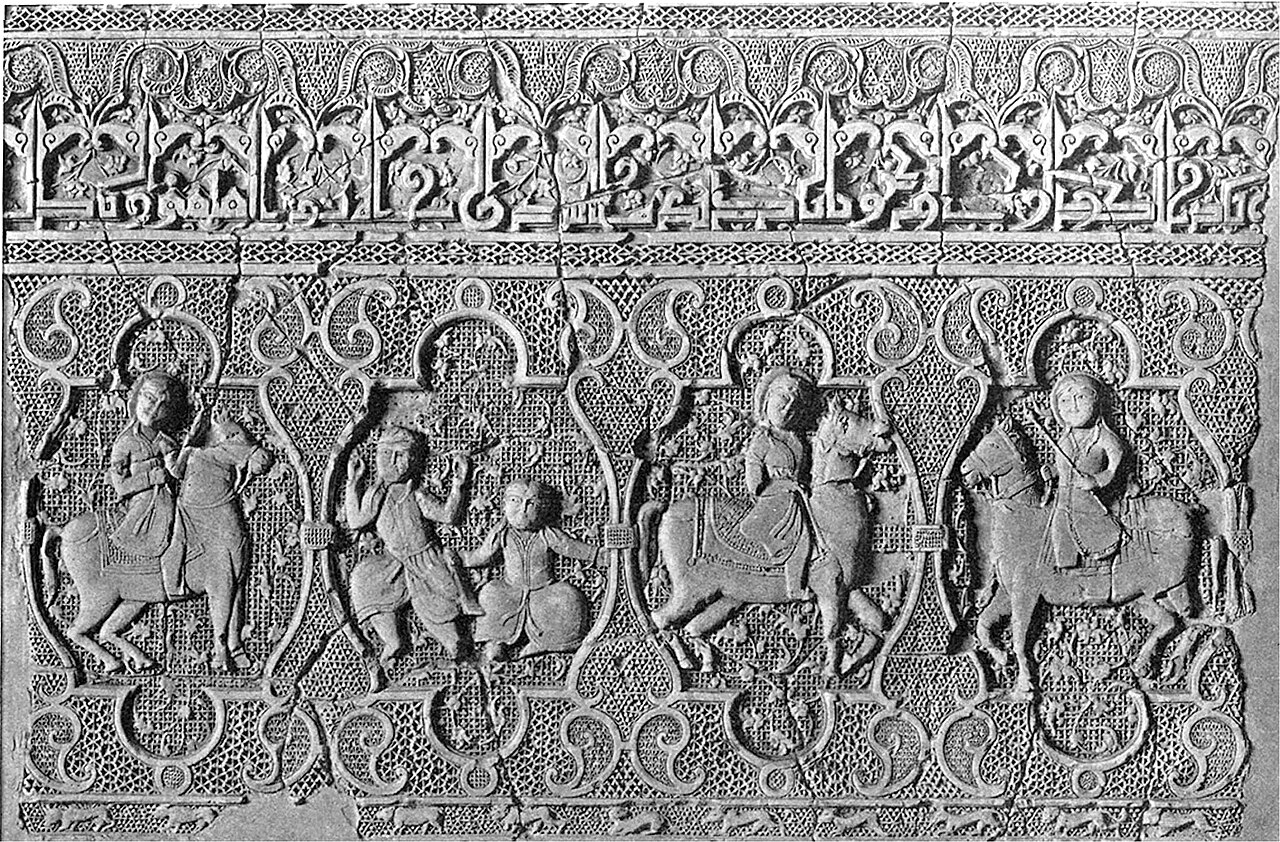
Photographs show documented examples of each craft for visual comparison; they do not prove what any other object is.
Side by side
| Moarraq tile mosaic | Stucco carving (Gach-bori) | |
|---|---|---|
| Persian name | کاشی معرق | گچبری |
| Category | Ceramics · Architectural tilework | Architectural ornamentation · Carved plaster |
| Materials | Clay (earthenware) | Gypsum plaster (gach) |
| Techniques | Cut-tile mosaic | Carved plaster (gach-bori) |
| Regions | Isfahan, Tabriz, Kashan, Yazd | Isfahan, Yazd, Kashan |
| Periods | Ilkhanid, Timurid, Safavid, Qajar, Contemporary | Seljuk, Ilkhanid, Safavid, Qajar, Contemporary |
| Motifs | Eslimi arabesque, Gereh (geometric knot) | Eslimi arabesque |
| Current vitality | Living tradition | Living tradition |
What they share
- Regions: Isfahan, Kashan, Yazd
- Motifs: Eslimi arabesque
- Periods: Ilkhanid, Safavid, Qajar, Contemporary
How to tell them apart
- The Moarraq tile mosaic record lists Clay (earthenware), which the Stucco carving (Gach-bori) record does not.
- The Stucco carving (Gach-bori) record lists Gypsum plaster (gach), which the Moarraq tile mosaic record does not.
- Moarraq tile mosaic typically involves Cut-tile mosaic.
- Stucco carving (Gach-bori) typically involves Carved plaster (gach-bori).
- A material listed for only one craft is a question to ask, not an identification test.
- The stated place of making is a useful clue, but never proof on its own.
Background on each craft
About Moarraq tile mosaic
Definition
Moarraq, meaning inlaid or veined, refers to tile mosaic assembled from small monochrome pieces rather than from tiles that are individually painted with a multicolour design. Each colour is fired separately as a plain glazed tile, then cut by hand into the precise shapes required by a full-scale drawing.
The cut pieces are laid face down on the drawing, glaze side against the paper, and mortar is poured over the reverse to bind them into a panel, which is then lifted, cleaned and set into the wall or dome as a finished section. The technique allows sharper colour separation and more intricate curvilinear detail than painted tile, at considerably greater labour cost.
History
Cut-tile mosaic revetment is documented on major Iranian monuments from the Ilkhanid and especially the Timurid period, when it was used extensively on shrines, mosques and madrasas in centres such as Yazd, Isfahan and Samarqand-linked workshops. The technique reached a widely recognised peak of refinement under the Safavids, notably on the great domes and portals of Isfahan.
From the later Safavid period onward, the faster and cheaper method of painting a design directly onto a single tile before glazing, known as haft rang or seven-colour tilework, was increasingly used alongside mosaic for large surfaces where cost and speed mattered, while moarraq was retained for the most prestigious commissions and for restoration of earlier monuments.
General background on the craft, not a statement about any individual object; dates and attributions summarise common positions in the literature and remain under review. Read the full Moarraq tile mosaic entry.
About Stucco carving (Gach-bori)
History
Carved stucco is documented in Iran from before Islam and flourished in Seljuk and Ilkhanid mihrabs; it remains an active building craft in restoration and new architecture.
Technique
Plaster is applied in layers and carved while still workable, or cast in moulds; deep undercut work creates layered arabesques and inscriptions.
General background on the craft, not a statement about any individual object; dates and attributions summarise common positions in the literature and remain under review. Read the full Stucco carving (Gach-bori) entry.
Read more
Disclaimer
This comparison is educational and built from entries still under review. It cannot confirm what a particular object is.