
What documented Stucco carving (Gach-bori) looks like
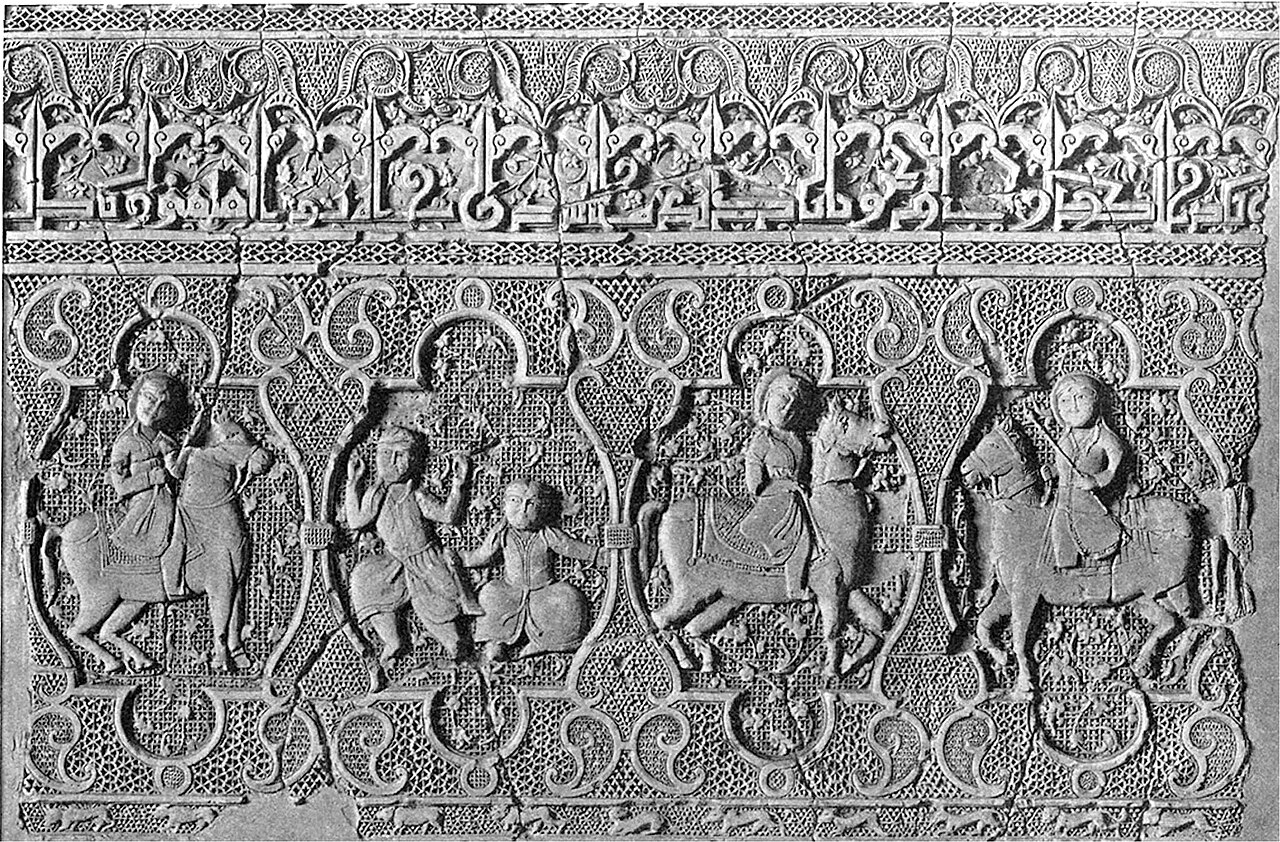
Reference photographs of documented Stucco carving (Gach-bori) pieces, credited to their sources. Compare construction, surface and wear with any piece you are offered — a resemblance is not proof of origin.
Stucco carving (Gach-bori) at a glance
| Persian name | گچبری |
| Category | Architectural ornamentation · Carved plaster |
| Main techniques | plaster-carving |
| Typical materials | gypsum-plaster |
| Places of making | isfahan, yazd, kashan |
| Current vitality | Living tradition |
Understanding Stucco carving (Gach-bori)
What Stucco carving (Gach-bori) is and how it is made
History
Carved stucco is documented in Iran from before Islam and flourished in Seljuk and Ilkhanid mihrabs; it remains an active building craft in restoration and new architecture.
Technique
Plaster is applied in layers and carved while still workable, or cast in moulds; deep undercut work creates layered arabesques and inscriptions.
Collecting and identification
Moisture damage, repainting and replacement sections are typical in historic buildings; removed panels in museums may have unclear building origins.
This guidance is educational only and is not an authentication or valuation service.
General background on the craft, not a statement about any individual object; dates and attributions summarise common positions in the literature and remain under review. Read the full Stucco carving (Gach-bori) entry.
Before you buy: what to inspect
- Most architectural craft is seen in place; portable panels and tiles are the exception.
- Look for hand-cut edges and slight variation between pieces.
- Check tiles and panels for chips, cracks and old mortar or plaster on the back.
Typical materials: gypsum-plaster.
Red flags: copies and 'Persian style' imports
- Tiles or panels claimed to come from historic buildings (removal may be illegal).
- Printed or decal-decorated tiles sold as hand-painted or hand-cut work.
A genuine Stucco carving (Gach-bori) piece should come with a named place of making in Iran (often isfahan, yazd, kashan) and a clear statement that it is handmade.
Questions to ask the seller
- Where does this piece come from?
- Is it newly made or salvaged?
- Can it legally be exported?
What affects the price
| Hand-cutting or hand-painting |
| Size |
| Workshop |
| Age and documented provenance |
Care and cleaning
- Dust gently; avoid acidic cleaners on glaze and plaster.
- Mount securely on a solid wall.
Storage
- Store flat and padded.
Shipping
Heavy and fragile — use crates and insurance.
Disclaimer
This guide is educational. It cannot confirm that any particular object is genuine, old or valuable. For important purchases, ask an independent specialist. Read the full Stucco carving (Gach-bori) entry.